Will climate change kill Pinot Noir in Burgundy?
Simon Stoll
Oenosuite Founder
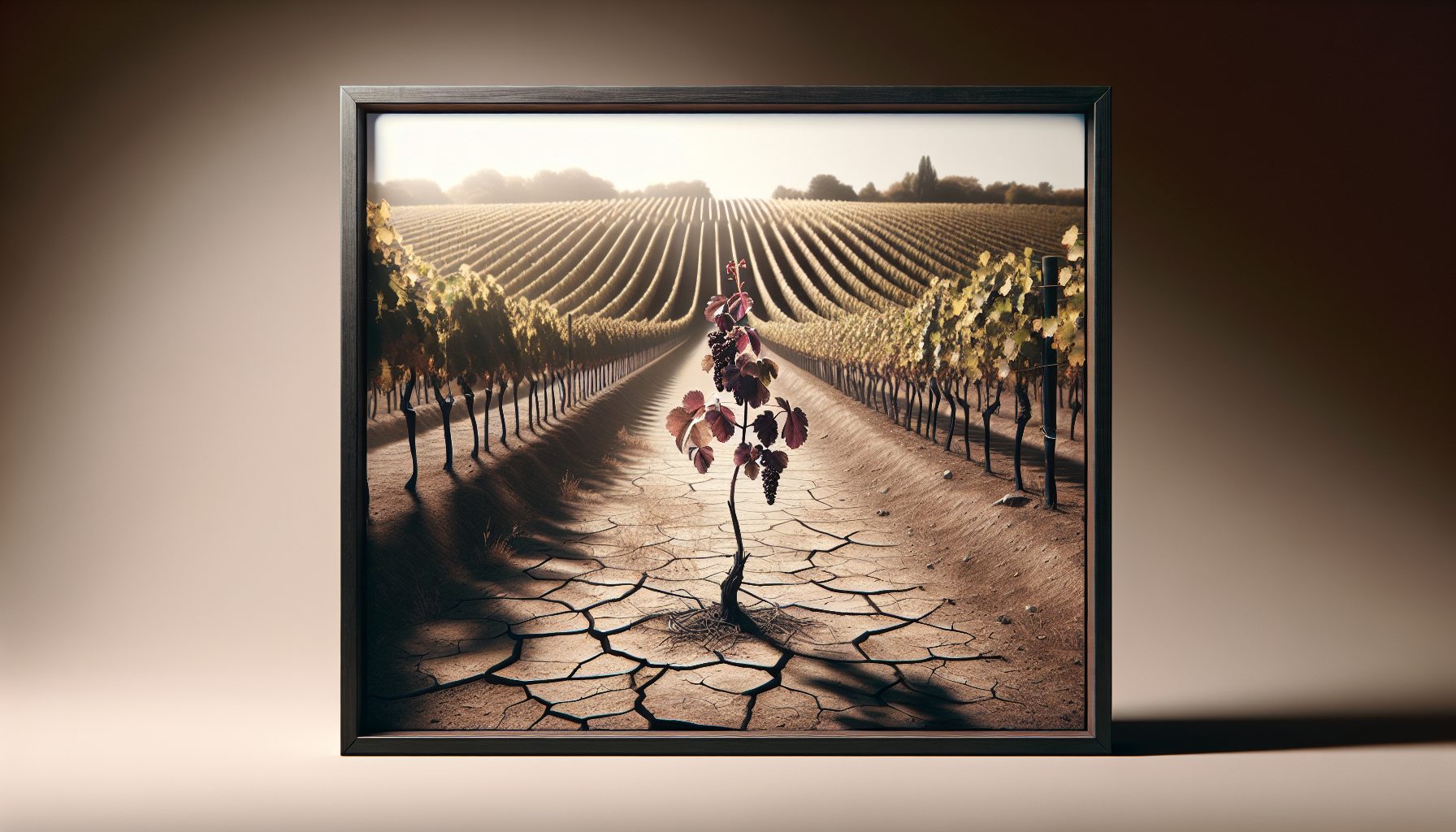
Pinot Noir is the sole red grape variety in Burgundy's village, Premier Cru and Grand Cru appellations of the Côte d'Or. A precocious, heat-sensitive cultivar born in a cool climate, it now sits on the front line of climate change: harvests have moved two to three weeks earlier in forty years, spring frosts repeatedly hit the vines, and wine profiles are visibly shifting. The question is no longer whether the climate is changing, but how far Burgundy can adapt without losing the soul of its wines. Spoiler: rumours of Pinot Noir's death in Burgundy are exaggerated, but its transformation is already well underway.
The numbers leave no room for doubt
According to French statistical agency Insee, average annual temperatures in Bourgogne-Franche-Comté have risen by 0.7 to 1.6 °C over fifty years, with a regional average of +1.3 °C. August and December show the strongest increases, at +2.3 °C and +2.1 °C respectively. A study by the Bureau Interprofessionnel des Vins de Bourgogne (BIVB) confirms a clear break around 1987-1988, with at least 1 °C of warming on the vineyard itself since then. Every phenological stage of the vine, budbreak, flowering, véraison, maturity, is now 7 to 12 days earlier than before that break.
The shift is visible in the harvest calendar. The vintage records of the Hospices de Beaune, reconstructed since 1354, form one of Europe's longest viticultural time series. They show that, on average, harvest used to start around 28 September between the late Middle Ages and 1987. Today it has shifted forward by roughly two and a half weeks. Laurent Delaunay, president of the BIVB, puts it bluntly: "We now harvest in August almost every other year, it's becoming the norm." The 2003 record, with harvest starting around 15 August, looked like a one-off at the time; it has since become a recurring probability.
Pinot Noir is one of the most heat-sensitive grape varieties in the French vineyard. Early-budding, fragile, allergic to excess, it historically thrives within a narrow climatic window. Pushing ripening into the heat of August rather than the cooler air of September deeply alters berry composition: sugar levels rise, acidity falls, polyphenols ripen faster than aromatic compounds. The practical result is wines that are higher in alcohol (often above 13.5° versus 12.5° historically), less acidic, sometimes more jammy, and potentially less suited to long ageing, the very trait that built the reputation of the great climats. The classical identity of Burgundian Pinot Noir, finesse, tension, freshness, is at stake.
Frost: the other face of disruption
Counter-intuitive but devastating: warming does not erase frost risk, it worsens it. When budbreak shifts earlier in the season, the tender buds become vulnerable to any cold snap in April. The nights of 6, 7 and 8 April 2021 will go down in history: temperatures dropped to -4 °C and locally to -7 °C, hitting almost all of Burgundy from Chablis to the Mâconnais. According to the BIVB, between 20 % and 80 % of buds (and up to 100 % in some parcels) were destroyed, with whites worst affected because they bud earlier. Across France, the FNSEA and the wine sector estimated the damage at around 2 billion euros.
Should we surrender to doom?
No, and this is where the debate sharpens. Burgundy growers, supported by public research, have launched an adaptation effort few other agricultural sectors can claim at this scale. The LACCAVE project, run by INRAE from 2012 to 2021 with around 100 researchers, produced four scenarios for 2050 and almost 2,700 concrete action proposals. Three technical levers stand out: clonal selection (late-budding Pinot Noir clones better armed against drought stress); rootstocks sourced from Hungary, Italy and Spain, studied by INRAE to delay vegetative growth and handle drought; and disease-resistant varieties from the ResDur (INRAE) and CepInnov programmes (IFV, INRAE Colmar and BIVB since 2014), crossed with Chardonnay, Pinot Noir and Gouais, expected on the market around 2035. Meanwhile, French regulations now allow up to 5 % of vineyard area to trial late-ripening alternative varieties.
Altitude as a refuge: the Hautes-Côtes in the lead
The Bourgogne Hautes-Côtes de Beaune and de Nuits, long seen as secondary terroirs, have become strategic. Planted between 280 and 550 metres in altitude (versus 220-320 m for the classic Côte d'Or), they enjoy a cooler microclimate that delays ripening by several days. The Horizon Hautes-Côtes project, run by the trade, is mapping the extension potential of the vineyard at altitude to identify the best parcels to plant given future climate risks. Plantation requests there have surged in recent years, a strong signal that the Hautes-Côtes may be the Côte d'Or of tomorrow. Pinot Noir already accounts for more than 70 % of red plantings in the area.
At the very top of the pyramid, legendary estates are leading their own transition. Domaine de la Romanée-Conti has farmed organically since 1985 and progressively converted several parcels (notably La Tâche and Grands Échezeaux) to biodynamics, with horses brought back to avoid compacting the soils. Domaine Leroy, run by Lalou Bize-Leroy, has farmed all 22 hectares biodynamically since 1988, including nine Grands Crus. Beyond ideology, these choices are climate strategy: living soils retain more water, vines are more resilient under stress, berries are less exposed to fungal pressure from increasingly erratic summer rains.
Our verdict (and a practical tip)
Climate change will not kill Burgundy's Pinot Noir, but it will force it to reinvent itself. The classical twentieth-century Burgundian identity, built on freshness and tension, is unlikely to come back exactly as it was. Sunny vintages such as 2003, 2018, 2019 and 2020 hint at a new equilibrium. The real threat is not extinction but aromatic standardisation: the risk of seeing jammy, alcoholic Burgundian Pinots drift toward New World profiles. The counter-strategy exists, organic farming, altitude, clonal selection, adjusted harvest dates, less extractive winemaking. To experience this transition from the inside, nothing beats being there: descending into Beaune's cellars, walking through Vosne-Romanée, talking with a Pommard grower. Oenosuite.fr offers immersive suites in Dijon, right at the gateway to the Burgundy vineyard: less than thirty minutes by road from Gevrey-Chambertin, Vosne-Romanée or Beaune, it's the ideal city base to head out each morning into the Côte de Nuits or the Côte de Beaune and follow this mutation alongside the growers themselves.
Sources & references
Plan your trip to Burgundy
Book your wine accommodation in Dijon
Luxury wine suite with complimentary blackcurrant liqueur, Jalunia connected cellar and wine tourism experiences.
Book now