A Burgundy Winemaker's Year: The Work in the Vines, Month by Month
Simon Stoll
Oenosuite Founder
In Burgundy, a winemaker's year is far more than the harvest: it holds about a dozen key operations spread across twelve months, from winter pruning between December and March to the late-summer picking. Understanding this calendar is the key to understanding why a climat in the Cote de Nuits or the Cote de Beaune yields a different wine year after year. This guide breaks down the Burgundy winemaker's work month by month: pruning, disbudding, trellising, leaf removal, veraison and harvest.
The vine's cycle follows an unchanging rhythm. After the leaves fall, the plant enters dormancy and concentrates its reserves; in spring it wakes, flowers in June, changes colour in August, then delivers its grapes. Between these natural stages the winemaker works without pause, sometimes through the night, candle in hand, to save a crop from frost. Here is the vine's year, season by season.
Winter: pruning, the vintage's founding gesture
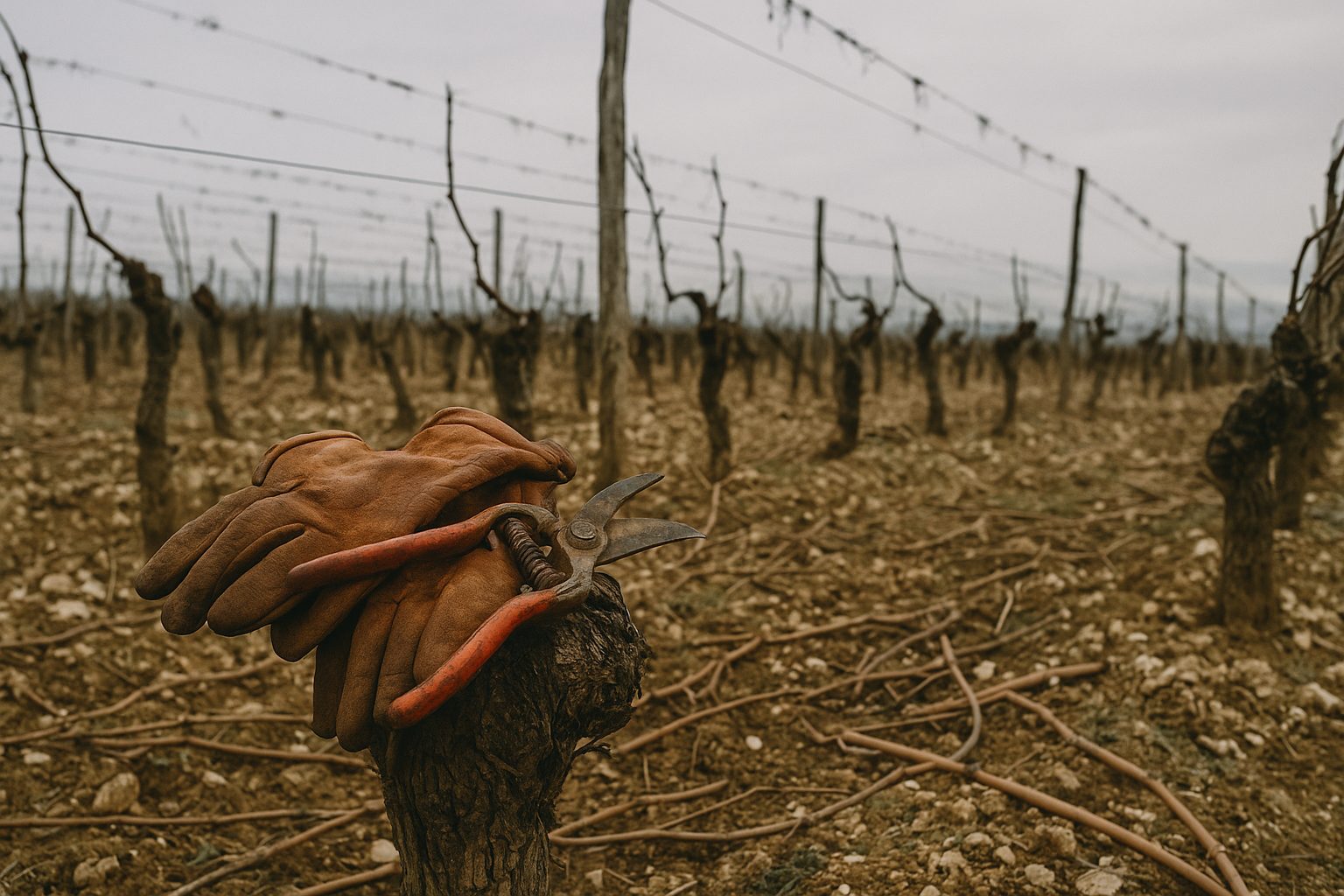
As soon as the leaves fall in November, the vine enters dormancy: this is when pruning begins, traditionally running from December to mid-March and often finishing in early March. In Burgundy, Guyot pruning, single or double, remains by far the most common. The grower selects the canes to keep and removes everything else, shaping the frame and the yield of the coming vintage in advance. Nothing commits the future crop more than this winter gesture, repeated vine by vine across thousands of plants.
The quality of the cut matters as much as its timing. You prune in dry weather, with a clean, well-sharpened secateur: a clean cut heals better than a crushed wound, which would open the door to trunk diseases. Some estates first carry out a pre-pruning to clear the vine, then return to prune finely before bending and tying the canes onto the trellis wire. The cut canes are then shredded on the spot or burned in the traditional wheelbarrow-braziers that dot the horizon of the Climats in the depths of winter.
Spring: budburst and the war on frost
By mid-March the sap rises: this is budburst. The buds open, the first leaves appear and, with them, the most nerve-wracking period of the year. Until early May, a single cold snap at night can scorch the young shoots in a matter of hours. Spring frosts have become a recurring scourge of the Burgundy vineyard, all the more dangerous because warming pushes budburst ever earlier.
To save their buds, growers stay up all night. Between 300 and 400 candles per hectare, large pots of paraffin, are lit between the rows to gain 2 to 3 degrees when the thermometer drops to between -4 and -6 degrees. They are put out at daybreak, once the temperature climbs back above zero. Others rely on anti-frost towers that stir the air (reckon on 30,000 to 40,000 euros for four to five hectares), or even on helicopters (around 200 to 250 euros per hectare). These sleepless nights partly explain the price of a bottle. In parallel, disbudding removes unwanted shoots by hand to concentrate the vine's vigour on the right canes.
Summer: the green work
From mid-May to July come the green works, all the operations carried out between budburst and harvest to control the canopy. Trellising consists of lifting the shoots and fixing them to the wires: better exposed, the foliage catches the sun and airs the bunches. Topping, meanwhile, trims the excess tips of the shoots so the sap concentrates on the fruit rather than the wood.
Flowering lasts only a handful of days in June, ten at most, and largely determines the volume of the future crop. Later, leaf removal takes off a few leaves, often only on the side of the rising sun, to perfect ripening and limit disease. Some growers also carry out a green harvest just before veraison: they sacrifice part of the bunches so the remaining ones ripen better. It is never systematic, it is a deliberate bet on quality over quantity.
Autumn: veraison, harvest and cellar
In August, veraison marks the turning point: the berries change colour, acidity falls and sugar climbs. Then comes the harvest. Long fixed around late September, it has moved forward by two to three weeks in half a century under the effect of the climate. In 2025, an early vintage, the first cuts came as soon as 18 August for Cremant de Bourgogne, followed by the Chardonnay of the Cote de Beaune and then Pinot Noir towards the end of the month.
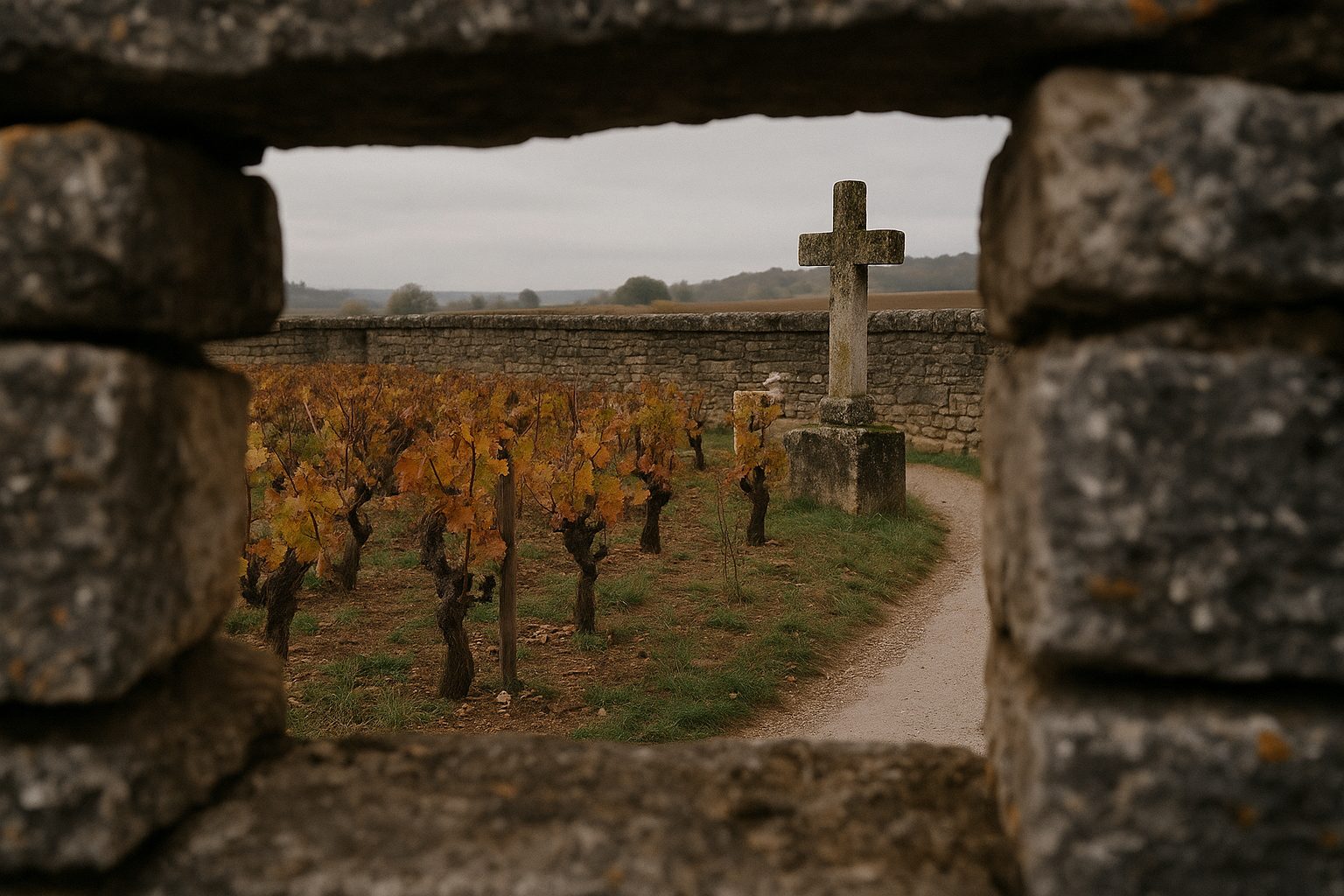
In Burgundy, the premiers crus and grands crus are picked by hand: manual harvesting protects the fragile Pinot Noir berries and allows a first sorting straight off the vine. Once the crop is in, the work moves to the cellar (sorting, vatting, fermentation, ageing in barrel) while the vine itself is already falling asleep. The leaves drop, and the cycle begins again with pruning. It is this repetition, across twelve months, that shapes every Climat listed as a UNESCO World Heritage site.
Seeing the winemaker at work: when to come, and how to gift the trip
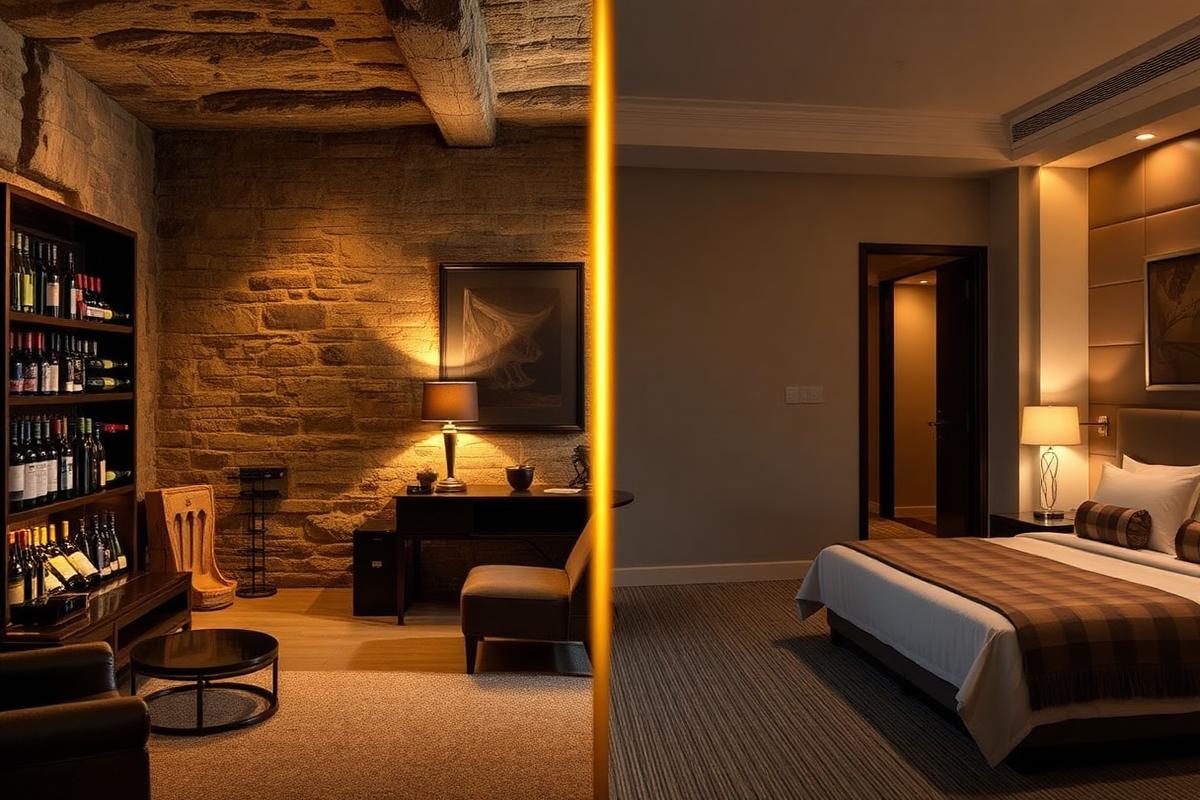
Each season offers a different spectacle: the braziers of winter pruning, the anti-frost candles of spring, the frenzy of the late-summer harvest. To witness it, it is best to stay in the heart of the vineyard. In Dijon, the Oenosuite, the only apartment awarded the Vignobles & Decouvertes label in Bourgogne-Franche-Comte and a stone's throw from the Palais des Ducs, puts the Route des Grands Crus twenty minutes away. Its two spaces, the Suite Charme & Vin (43 sqm, 2 to 4 guests) and the Loft d'Artiste (25 sqm, 2 guests), extend the experience with a blind tasting, a wine escape game and the Jalunia connected cellar on self-service. Booking directly on oenosuite.fr guarantees the best rate, with no platform commission.
The catch with a seasonal stay is picking the right date: there is no way to know in advance when flowering or the first day of harvest will fall. That is exactly what the Oenosuite gift card solves: you choose the amount (from 25 to 1,000 euros, or a preset tier from 50 to 300 euros), your loved ones choose the moment. Valid for twelve months and usable on any stay or experience, it turns an enthusiast's curiosity into a real weekend in the vines, whether in the spring of candles or the autumn of harvest. Give it at oenosuite.fr/carte-cadeau, and let Burgundy set the date.
Sources & references
Plan your trip to Burgundy
Book your wine accommodation in Dijon
Luxury wine suite with complimentary blackcurrant liqueur, Jalunia connected cellar and wine tourism experiences.
Book now