Domaine or Négociant in Burgundy: What Really Differs
Simon Stoll
Oenosuite Founder
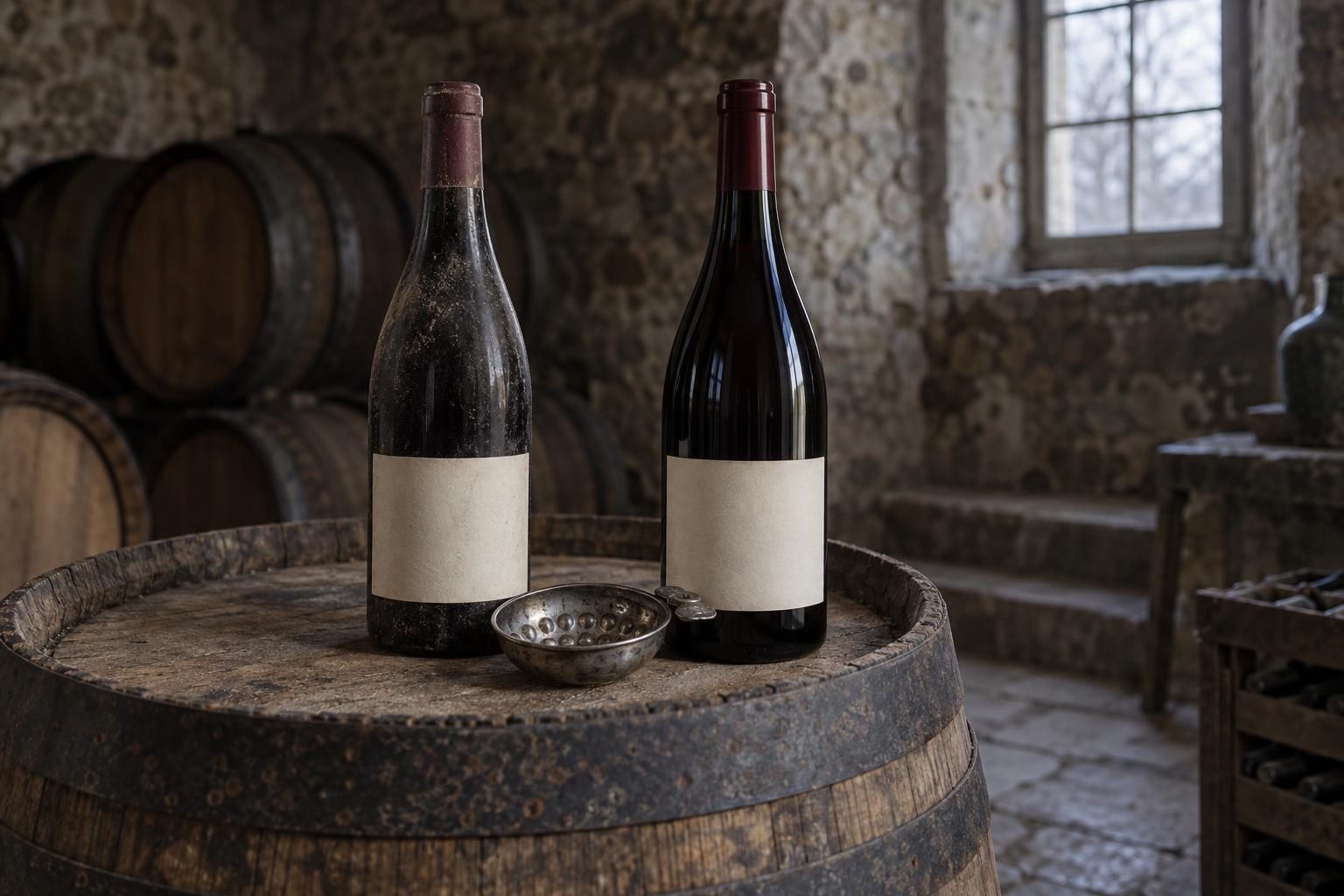
In Burgundy, a bottle may be signed by a domaine (the grower-owner, who farms the vines and makes the wine) or by a négociant house (the négociant-éleveur, who buys grapes, must or wine to age and bottle it). Both statuses have coexisted for centuries, and the label says which one applies: knowing how to read it changes how you choose a bottle and how you plan a visit.
Two trades, one region
The domaine is the image most people have of the Burgundian winemaker: a family, a few hectares split into small plots, a cellar under the house. It works its own vines and signs a wine that expresses a place and a vintage first. This approach spread widely in the twentieth century, when growers began bottling their own wine instead of selling to the trade; iDealwine names the Gouges estate in Nuits-Saint-Georges and Richard in Gevrey-Chambertin among the pioneers.
The négociant trade is older still. According to iDealwine, several Beaune houses date from the eighteenth century: Champy in 1720, Bouchard in 1731, Chanson in 1750, then Louis Latour in 1797 and Louis Jadot in 1850. Their job is to buy, blend, age and sell. A négociant-éleveur can offer a Chambolle-Musigny, a Meursault and a Pommard in the same range, something a small estate, limited to its own plots, cannot do.
The line is blurrier than it looks. Many large houses also own vines: iDealwine points out that, as much as négociants, they are also estates, usually with two separate entities. Drouhin's Clos des Mouches and Louis Latour's Corton-Charlemagne are examples. Conversely, established growers sometimes run a négociant range alongside their estate wines, as Domaine Dujac does with its Dujac Père et Fils line.
Reading the label without mistakes
The first reflex is to look for the status mention. On the estate side you read "propriétaire-récoltant" or "mis en bouteille au domaine"; on the house side, "négociant-éleveur" or a phrase such as "élevé et mis en bouteille par". These mentions describe who made the wine, not how good it is: iDealwine stresses that the distinction should not be read as a hierarchy. An excellent wine can come from either side, and so can a disappointing one.
Beware of estates that also make négociant wine. The same name can appear on two labels, one for the property's own grapes and one for purchased grapes. The estate name alone is not enough: look for the status mention, sometimes in small print, and do not hesitate to ask in the cellar. Growers are usually happy to answer, because this transparency is part of the job.
Then there are the micro-négociants, a recent arrival. These structures, often without their own vines, buy grapes from selected growers and vinify them in their own style. iDealwine cites Philippe Pacalet in Beaune as an example. For the enthusiast, this is good news: you sometimes find prestigious appellations made in small quantities, at prices that vary and are best compared bottle by bottle rather than judged on status.
Visiting: where to taste, estate or house?
The two experiences complement each other. At an estate, the talk is about plots, vintages and picking decisions; the visit is often more intimate, by appointment, with the grower in person. At a négociant house, particularly in Beaune, visits are generally better organised for visitors, with historic cellars, a presentation of the range and sometimes several appellations to taste in one session. Always check opening times and booking conditions on each house's own website.
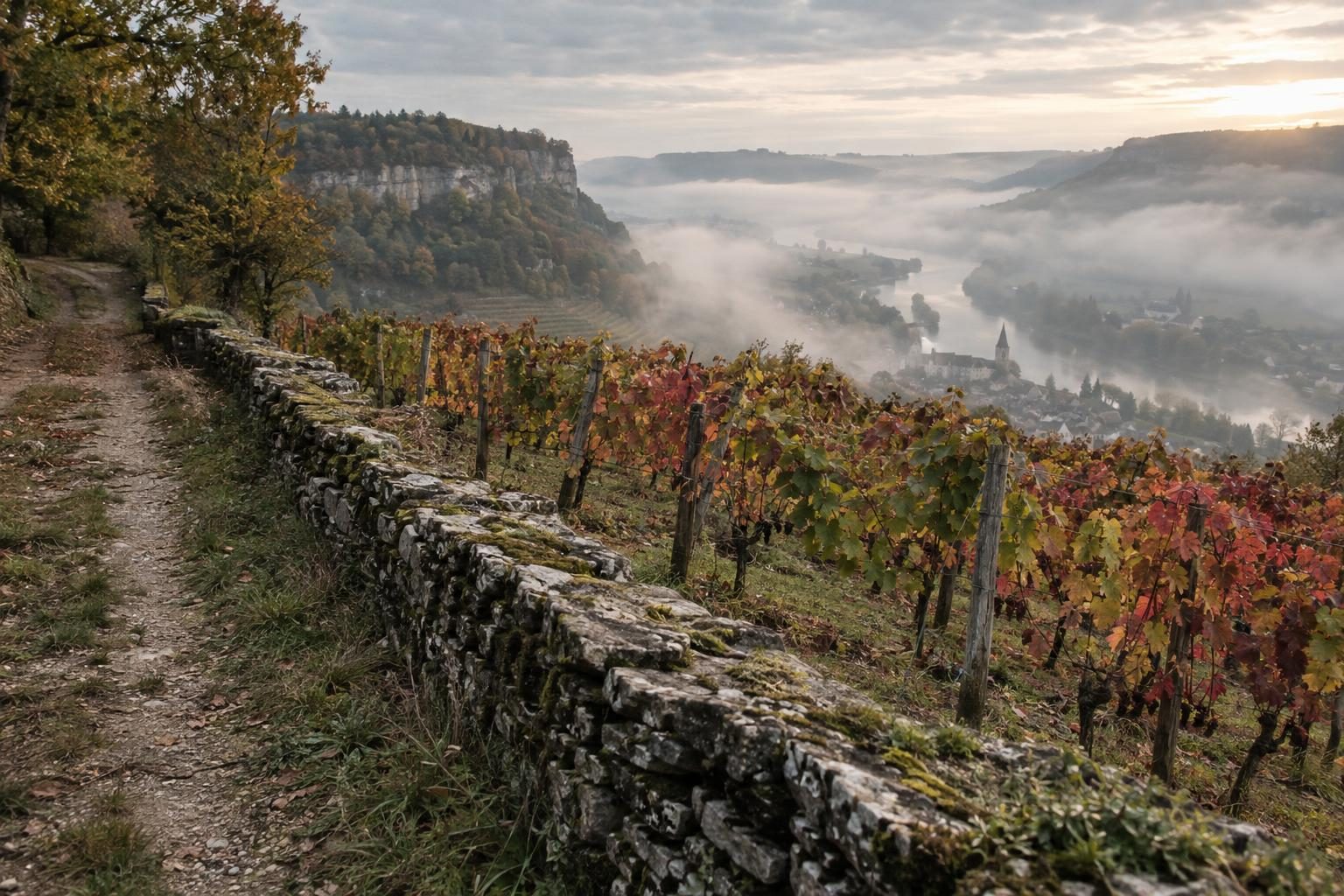
A good thread for a day: a morning at an estate to understand a plot and a gesture, an afternoon at a négociant to compare neighbouring appellations. This sequence gives a real picture of how the vineyard is organised, far more telling than a map. If you would rather have someone arrange the appointments, platforms such as Winalist offer estate visits that you can book in advance in Burgundy.
Buying follows the same logic. An estate offers its own cuvées, often in limited quantities, and the lesser-known ones can be the most interesting. A négociant offers a wider range that is easier to find elsewhere. Always ask when to drink the bottle and how to store it: it is the question that best shows the difference between a salesperson and a passionate grower. Ask the same question everywhere you go, and compare the answers: after two or three cellars, you will start to recognise each house style and each grower's way of explaining their work, which is the most useful souvenir of the trip.
Staying in Dijon, 20 minutes from the Route des Grands Crus
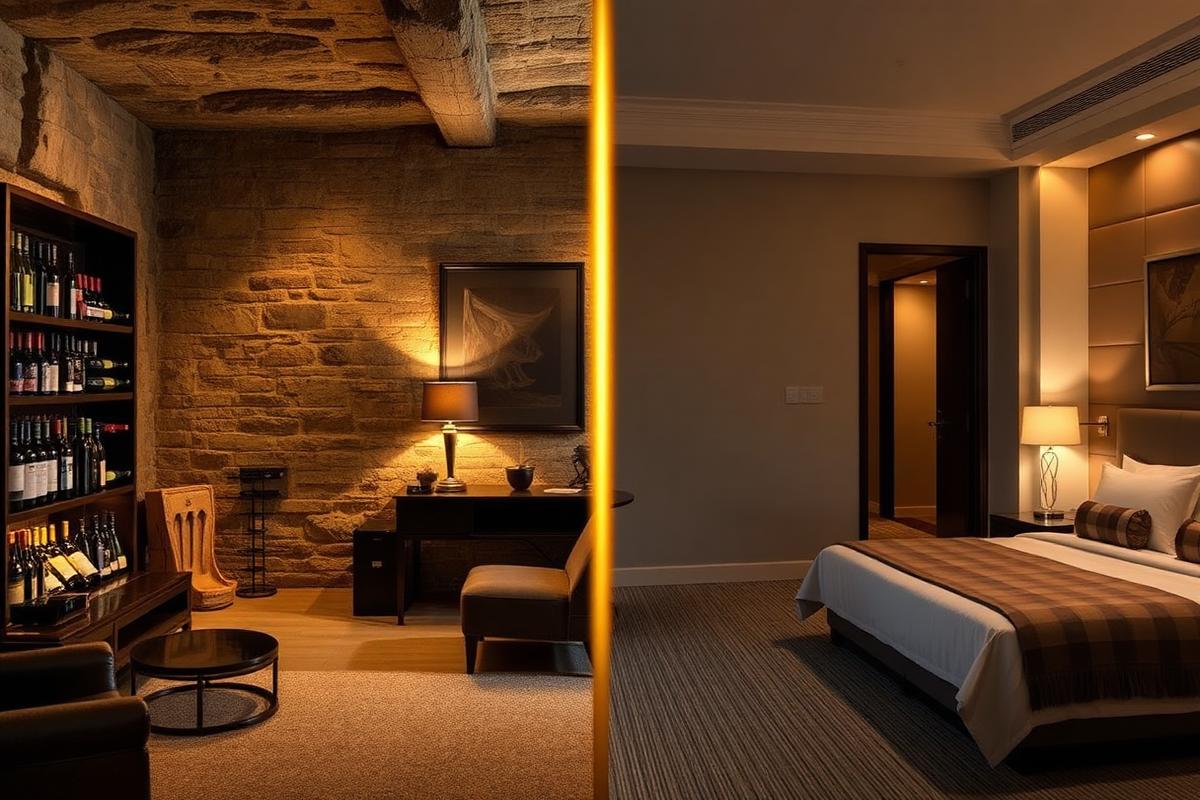
To link an estate in the morning with a négociant house in the afternoon, Oenosuite, in the heart of Dijon, is a practical base: the only apartment labelled Vignobles & Découvertes in Bourgogne-Franche-Comté, a short walk from the Palais des Ducs, with the Route des Grands Crus 20 minutes away. The Suite Charme & Vin (43 m², 2 to 4 guests) or the Loft d'Artiste (25 m², 2 guests, designed by Dijon architect Alexandrine Vaure) let you carry on in the evening with the Jalunia connected cellar, self-service from the suite, to taste Burgundy wines and compare what you learned during the day.
And to give this trip to a wine lover without knowing their dates, the Oenosuite gift card (https://oenosuite.fr/carte-cadeau) answers the problem: you choose the amount (€50, 75, 100, 150, 200 or 300, or a custom amount between €25 and €1,000), they choose the dates. Valid for 12 months on any Oenosuite stay or experience, it can carry a name and a personal message. Book directly on oenosuite.fr, with no platform commission, or call +33 7 50 96 09 18.
Sources & references
Plan your trip to Burgundy
Book your wine accommodation in Dijon
Luxury wine suite with complimentary blackcurrant liqueur, Jalunia connected cellar and wine tourism experiences.
Book now