Hautes-Côtes de Nuits and Beaune: Burgundy's Hinterland
Simon Stoll
Oenosuite Founder
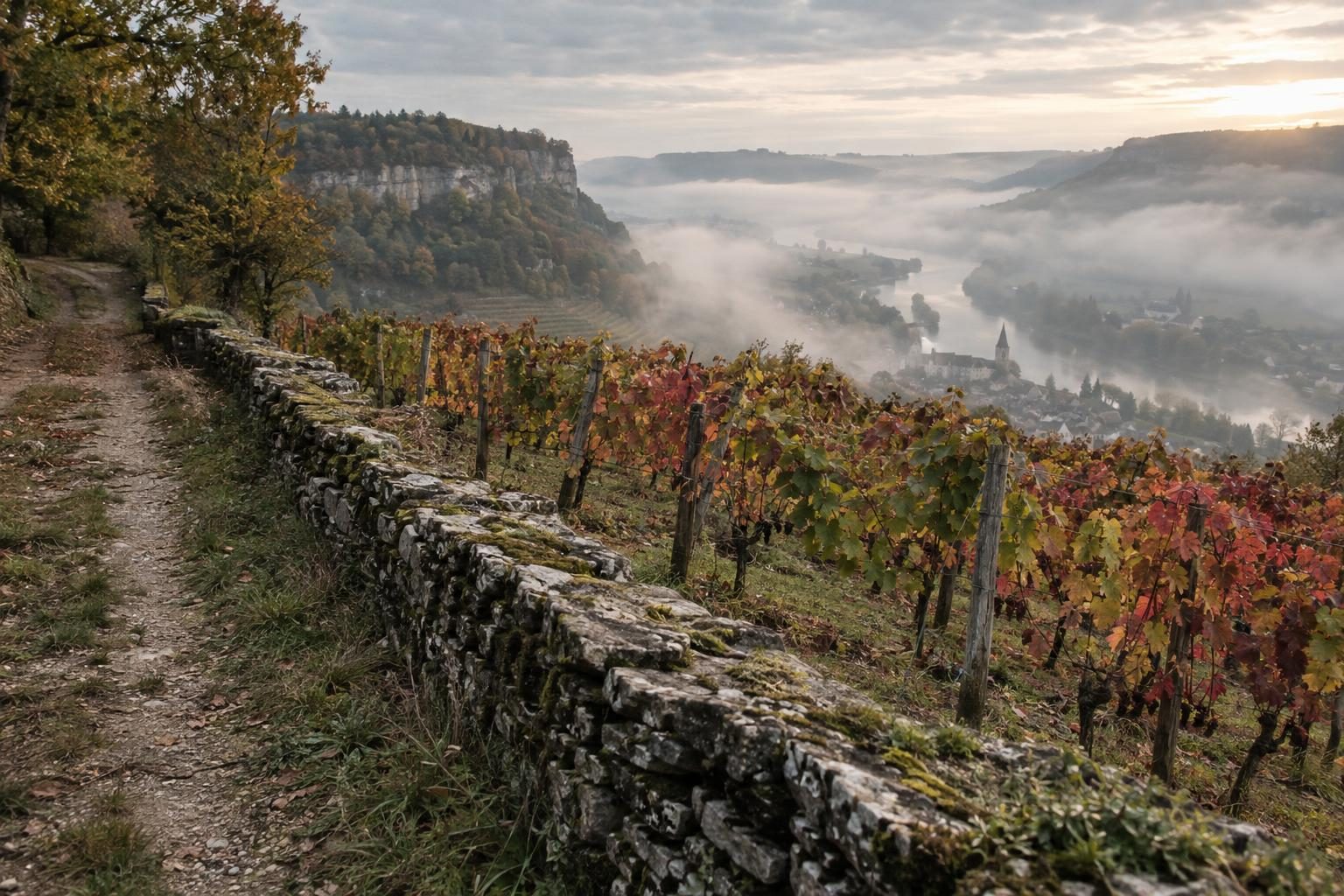
The Hautes-Côtes de Nuits and Beaune are the wine-growing hinterland of the Côte d'Or: vines planted between roughly 290 and 450 metres above sea level, above the escarpment of the famous Côte de Nuits and Côte de Beaune. Recognised in 1961, these two regional appellations cover nearly 1,800 hectares and account for almost one in ten bottles of regional Burgundy. Long known as the "Arrières-Côtes", this high-altitude vineyard now attracts well-known growers and curious visitors looking for fresh, accessible and authentic Burgundy wines.
An appellation born in 1961, a vineyard in the background
To understand the Hautes-Côtes, forget the image of the Route des Grands Crus at the foot of the slope. Here the vineyards sit in valleys cut into the limestone plateau, behind the escarpment. According to the Burgundy wine board (BIVB), vines in the Bourgogne Hautes-Côtes de Nuits appellation grow between 275 and 480 metres, mostly on south, south-east and south-west facing slopes. Aspect matters enormously: at this altitude, a well-oriented slope makes the difference between ripe grapes and tense, green ones.
The legal framework is simple, which is part of its charm. Both appellations, Bourgogne Hautes-Côtes de Nuits and Bourgogne Hautes-Côtes de Beaune, are regional appellations: there are no village-level wines and no premier crus. Sixteen communes lie above the escarpment on the Côte d'Or side, with four more partly included in the upper parts of their land. Reds and rosés are mainly Pinot Noir and whites are Chardonnay; Pinot Blanc is permitted but rare. For the Hautes-Côtes de Nuits, maximum yields are set at 50 hectolitres per hectare for reds and 55 for whites.
This lack of hierarchy is an advantage for visitors: you are not hunting for a prestigious label, you are looking for a grower. The same estate name may sign a grand cru on the slope and a Hautes-Côtes wine in the hills, and that comparison is exactly what makes a visit instructive. The reds are often described as supple and forthright, with fleshy fruit and lively tannins, tighter than in the Côte, while the whites play on freshness and tension.
Altitude and climate: why the Hautes-Côtes are back in favour
For decades, altitude was a handicap: harder ripening, frost risk, vintages when grapes struggled to reach full maturity. Climate change has reshuffled the cards. According to the trade press, warmer temperatures have made these cool, high slopes better suited to balanced ripening, preserving acidity where some lower slopes struggle to keep freshness. It is one of the arguments behind the growing interest in the area.
That interest can be measured in investors. Well-known Côte producers, including Pierre-Yves Colin-Morey, Méo-Camuzet, David Duband, Arlaud and the Gros and Leflaive families, have invested in high-altitude plots. Laurent Delaunay of the maison Édouard Delaunay in Étang-Vergy has launched three single-vineyard cuvées, including one from Les Dames Huguette, just above Nuits-Saint-Georges. The Nuiton-Beaunoy cooperative manages around 185 hectares across both appellations and is moving towards site-specific bottlings.
Growers have also commissioned a soil study from geologist Françoise Vannier, crossing geology, altitude, climate and biodiversity; the area is part of the Natura 2000 network. For visitors, this changes how you read the landscape: you are not looking at a "second-class" zone but at a territory being redefined, where meadows, forests and vines alternate and each valley has its own personality.
Visiting the Hautes-Côtes: villages, growers and good practice
You visit the Hautes-Côtes differently from the Côte: there are few big cellars open all day and more family estates receiving by appointment. Call or message ahead, avoid turning up at lunchtime and keep your schedule flexible. Roads are winding and villages small; a car is almost essential, and if you are tasting, appoint a driver or book a chauffeured excursion rather than improvising.
A successful day means driving up from the Côte through one of the valleys, visiting one or two estates, lunching in a village in the hinterland, then coming back down to finish with a tasting in the Côte de Nuits or Côte de Beaune. This sequence is the best terroir lesson you can get: you taste a Hautes-Côtes in the morning and a village or premier cru in the afternoon, and you understand what altitude changes. To book estate visits without making twenty calls, Winalist lists visits in Burgundy (link in the sources).
On budget, the Hautes-Côtes are an excellent place to buy wine without aiming for the summits: these are regional Burgundy bottles, well below the prices of the Côte's villages and crus. Expect a few tens of euros for the most ambitious cuvées, less for entry-level bottles, and always ask the grower when to drink the bottle: these wines are often best enjoyed younger than those of the great terroirs.
Exploring the vineyards from Dijon
To reach the Hautes-Côtes as easily as the Route des Grands Crus, Oenosuite, in the heart of Dijon, is a practical base: the only apartment labelled Vignobles & Découvertes in Bourgogne-Franche-Comté, a short walk from the Palais des Ducs, with the Route des Grands Crus 20 minutes away. In the evening, after a day in the vines, the Suite Charme & Vin (43 m², 2 to 4 guests) or the Loft d'Artiste (25 m², 2 guests) offer a real return to calm, with the wine escape game, the Jalunia connected cellar and a miniature of Dijon crème de cassis offered on arrival. Booking direct on oenosuite.fr avoids platform commission (+33 7 50 96 09 18).
And if you want to introduce someone to this hinterland without knowing their dates, the Oenosuite gift card (https://oenosuite.fr/carte-cadeau) solves the problem: you choose the amount (€50, 75, 100, 150, 200 or 300, or a custom amount between €25 and €1,000), they choose the dates. Valid for 12 months on any Oenosuite stay or experience, it can carry a name and a personalised message.
Sources & references
Plan your trip to Burgundy
Book your wine accommodation in Dijon
Luxury wine suite with complimentary blackcurrant liqueur, Jalunia connected cellar and wine tourism experiences.
Book now