Phylloxera in Burgundy: how an aphid almost destroyed it all
Simon Stoll
Oenosuite Founder
Phylloxera: the worst wine crisis in Burgundian history
Grape phylloxera (Daktulosphaira vitifoliae) is a microscopic aphid native to the eastern United States, accidentally introduced into France in 1863, that feeds on the root sap of Vitis vinifera and kills European vines. In Burgundy, its presence was officially recognised in Saône-et-Loire in 1875 in the village of Mancey, near Tournus, before relentlessly moving north. The crisis that followed, spanning 1863 to the end of the century, remains the single greatest trauma in the history of French viticulture.
To grasp the scale of the disaster: between 1875 and 1900, France lost more than half of its vineyard, which shrank from roughly 2.5 million hectares to 1.7 million hectares. National production, which had peaked at 85 million hectolitres in 1875, collapsed to 25 million hectolitres within a few years. Burgundy, then at the height of its commercial power, saw its more modest appellations recede and some, such as Tonnerre and Épineuil in the Yonne, were almost entirely wiped out.
1863-1868: identifying the culprit in the Gard
Phylloxera was first observed in France around 1863 on the Pujaut plateau, near Roquemaure in the Gard. For five years, no one understood why entire plots withered and died for no apparent reason. It was Jules-Émile Planchon, a botanist in Montpellier, who identified the insect in 1868, alongside Félix Sahut and Gaston Bazille, president of the Hérault agricultural society. Planchon initially named it Rhizaphis vastatrix (« the root devastator ») before it was reclassified in the genus Phylloxera.
The insect spread by oil-stain pattern: it began by yellowing a few vines, which died within two or three years, then expanded in concentric circles around the original outbreak. Roots showed characteristic nodosities and were eventually digested. No European Vitis vinifera variety could resist, Pinot Noir, Chardonnay, Aligoté and Gamay were all doomed.
1875-1887: Burgundy attacked from south to north
The geographical progression of phylloxera through Burgundy is now well documented. After Beaujolais in 1874, the insect reached Saône-et-Loire in 1875. In the Côte-d'Or, the first stains were officially recorded on 17 July 1878 at Meursault by the phylloxera inspector (with actual contamination dating from 1876), then on 23 July 1878 in the Dijon botanical garden. The more northerly Chablis vineyard was hit later: it was in 1886-1887 that phylloxera decimated the vineyards of the Yonne, already weakened by other fungal diseases.
Faced with disaster, Burgundian growers tried everything. Carbon disulphide chemical treatments, developed by agronomist Paul Thénard, were injected into the soil using a « pal injecteur » resembling a giant syringe: the method was slow, costly and did not reach deep roots. Winter submersion (flooding plots from November to February) was effective but inapplicable on the steep slopes of the Côte d'Or. No chemical or mechanical solution durably saved the vineyard.
Grafting onto American rootstock: the rescue
The solution would paradoxically come from the homeland of the pest. From the 1870s, French botanists understood that American vines (Vitis riparia, Vitis rupestris, Vitis berlandieri) were naturally resistant to the aphid. The idea was radical: graft every European stock onto an American rootstock, combining American root resistance with French varietal quality. A viticultural mission to America in 1887, funded by the Ministry of Agriculture, brought back an exhaustive inventory of usable species, notably Vitis berlandieri, particularly suited to the chalky soils typical of Burgundy.
Grafting was officially authorised in Burgundy from 1887. The reconstitution of the vineyard then spread roughly from 1880 to 1900, supported by tax incentives and the formation of cooperatives. Today, virtually all Burgundian vines grow on American rootstocks: the most widely used worldwide are Vitis berlandieri hybrids such as SO4 and 110R. Without this graft, the 31,679 hectares that Burgundy counted in 2024 would simply not exist.
Romanée-Conti 1945: the last ungrafted wine
One emblematic case illustrates the stubborn resistance of certain estates to grafting: the Domaine de la Romanée-Conti. On its mythical 1.8-hectare Grand Cru parcel, ungrafted vines continued to produce until their vigour collapsed. The 1945 vintage was thus the last Romanée-Conti made from pre-phylloxera vines, vinified when yields had fallen to just 2.5 hL/ha, about 600 bottles only. The old vines were uprooted in autumn 1945, the parcel left fallow, replanted in 1947, and no vintage was produced before 1952.
This near-disappearance partly explains why bottles of Romanée-Conti 1945 are now among the most expensive wines ever sold at auction, regularly exceeding half a million euros. They are the last liquid witnesses of a vanished Burgundian viticulture.
Visiting Burgundy through the lens of phylloxera
For wine history enthusiasts, several places allow you to grasp the phylloxera crisis concretely. The Cité des Climats et vins de Bourgogne, opened in Beaune, Chablis and Mâcon in 2023, devotes several rooms to the post-1880 reconstruction of the vineyard. The Musée du Vin de Bourgogne, housed in the former Hôtel des Ducs in Beaune, displays old tools including carbon disulphide injectors. In Meursault, the tourist office occasionally runs the walking tour « Chronique d'une catastrophe annoncée », retracing the arrival of phylloxera in July 1878.
Practical tip: for a wine tourism stay combining history and tasting, oenosuite.fr offers accommodation in the Côte d'Or and in Meursault itself, ideally located to visit the Cité des Climats in Beaune in the morning and taste with growers in the afternoon. Ask to taste wines from vines over 60 years old: they are direct heirs of the slow post-phylloxera reconstruction.
What the crisis permanently changed
Beyond the technical rescue, phylloxera structurally transformed Burgundian viticulture. It accelerated the geographic concentration on the best climats: lowland and Hautes-Côtes vineyards, unprofitable to replant, retreated in favour of the most prestigious slopes of the Côte de Nuits and Côte de Beaune. It hastened the disappearance of hundreds of old grape varieties in favour of the Pinot Noir/Chardonnay duo, deemed easier to graft profitably. It finally imposed planting in straight rows, better suited to mechanical work and grafting.
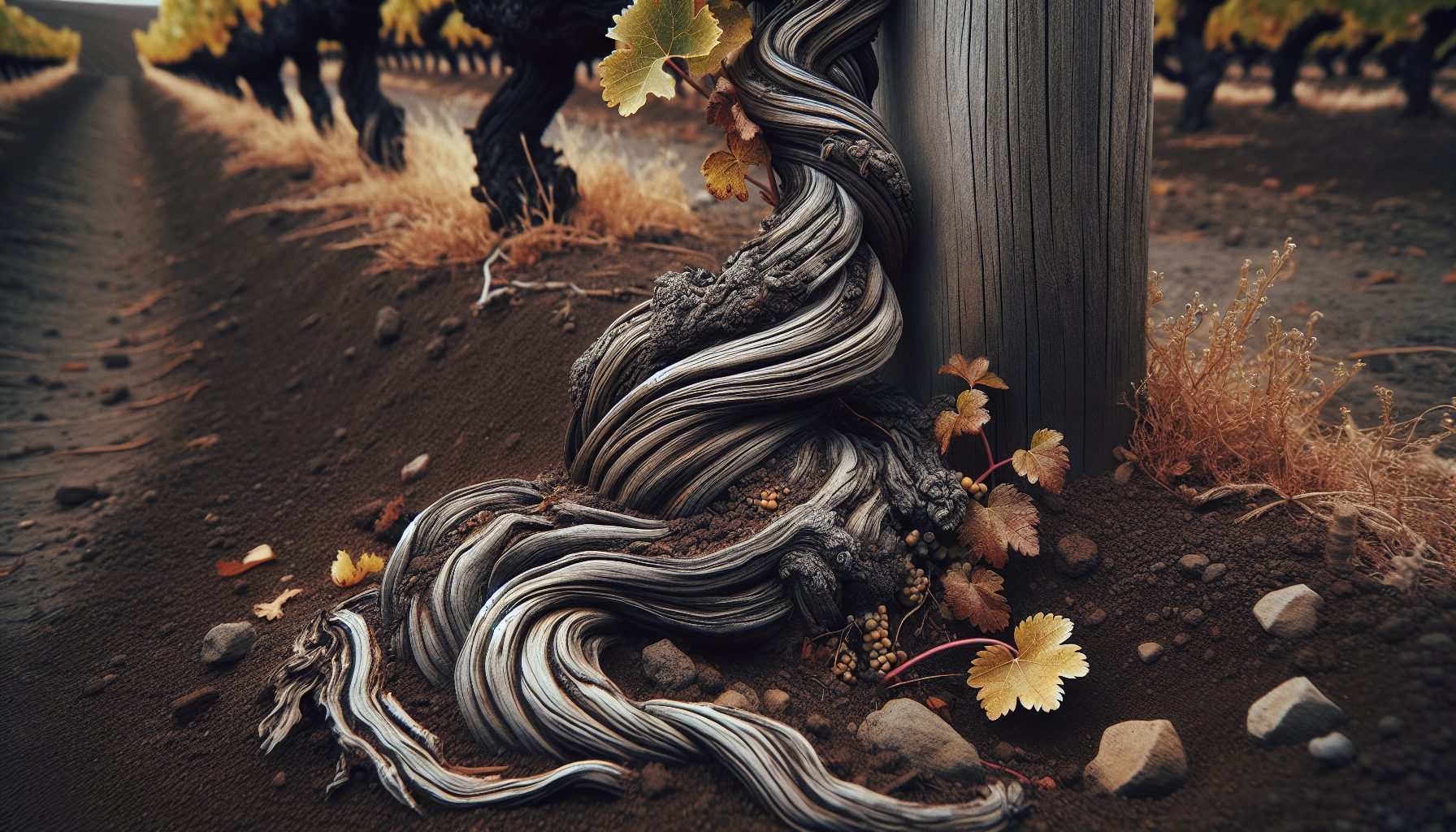
When you walk today through the perfectly aligned rows of Gevrey-Chambertin, Pommard or Chablis, remember that every single vine bears a graft a few centimetres above the soil: it is the physical scar of the greatest wine crisis in history. To explore this rebuilt Burgundy, oenosuite.fr remains the ideal base, just a few kilometres from Meursault, the official birthplace of the Côte-d'Or disaster.
Sources & references
- Phylloxera, Wikipedia
- How phylloxera changed Burgundy viticulture, UNESCO Chair Wine and Culture
- 1887: a viticultural mission to America to save the French vineyard, INRAE
- Vineyard of Burgundy, Wikipedia
- Romanée-Conti, Wikipedia
- Wine walk in Meursault: chronicle of a foretold disaster, Bourgogne Tourisme
- Phylloxera, French Vine and Wine Institute
Plan your trip to Burgundy
Book your wine accommodation in Dijon
Luxury wine suite with complimentary blackcurrant liqueur, Jalunia connected cellar and wine tourism experiences.
Book now