The Mâconnais: a guide to wine tourism in southern Burgundy
Simon Stoll
Oenosuite Founder
The Mâconnais: Burgundy's sun-soaked south
The Mâconnais is the southernmost subregion of the Burgundy vineyard, covering approximately 6,797 hectares between Saint-Gengoux-le-National to the north (the Côte Chalonnaise border) and Saint-Amour to the south (the gateway to Beaujolais). With 29 appellations, around 900 winegrowers and 6% of Burgundy's vineyard surface, the Mâconnais is first defined by the overwhelming dominance of Chardonnay, which accounts for nearly 80% of plantings.
Why has the Mâconnais long been overlooked compared with the Côte d'Or? Because it was historically seen as the « lesser » Burgundy, dedicated to easy-drinking whites and unremarkable Mâcon-Villages. That image is now outdated. Since the recognition of 22 Pouilly-Fuissé Premier Cru climats in 2020 and the 2023 opening of the Cité des Climats et vins de Bourgogne in Mâcon, the region plays a leading role in the world Chardonnay map.
Pouilly-Fuissé: the 2020 Premier Cru revolution
The most important wine event in the Mâconnais in recent years was the official recognition, by INAO decree in September 2020, of 22 climats classified as Premier Cru within the Pouilly-Fuissé AOC. That's 194 hectares, about 24% of the appellation's total surface, spread across the four historic communes: Chaintré, Fuissé, Solutré-Pouilly and Vergisson. The 2020 vintage was the very first to be vinified and sold as Premier Cru, with a maximum authorised yield of 56 hL/ha.
It is a quiet revolution: Pouilly-Fuissé becomes the first Mâconnais appellation to be granted Premier Cru status, when no appellation in the area had previously enjoyed it. Among the classified climats, several names now stand out: Aux Quarts, Le Clos, Les Ménétrières, Aux Bouthières, La Maréchaude, Sur la Roche. They can be tasted at reference producers such as Château de Beauregard, Domaine Saumaize-Michelin and Domaine Robert-Denogent.
Saint-Véran and Viré-Clessé: the diversity of southern whites
The Saint-Véran AOC, created on 6 January 1971, covers about 696 hectares spread over 8 communes: Davayé, Prissé and Solutré-Pouilly to the north; Chânes, Chasselas, Leynes, Saint-Amour and Saint-Vérand to the south. A geographical curiosity, the appellation is split in two by the Pouilly-Fuissé area. Made exclusively from Chardonnay, Saint-Véran wines tend to deliver a tighter finish and a more exuberant fruit than their Pouilly-Fuissé neighbours, often at prices 30 to 40% lower.
Viré-Clessé, the youngest Mâconnais appellation, was recognised by decree on 26 February 1999 and covers around 390 hectares in the communes of Viré, Clessé, Laizé and Montbellet. Like the other northern Mâconnais villages, it is exclusively planted with Chardonnay on clay-limestone soils. Viré-Clessé wines are renowned for their aromatic richness and ability to express subtle honeyed notes, sometimes channelled into « late » cuvées without excess sugar.
The Grand Site de France Solutré-Pouilly-Vergisson
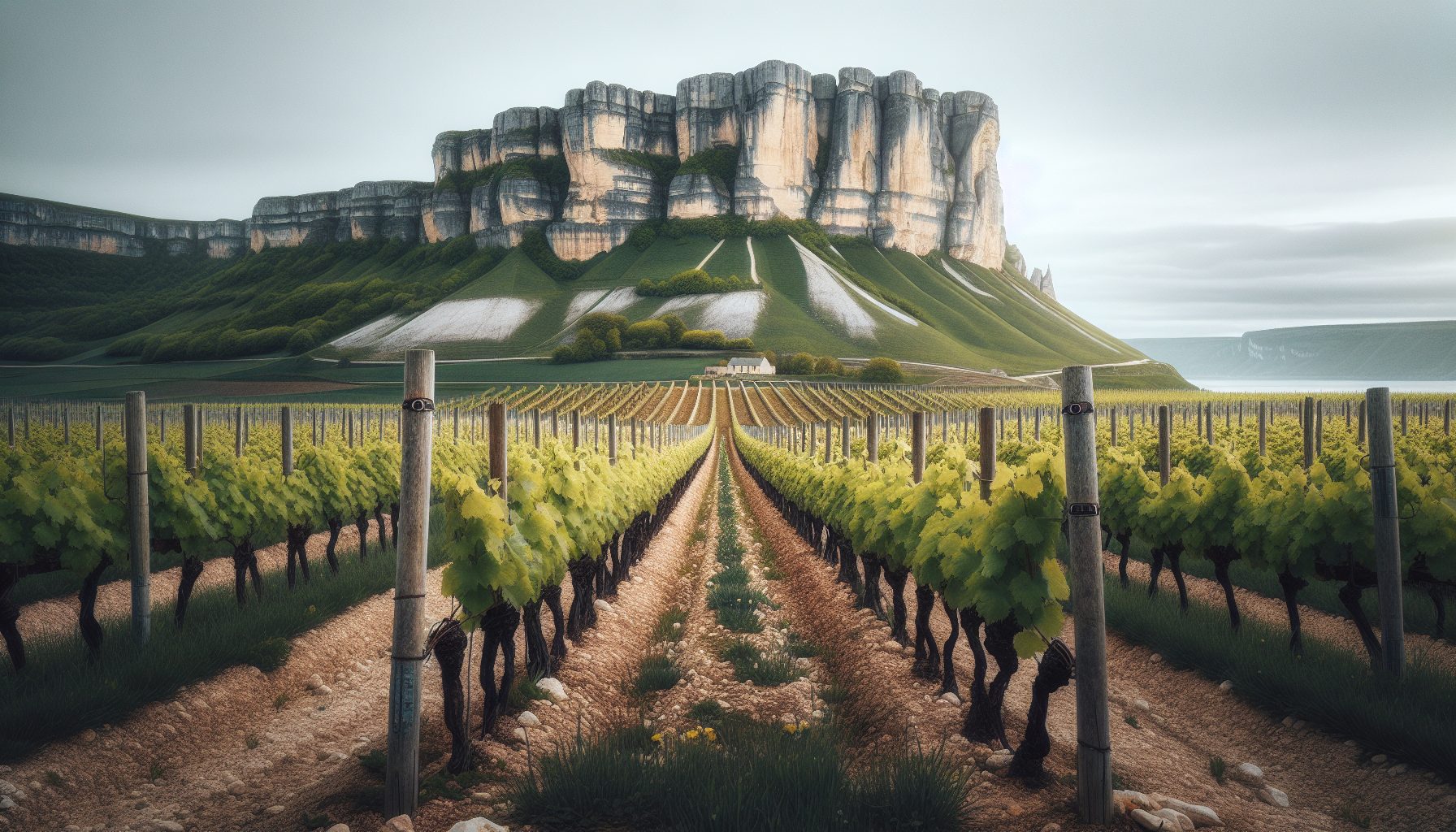
Visiting the Mâconnais without climbing the Roche de Solutré would be a wine-tourism faux pas. This limestone escarpment rises to 493 metres above the Pouilly-Fuissé vineyards and forms, with the Roche de Vergisson (487 metres), a unique geological pair in Burgundy. The site is protected as a Grand Site de France and falls within the European Natura 2000 network; it covers the communes of Solutré-Pouilly, Vergisson, Davayé, Prissé, Fuissé and Charnay-lès-Mâcon.
The ascent of the Roche de Solutré is on foot, on a 4-kilometre loop with about 100 metres of elevation gain, taking roughly one hour return, accessible to anyone with average mobility. At the foot of the site, the Solutré Prehistory Museum displays collections from an archaeological deposit occupied for more than 50,000 years, one of the richest Upper Palaeolithic sites in Europe. The Maison du Grand Site in Solutré offers a welcome point, a shop and a starting hub for hikes.
Cluny and the Cité des Climats: heritage meets wine
About 30 kilometres north-west of Mâcon, the Abbey of Cluny, founded in 910, was at its peak around 1100 the spiritual centre of more than 1,500 monasteries housing around 10,000 monks across Europe. Its abbey church, the Maior Ecclesia, was the largest church in Christendom before the construction of St Peter's Basilica in Rome. Largely demolished after the French Revolution, it is now visited with the help of augmented-reality reconstructions and remains an essential cultural stop for any Mâconnais stay.
In Mâcon itself, the Cité des Climats et vins de Bourgogne opened on 3 May 2023, completing the wine-tourism experience. Located at 520 avenue Maréchal de Lattre de Tassigny, it offers an immersive route dedicated to the vineyards of southern Burgundy, tasting workshops, oenology classes and a seasonal events programme. Together with its sister sites in Beaune and Chablis, it forms a unique three-part educational ensemble to grasp the Burgundian concept of climat.
The Mâconnais by bike: the Voie Verte
A regional gem: between Mâcon and Cluny, the Voie Verte unrolls 21 kilometres of former railway converted into a cycle path, crossing the Lamartinian Valley, the Roches of Solutré and Vergisson, and several Mâconnais villages. Connected further north to the Givry-Cluny Voie Verte, it forms a continuous 64-kilometre car-free itinerary punctuated by service stops at Givry, Buxy, Saint-Gengoux-le-National, Cormatin and Cluny.
A detour through Cormatin is highly recommended: its 17th-century château houses, among other things, a bicycle museum with more than 160 historic bikes. Together with the Romanesque churches of the region, it is one of the most memorable heritage stops on a southern Burgundy cycling trip.
Why Gamay still grows alongside Pinot Noir in the Mâconnais
A historical detail often overlooked: while Gamay is today marginal across the rest of Burgundy, this is due to Philippe le Hardi's 1395 ordinance, which banned its cultivation in favour of Pinot Noir within the Duchy of Burgundy. The county of Mâcon, however, was not part of the Duchy at the time, and the ordinance never applied there. As a result, Gamay survived and is still produced today in Mâcon rouge, alongside Pinot Noir. A peculiarity that brings the Mâconnais closer to neighbouring Beaujolais as much as to the Côte d'Or.
Planning your stay in the Mâconnais
Mâcon is accessible by TGV from Paris in 1h45 (Mâcon Loché-TGV station), making it a strong entry point. For travellers based in the Côte d'Or, count on around 1h30 driving time from Beaune or 1h50 from Dijon, oenosuite.fr in Dijon can serve as a base camp combining the Côte de Nuits, Côte de Beaune and a day trip into the Mâconnais. Book domaine visits at least a week ahead: in Pouilly-Fuissé as well as in lesser-known villages, the welcome is often led by the winemaker in person, in very small groups.
Best times to visit: April-May (vines in growth, still-cool air) or September-October (harvest and golden autumn light). Bottle budget: 12 to 25 € for a solid Mâcon-Villages or Saint-Véran, 25 to 60 € for a Pouilly-Fuissé Premier Cru. And, above all, do not leave the region without climbing the Roche de Solutré at sunrise, the panorama over the vineyards is worth a thousand tastings.
Sources & references
- The Mâconnais Vineyard, Mâcon Tourism
- Pouilly-Fuissé Premier Cru, iDealwine
- Pouilly-Fuissé Premier Cru designation, Decanter
- Saint-Véran AOC, Wikipedia
- Viré-Clessé, Wikipedia
- Roche de Solutré, Mâcon Tourism
- Cluny Abbey, official site
- Cité des Climats et vins de Bourgogne, Mâcon
- Voie Verte du Mâconnais, Mâcon Tourism
- Ducal Ordinance, Philippe le Hardi
Plan your trip to Burgundy
Book your wine accommodation in Dijon
Luxury wine suite with complimentary blackcurrant liqueur, Jalunia connected cellar and wine tourism experiences.
Book now