Côte Chalonnaise: a guide to Burgundy's 5 lesser-known appellations
Simon Stoll
Oenosuite Founder
The Côte Chalonnaise: Burgundy's intimate side
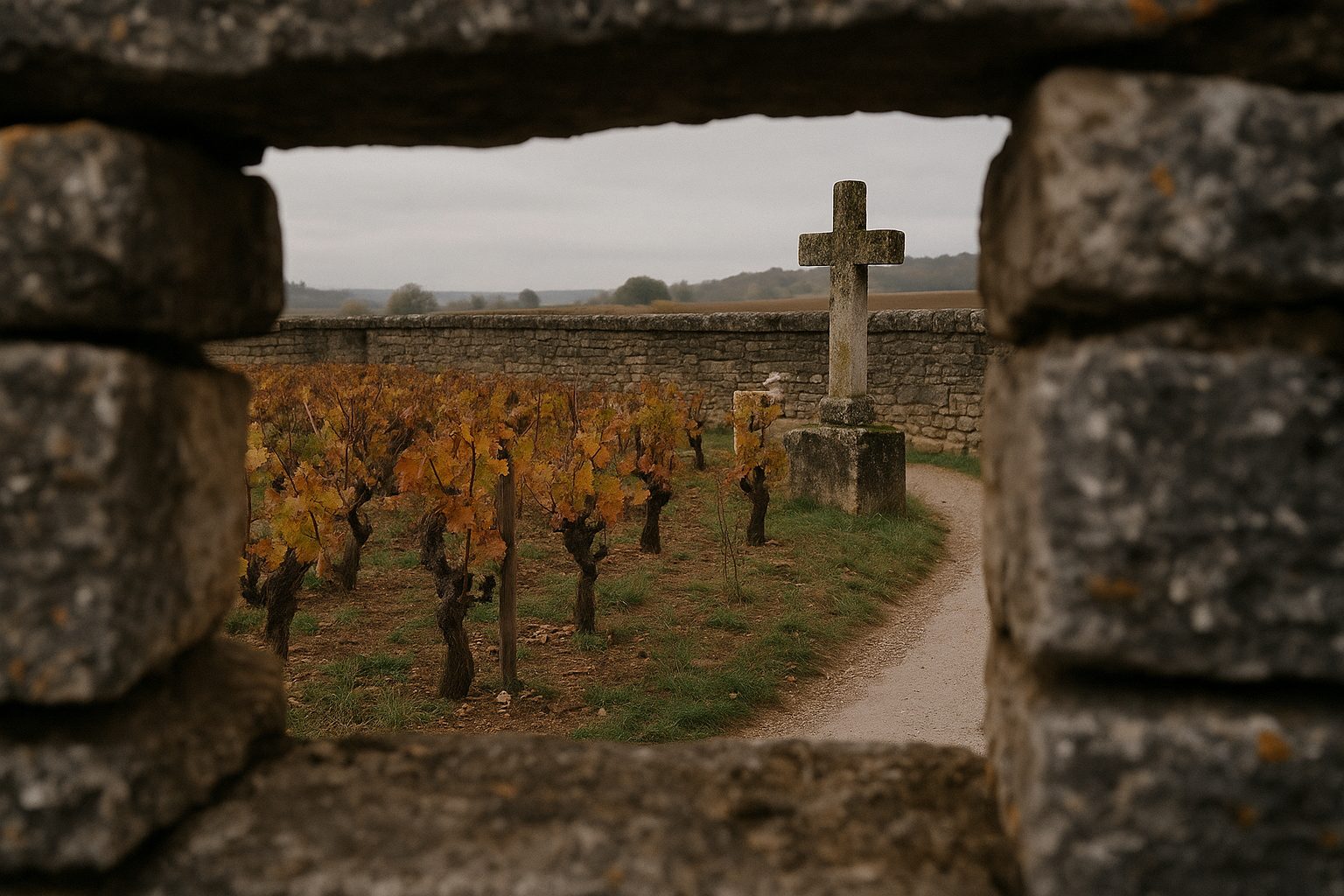
The Côte Chalonnaise is a 4,475-hectare vineyard located in the Saône-et-Loire department, extending the Côte de Beaune southward between Chagny and Saint-Vallerin. It comprises five communal appellations, from north to south: Bouzeron, Rully, Mercurey, Givry and Montagny, plus the regional Bourgogne Côte Chalonnaise appellation. The region counts more than 150 climats classified as Premier Cru, but no Grand Cru. This lack of institutional prestige is precisely what makes it the most accessible playground in serious Burgundy.
Just 30 minutes' drive from Beaune and 20 minutes from Chalon-sur-Saône, the Côte Chalonnaise remains one of the least-visited sectors of the Burgundy vineyard. No tour buses, few rows of boutiques, family-run estates that still take the time to talk with their visitors. For travellers seeking exceptional value for money and a less industrialised welcome than on the Côte d'Or, it's a near-mandatory destination.
Bouzeron: France's only Aligoté village AOC
The smallest of the five communal appellations with about 60 hectares, Bouzeron is the only village-level AOC in France dedicated exclusively to Aligoté Doré (as opposed to the lesser Aligoté Vert). The Bouzeron AOC was created by decree on 17 February 1998, recognised back in September 1997, at the end of a long campaign led notably by Aubert and Pamela de Villaine to obtain recognition for the local Aligoté grown on limestone soils.
Domaine A&P de Villaine, founded in 1973 by the man who co-directed the Domaine de la Romanée-Conti from 1974 to 2021, remains the appellation's absolute reference. Now run by Pierre de Benoist, Aubert's nephew, since 2001, the estate produces age-worthy, elegant, taut Aligoté that has definitively buried the cliché of the « kir grape ». Expect to pay 20 to 35 € per bottle, a tiny investment to discover a uniquely Burgundian white.
Rully: historic capital of Crémant de Bourgogne
With its 340 hectares spread over the communes of Rully and Chagny, the Rully appellation mostly produces white wine from Chardonnay (about 65% of production), complemented by Pinot Noir reds. The AOC was recognised by decree on 13 June 1939 and counts 23 climats classified as Premier Cru, 21 in Rully, 2 in Chagny. The best lieux-dits, such as Grésigny, Vauvry or Cloux, deliver vibrant, chiselled whites with a chalky minerality.
Rully is above all one of the oldest and most important production centres for Crémant de Bourgogne, a tradition dating back to the early 19th century, with over 15,000 hectolitres made each year. Must-visit estates: Jacqueson, Ninot, André Delorme (one of the oldest Crémant houses), Vincent Dureuil-Janthial, and Olivier Leflaive, who also produces a few notable cuvées here.
Mercurey: the heavyweight of the Chalonnais
With around 650 hectares, Mercurey is the largest communal appellation in the Chalonnais, spread over the communes of Mercurey and Saint-Martin-sous-Montaigu. Red dominates massively (575 ha of Pinot Noir versus 75 ha of Chardonnay), and the appellation counts 32 climats classified as Premier Cru among its 85 named climats. In 2023, 472 hectares were in village appellation and 163 hectares in Premier Cru.
It is Domaine Faiveley that truly raised Mercurey to international stature, building over the 20th century one of the largest family-owned estates in Burgundy. Mercurey reds are structured, fruity, capable of ageing (8 to 15 years for Premier Cru in good vintages) and serve as one of the most credible entry points to quality Burgundian Pinot Noir, often half the price of a comparable Gevrey-Chambertin.
Givry: Henri IV's favourite wine
The Givry appellation, recognised by the INAO in 1946, covers 265 hectares across the communes of Givry, Jambles and Dracy-le-Fort, 12 kilometres west of Chalon-sur-Saône. With 38 climats classified as Premier Cru spread over 110 hectares, it is proportionally the most densely classified appellation in the Chalonnais. Red represents about two-thirds of production, white the remaining third.
Givry has enjoyed a strong reputation since the Middle Ages, Charles VII drank it as early as 1390, but it was above all Henri IV (1553-1610) who made it his favourite wine, according to chronicler Claude Courtépée. Today, the Joblot, Ragot, Thénard, François Lumpp and Laurent Mouton estates maintain this tradition of excellence with supple yet structured reds, and surprisingly precise whites on the marl-rich terroirs.
Montagny: 100% Chardonnay, 100% Premier Cru potential
With around 310 hectares planted exclusively to Chardonnay on Jurassic limestone soils, the Montagny appellation (AOC created in 1936) is the southernmost in the Côte Chalonnaise. It extends across the communes of Montagny-lès-Buxy, Buxy, Saint-Vallerin and Jully-lès-Buxy, and counts an exceptional 49 climats classified as Premier Cru, a proportional record across the whole of Burgundy.
Cited by Ernest Hemingway in A Moveable Feast (published posthumously in 1964, written in the 1920s), Montagny wines are vibrant, mineral whites with a saline finish. At prices often half those of Meursault or Puligny-Montrachet, they offer one of the best value propositions in Burgundian Chardonnay, particularly in well-balanced vintages such as 2020 and 2022.
Visiting the Côte Chalonnaise: practical tips
The best base for exploring the Côte Chalonnaise is Dijon or its surroundings: from Dijon, you're 45 minutes from Rully, and you can combine the Côte de Nuits in the morning, the Côte de Beaune at midday and the Chalonnais in the afternoon, all in one day. Book your visits at least a week in advance: family estates in the Chalonnais welcome very small groups, often hosted by the winemaker personally, and some only receive by strict appointment.
For a wine-tourism stay combining the Grands Crus of the Côte d'Or with confidential discoveries in the Chalonnais, oenosuite.fr offers charming accommodations in Dijon, ideally located to explore the entire Burgundy vineyard. Expect a bottle budget of 15 to 30 € for a Mercurey village or a Montagny Premier Cru, almost half the price of an equivalent Côte de Beaune. Best time to visit: April-May (before bud break) or September-October (harvest).
Sources & references
Plan your trip to Burgundy
Book your wine accommodation in Dijon
Luxury wine suite with complimentary blackcurrant liqueur, Jalunia connected cellar and wine tourism experiences.
Book now