Burgundy Coopers: Who Makes the Barrels of the Grand Crus
Simon Stoll
Oenosuite Founder
A Burgundy barrel, the pièce bourguignonne, holds 228 litres, while a Bordeaux barrique holds 225. Three litres is not much, but it is enough to make the point: an oak barrel is not a standardised container, it is a regional object, built a few kilometres from the vines it will serve. Burgundy's coopers nonetheless remain the great invisibles of the region. People quote the climats, the growers, the vintages; almost never the workshops along the Côte where the barrels that raise the grand crus are born, nor the forestry chain that feeds them.
That chain is far longer than most people imagine, and it starts a long way from the cellars. Between a standing oak in the forest and a barrel delivered to a grower in Meursault or Gevrey-Chambertin, at least three years pass, and a forester, a stave-splitter, a seasoner and a cooper each take their turn. Every one of those trades works a scarce material that is slow to replace and expensive to buy. That explains both the price of a new barrel and the almost obsessive care the best estates put into choosing their cooperage, sometimes for decades.
From oak tree to stave: a scarce raw material
It all begins in a small number of French forests: Cîteaux in the Côte-d'Or, Bertranges in the Nièvre, Tronçais in the Allier, Bercé in the Sarthe, Darney in the Vosges. The Office national des forêts sells roughly 40% of the volume of oak harvested in France, and more than half of the top-quality timber; its sales set the reference price for the whole market. For logs destined for cooperage, the order of magnitude sits at around 400 to 800 € per cubic metre, with wide variation from one lot to another depending on quality.
Oak of so-called stave quality must be pale, homogeneous and fine-grained, with a straight trunk free of knots over several metres. At Tronçais, the fine grain of the sessile oaks is the product of several centuries of patient forestry managed by the ONF, on an oak wood now classified as a Forêt d'Exception. The stave-splitter does not saw the wood: he splits it along the grain, following the medullary rays, the only way to obtain genuinely watertight staves. Yields are low, with a large share of the log ending up as by-products, which weighs directly on the final price.
Twenty-four to thirty-six months of open-air seasoning
The staves are then stacked outdoors and seasoned in the open air for 24 to 36 months, exposed to rain, frost and sun. This delay is not a cooper's affectation: leaching by rain, oxidation and enzymatic degradation remove a fraction of the harshest soluble tannins and noticeably soften the wood. Cooperages supplying the grand crus readily claim the longest seasoning times, precisely so that the barrel does not mark the wine and leaves it its natural tension. Staves dried too quickly give a more aggressive wood, on the nose as much as on the palate.
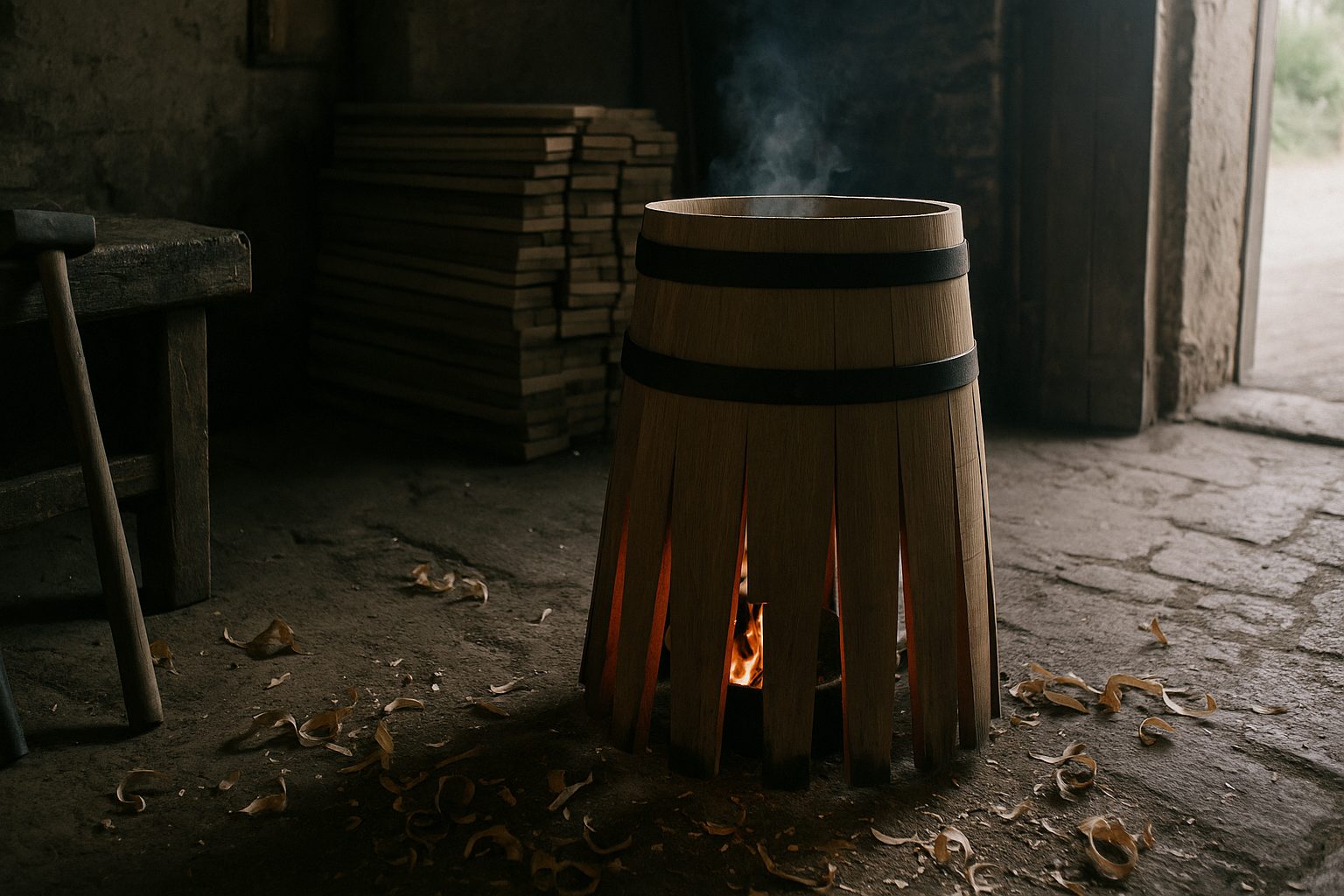
Then comes the workshop. The staves are raised and drawn together inside iron truss hoops, and the barrel is bent over a brazier: that small wood fire, lit beneath the still-open shell, softens the wood and simultaneously provides the toast. The step is decisive, because it changes the chemical composition of the oak, with Maillard reactions producing volatile compounds carrying grilled and caramel notes. A finished pièce bourguignonne stands around 88 cm tall, measures 73 cm across the bilge, weighs about fifty kilos and uses staves 27 to 30 mm thick.
What a Burgundy barrel costs
Prices vary with the cooperage, the origin of the wood, the length of seasoning and the type of toast, but expect roughly 1,000 to 1,700 € for a new 228-litre Burgundy barrel in French oak. Spread across the three hundred or so bottles a barrel will fill, a new 1,200 € cask represents about four euros per bottle in its first year: trivial on a grand cru, very heavy on a regional appellation. That is also why most estates blend new barrels with one-, two- and three-wine casks rather than replacing everything every year.
The houses that supply the Côte
Meursault is home to Tonnellerie Damy, founded in 1946 by Roger Damy in Nantoux, then taken over in 1970 by his son Jacques — named Meilleur Ouvrier de France in 1976 — who bought the Meyer workshop in Meursault. The house now produces in the region of 20,000 barrels a year in a 6,000 m² workshop, with around 35 coopers, two of them Meilleurs Ouvriers de France. At Ladoix-Serrigny, Tonnellerie Cadus, founded in 1996, turns out some 18,000 to 20,000 barrels a year with 39 staff including 27 coopers, and recently launched a barrel named « 47.07 ».
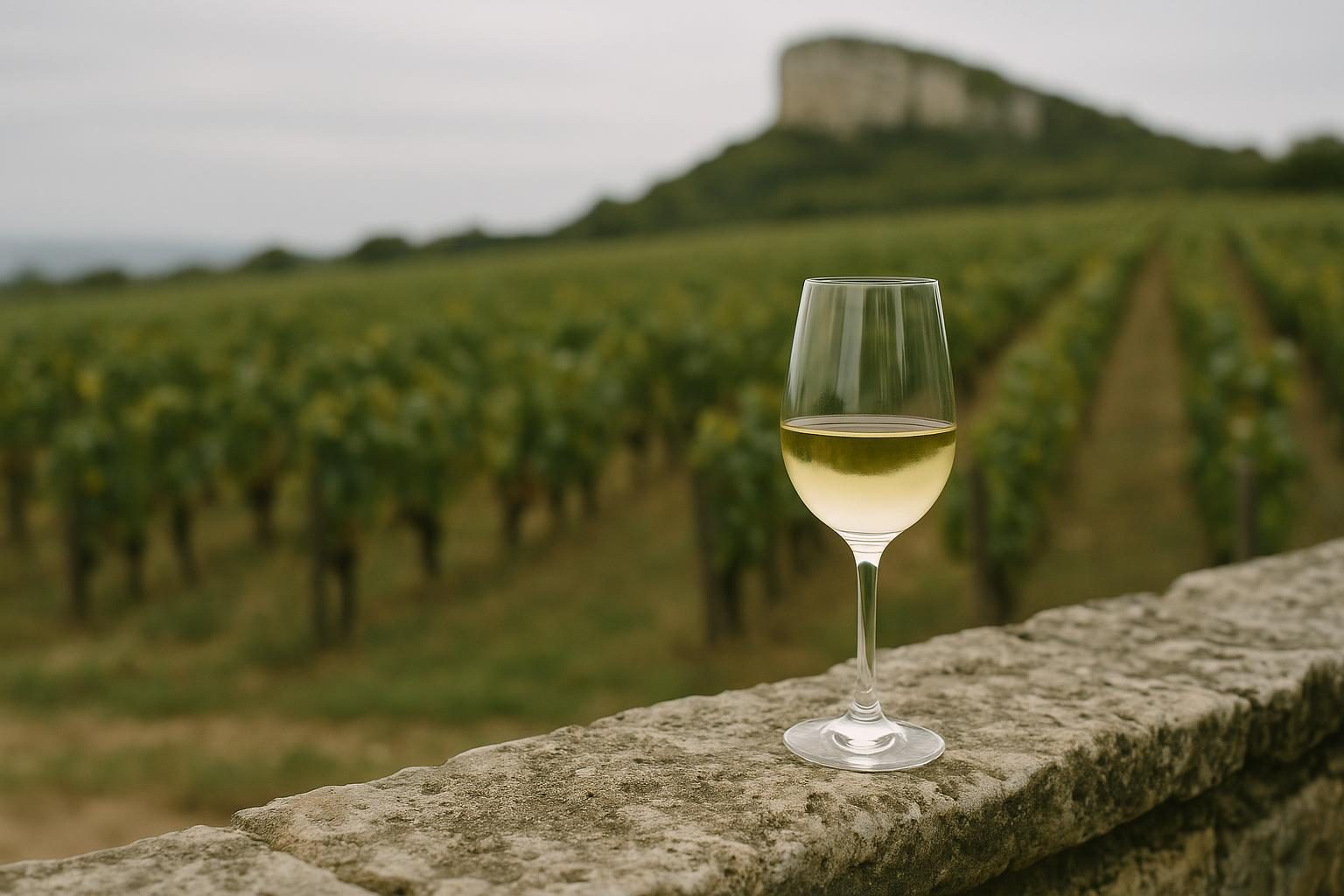
Further west, Saint-Romain hosts Tonnellerie François Frères, active since 1910, now one of the world leaders in the sector and part of the TFF group. Tonnellerie Rousseau, established in Burgundy since 1954, left its historic Couchey site in January 2024 for Gevrey-Chambertin, while Chassin Père et Fils makes barrels of 225 to 500 litres in Beaune. Founded in the 1960s and based in Meursault, the GIE Les Tonnelleries de Bourgogne exports its members' barrels to more than forty-five countries around the world.
Watching a cooper at work — and tasting the result
The most accessible experience is booked at Vignoles, five minutes from Beaune: Art du Tonneau runs a hands-on workshop where you assemble a barrel yourself, in three stages — the history of cooperage and types of wood, assembly, then toasting and heading. Allow an hour and a half to two hours; booking is compulsory and places are limited. The shop is open Monday to Friday, 9am to 12pm and 2pm to 5pm, with workshops scheduled on Wednesdays at 2pm and Sundays at 10am. The cooperages themselves, by contrast, are not tourist sites: they are working businesses, with no ticket desk and no gift shop, and you must contact them before hoping to see anything at all. Saint-Romain, with its roughly two hundred and fifty inhabitants and two cooperages, is still a worthwhile detour on the loop west of Beaune, if only for the smell of toasted oak that sometimes drifts through the village. Plan it on a weekday, early in the day, and without expecting a guided tour with commentary and a tasting at the end.
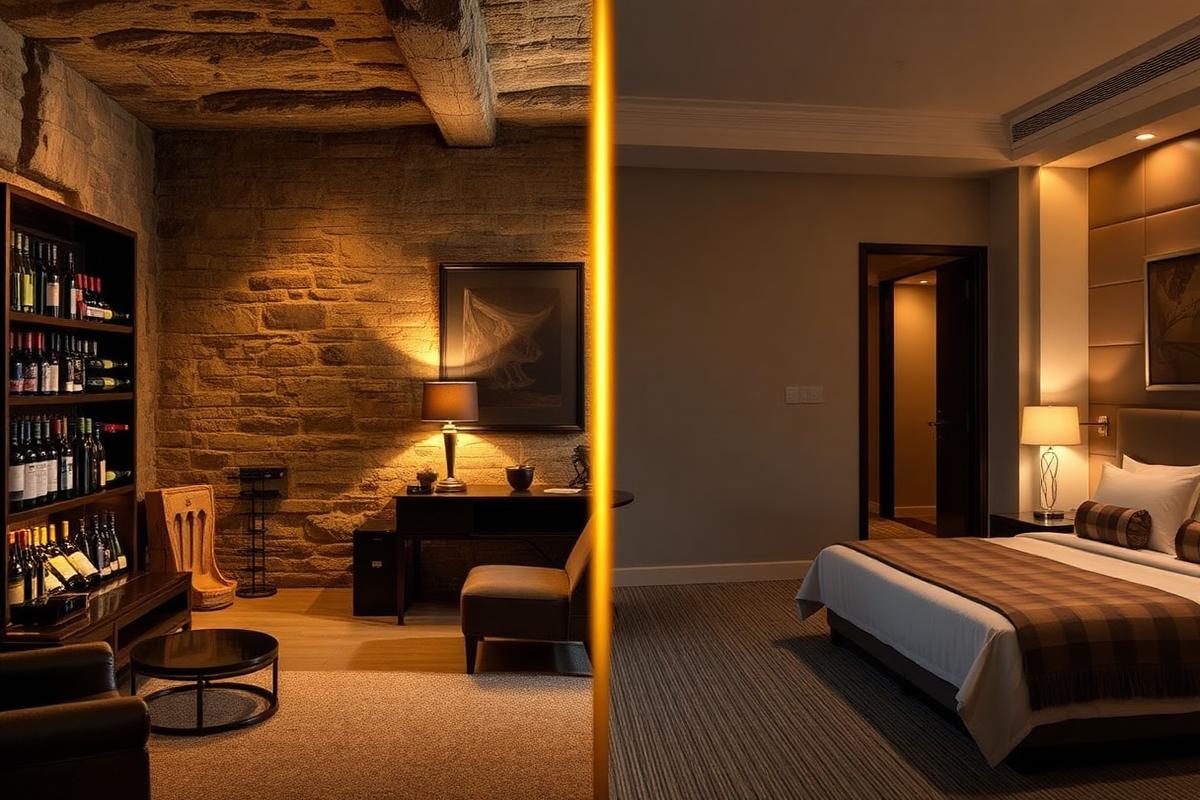
That leaves the best exercise for understanding what a barrel actually contributes: tasting blind two wines from the same estate, one raised in new oak, the other not. Deprived of the label, you stop confirming what you think you already know and finally identify what the wood really signs — vanilla, toast, a rounder texture through the mid-palate. That is exactly what the Oenosuite in Dijon (oenosuite.fr) offers, with its blind tasting, tasting socks provided, and its Jalunia connected cellar giving self-service access to Burgundy wines from the suite itself.
To extend the trip, the Route des Grands Crus is twenty minutes away and the workshops at Vignoles and Saint-Romain less than an hour: the Oenosuite, the only apartment awarded the Vignobles & Découvertes label in Bourgogne-Franche-Comté and rated 4.94/5 on Airbnb, makes a practical base for that kind of itinerary, with direct booking on oenosuite.fr remaining the best rate. And if you want to give that weekend without knowing when the other person is free, the Oenosuite gift card solves it: amounts from 50 to 300 €, a free amount between 25 and 1,000 €, a personalised message, twelve months' validity and a fourteen-day right of withdrawal.
Sources & references
Plan your trip to Burgundy
Book your wine accommodation in Dijon
Luxury wine suite with complimentary blackcurrant liqueur, Jalunia connected cellar and wine tourism experiences.
Book now