Wine Tasting Courses: WSET, Schools and Classes in Burgundy
Simon Stoll
Oenosuite Founder
The WSET (Wine & Spirit Education Trust), founded in London in 1969, now operates in more than 70 countries, in 15 languages, through a network of over 900 approved course providers, and has been running courses in France since 1991. In Burgundy, the École des Vins de Bourgogne has been teaching for more than forty years across four sites: Beaune, Dijon, Chablis and Mâcon. Learning wine tasting is no longer reserved for professionals: between international certifications, regional tasting courses and university programmes, an enthusiast now has a genuine choice. The difficulty is working out which route matches your level, your budget and the time you can realistically commit.
Three broad families of programmes coexist. International certifications, WSET first among them, award a qualification recognised across the trade and structure learning into successive levels. Regional wine courses and tasting workshops take the opposite approach, favouring fieldwork: you learn the vineyard by drinking it, on site, alongside the people who make it. Finally, the university route leads to the technical professions of wine. None is objectively better than the others; they simply answer different goals. Someone who wants to understand what is in the glass does not need the same path as a wine merchant retraining for a new career.
WSET: four levels, one shared grammar
The WSET wine stream has four levels. The Level 1 Award takes a single day and lays the foundations: main styles of wine, a tasting method, first food pairings. Level 2 broadens the picture to the principal grape varieties and the great wine regions of the world; it is the benchmark for anyone working in hospitality or the wine trade. Level 3 becomes considerably more demanding: viticulture, winemaking, and the ability to justify a quality assessment. The Level 4 Diploma, finally, runs over one to three years and covers the entire industry. Levels 1 to 3 in wines are regulated by Ofqual, the British qualifications authority.
On budget, fees vary noticeably from one approved provider to another, but the order of magnitude is stable in France: expect roughly 230 € for a Level 1, around 700 to 800 € for a Level 2 over three days, and about 1,200 to 1,300 € for a Level 3. The Diploma runs into thousands of euros, spread across several modules. On funding, be careful: depending on the organisation, only Level 3 is offered through the French CPF scheme, with Levels 1 and 2 more often funded via France Travail or an OPCO. Always check directly with the provider before enrolling, as conditions change between sessions.
The École des Vins de Bourgogne: learning where the wine is made
An offshoot of the BIVB, the École des Vins de Bourgogne claims more than forty years of experience and now operates across four locations: Beaune, at 21 avenue Charles de Gaulle, along with Dijon, Chablis and Mâcon. Its entry level is deliberately accessible: short workshops of roughly 45 minutes to an hour can be booked online and sit in a range of approximately 22 to 35 €. In Dijon, inside the Cité internationale de la gastronomie et du vin, immersive workshops project the vineyard onto all four walls of the room before the wine is poured, in sessions capped at eighteen people.
For those who want to go further, two formats structure the offer. The « Certificat de dégustateur » fills three intensive days devoted entirely to tasting Burgundy wines: the basics of sensory analysis, methodology, and identifying the main organoleptic characteristics of whites and reds. The Certificat Professionnel d'Analyse Sensorielle, for its part, targets trade professionals — growers, merchants, brokers and technicians — with 72 hours spread over ten full days and two half-days, structured into four modules running from the basics of sensory analysis to wine faults. Fees are not published online, so you have to request them from the school directly.
The university route: IUVV Jules Guyot in Dijon
Dijon is not only a logistical base for exploring the vineyard: it is also a very old centre of wine teaching. The Institut œnologique de Bourgogne was created there in 1901, attached to the Faculty of Sciences, and the university has awarded the Diplôme national d'œnologue since 1957. The Institut universitaire de la vigne et du vin Jules Guyot, created in 1992 and part of Université Bourgogne Europe, offers bachelor's degrees, master's degrees, university diplomas and the DNO, a two-year programme available as full-time study or through apprenticeship. The IUVV is one of six centres authorised to award that national diploma in France.
This route is obviously not a hobby: it trains technicians capable of running a vinification, not well-informed amateurs. But it is a useful reminder for every other path: tasting is taught as a discipline, with a vocabulary, a method and shared references. That is precisely what a certification sells — not a finer palate, but a common framework that lets you describe a wine the same way in Dijon, London or Tokyo. Innate talent matters less than people imagine; structured repetition matters a great deal more.
Practising between courses: blind tasting
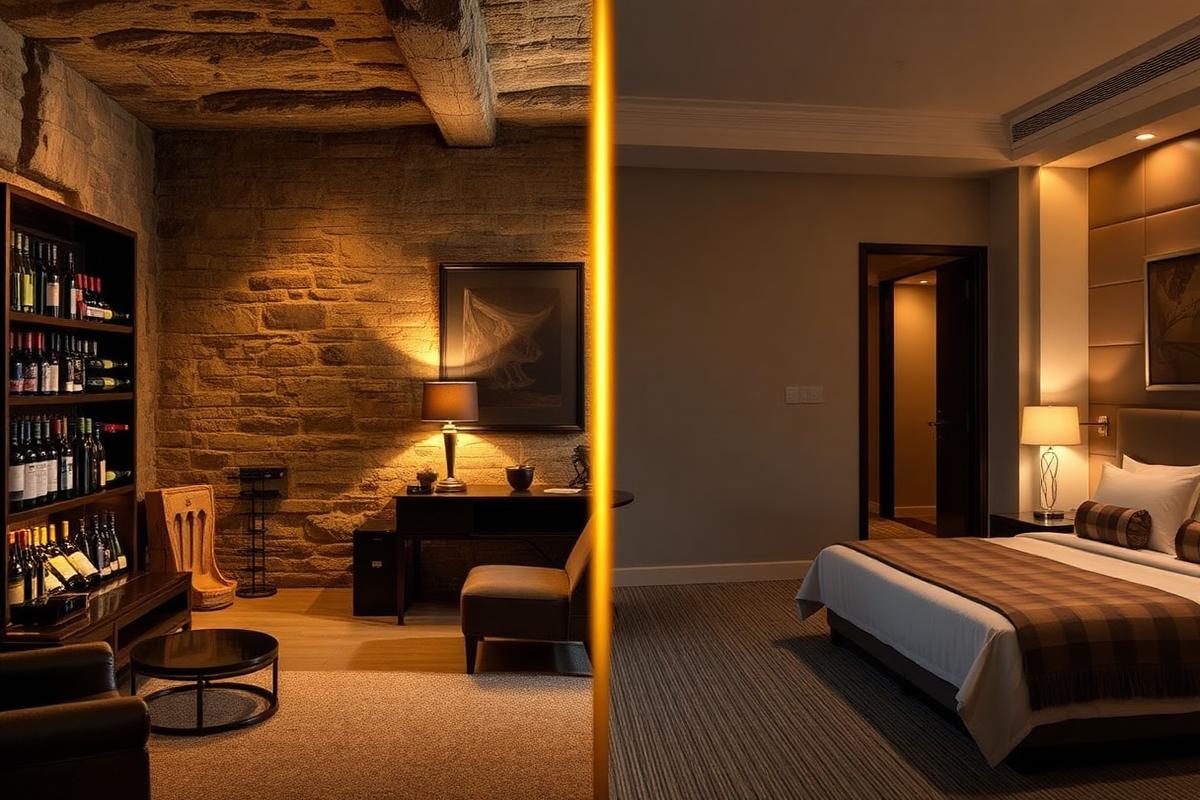
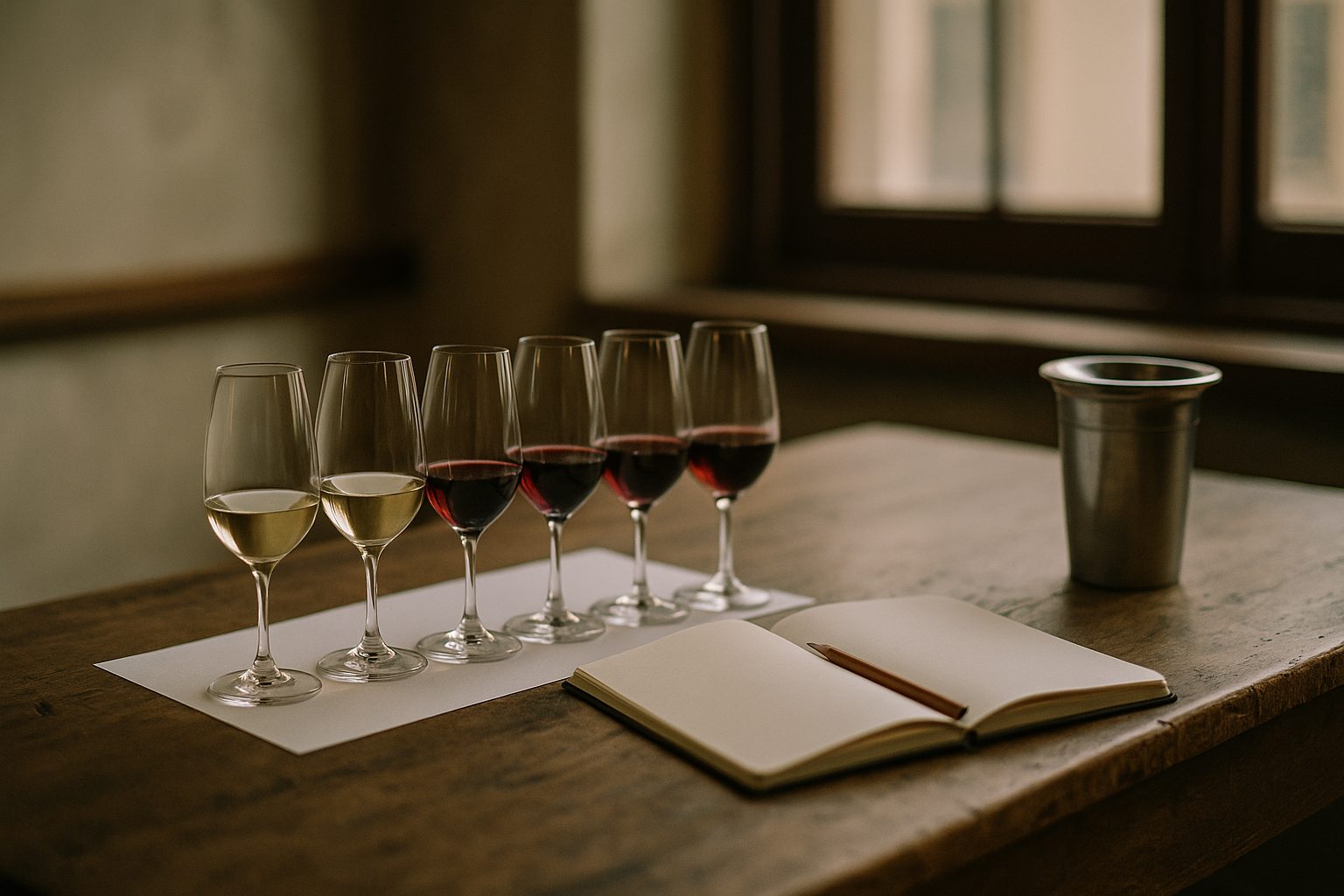
No course replaces repetition, and the best exercise remains blind tasting: deprived of the label, you stop simply confirming what you think you already know. That is one of the reasons behind the Oenosuite in Dijon (oenosuite.fr): blind tasting is offered on site, with tasting socks provided to hide the bottles, alongside a Jalunia connected cellar giving self-service access, from the suite itself, to Burgundy wines in tubes or bottles. The only apartment in Bourgogne-Franche-Comté to carry the Vignobles & Découvertes label, it puts the Route des Grands Crus twenty minutes away, which is convenient when you are combining a course in Beaune with estate visits.
Which path should you choose?
If the aim is to progress as an enthusiast, start with a short workshop in Beaune or Dijon, then move on to a Level 1 or a « Certificat de dégustateur » if the appetite holds. If the aim is professional, Level 2 then Level 3 make the clearest case to an employer, ideally with funding support. If you are targeting a technical job, only the university route makes sense. And if you are still hesitating, the most honest test is to spend a weekend tasting seriously before committing several hundred euros to a certification.
That leaves the question of gifting, because these courses are given as presents more often than bought for oneself. The problem is always the same: you do not know when the person will be free. The Oenosuite gift card sidesteps it, with preset amounts from 50 to 300 €, a custom amount possible between 25 and 1,000 €, a personalised message, twelve months' validity from the date of purchase, use on any Oenosuite stay or experience, and a fourteen-day right of withdrawal. You choose the amount, they choose the dates. For a tasting weekend in Dijon, booking directly on oenosuite.fr remains the best rate, with no platform commission.
Sources & references
Plan your trip to Burgundy
Book your wine accommodation in Dijon
Luxury wine suite with complimentary blackcurrant liqueur, Jalunia connected cellar and wine tourism experiences.
Book now