Saint-Aubin: Burgundy's Underrated Premier Cru Whites
Simon Stoll
Oenosuite Founder
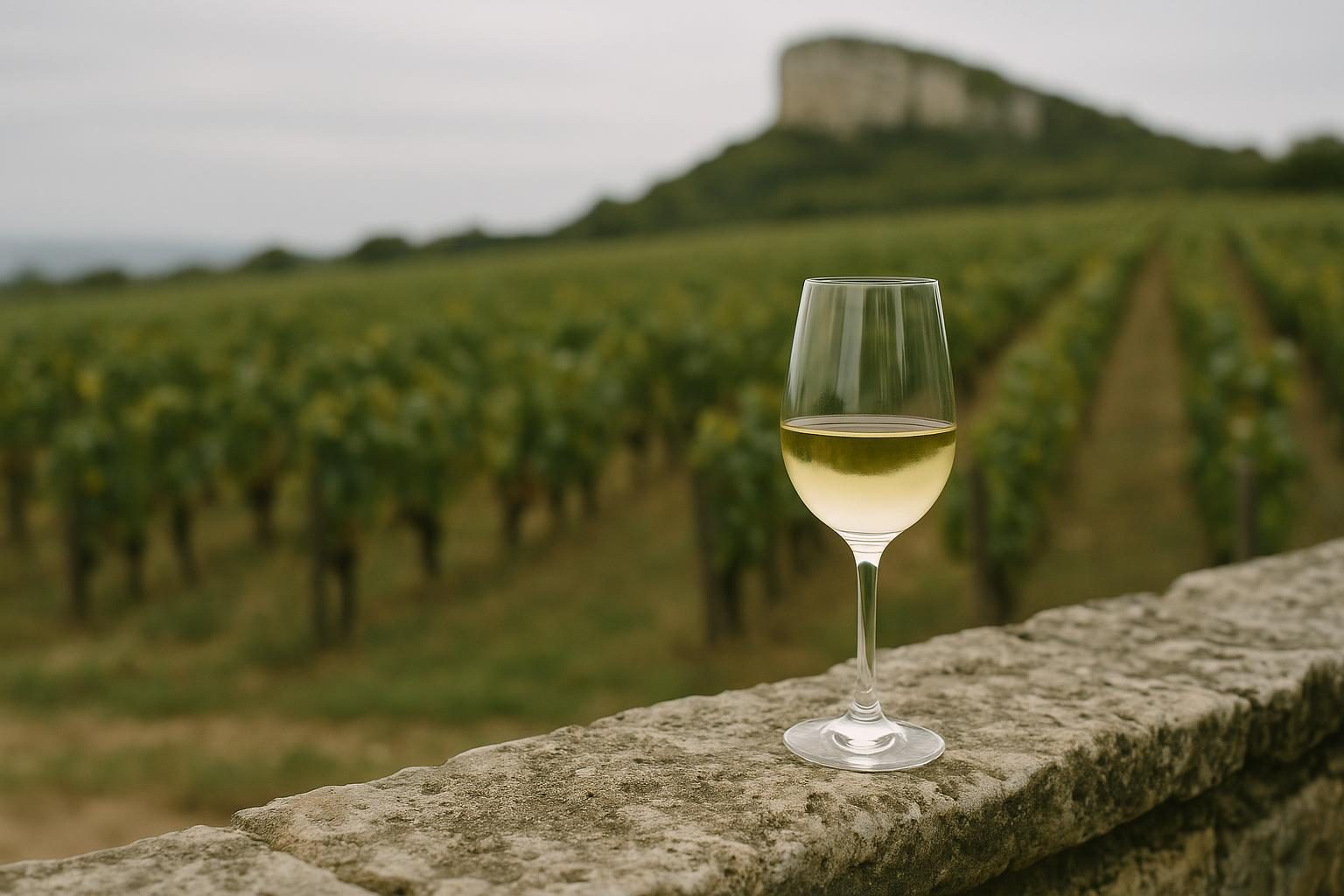
Saint-Aubin is a communal appellation of the Côte de Beaune in the Côte-d'Or department, about twenty kilometres south-west of Beaune. Recognised by decree on 31 July 1937, it covers roughly 170 hectares and produces mostly white wine (around 75% Chardonnay, 25% Pinot Noir). The wine village sits in a tucked-away valley that opens, just to the east, onto the legendary slopes of Chassagne-Montrachet and Puligny-Montrachet. For lovers of great white Burgundy weary of the dizzying prices of those two neighbours, Saint-Aubin has become one of the last addresses on the map where quality-to-price ratios still make sense. Setting up base camp through oenosuite.fr in Dijon makes it easy to explore this discreet appellation, less than an hour's drive away.
A Geology Built for Limestone-Driven Whites
Saint-Aubin's geography is unusual in Burgundy: the valley forms a sharp elbow opening onto a south-facing amphitheatre, where the hamlet of Gamay is tucked in. Vines are planted between 300 and 350 metres altitude, noticeably higher than the heart of the Côte d'Or, an asset in a warming climate. The geological substrate combines the "Dalle nacrée" of the Callovian (Middle Jurassic) at the base, topped by an Oxfordian sequence alternating banded limestones and marl layers. The soils are shallow, well-draining, carbonate-rich, ideal conditions for Chardonnay. On the slopes where browner clays prevail, Pinot Noir produces taut, energetic reds, distant but honest cousins of the great Côte de Nuits appellations.
30 Premier Crus, Covering Almost 80% of the Vineyard
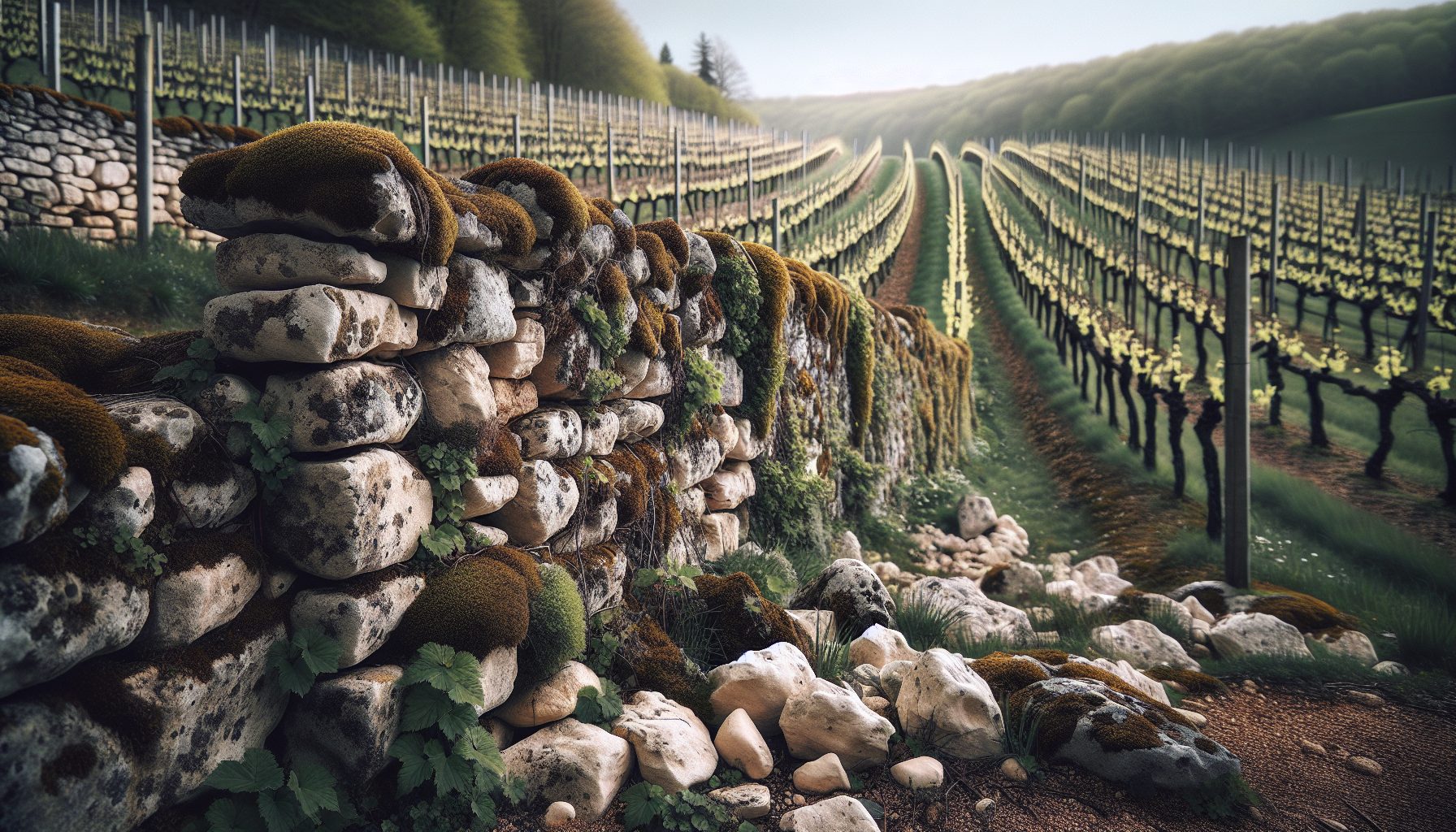
Rare distinction: in Saint-Aubin, 30 climats are classified Premier Cru in the appellation's official specifications, and they cover nearly 80% of the planted area. No other communal appellation in the Côte de Beaune comes close to that proportion. Among the most sought-after climats are Les Murgers des Dents de Chien, a stony plateau high above the valley directly extending the Montrachet spur; En Remilly, just below, abutting the parcels of Puligny and Chassagne; Le Charmois, leaning toward Chassagne; and Les Frionnes, Sur le Sentier du Clou or La Chatenière for connoisseurs. The name "Murgers" means "piles of stones" in old Burgundian dialect, a direct reference to the mosaic of dry-stone walls that still structures the plots today, a testimony to the back-breaking work of the generations who cleared these slopes one stone at a time.
Reference Estates: Who to Follow
The name to know is unquestionably Domaine Hubert Lamy. Founded in 1973 by Hubert Lamy, though the family has farmed vines in Saint-Aubin since 1640, it is now run by his son Olivier Lamy, who has become one of the defining figures of the new Burgundy. The estate works 18.5 hectares, around 80% Chardonnay, across Saint-Aubin, Puligny-Montrachet, Chassagne-Montrachet and Santenay. Its signature: ultra-high-density planting, up to 30,000 vines per hectare on certain parcels, a return to medieval Burgundian practice from before phylloxera, designed to push root competition and concentration. "Haute Densité" cuvées such as Derrière chez Édouard and En Remilly have become cult bottles, snapped up on allocation by serious wine merchants.
Domaine Marc Colin et Fils, founded in 1970 by Marc Colin and his wife Michèle from six inherited hectares, is another pillar. The estate today covers 26 different appellations, one of the broadest palettes in the Côte de Beaune, and even owns rows in Montrachet and Bâtard-Montrachet Grand Cru. Not to be confused with Domaine Pierre-Yves Colin-Morey, founded in 2005 by Pierre-Yves Colin (Marc's son) and his wife Caroline Morey after a decade vinifying at the family domaine. Based in Chassagne, the estate works 13 hectares across Saint-Aubin, Chassagne, Puligny, Meursault and Santenay, with a controlled oxidative approach that yields exceptionally pure whites.
Quality-to-Price: The Real Alternative to Puligny
This is where Saint-Aubin crushes the competition. On the vineyard land market, the ouvrée (4.28 ares) of Premier Cru changes hands at around €21,000 in Saint-Aubin, versus around €44,000 in Puligny-Montrachet, half the price for terroirs that are often only metres apart. The gap shows up directly in retail bottles: a good-producer Saint-Aubin Premier Cru sells for €35-60 at the cellar door, while the equivalent Puligny regularly tops €80 and climbs above €100 for the prestige Premier Crus. Yet the aromatic profile is unmistakably Burgundian: taut, saline, limestone-driven, with discreet stone-fruit and an elegance that has nothing to envy of the neighbours. The real difference is in depth and ageing potential, a Saint-Aubin Premier Cru is best drunk between five and twelve years, whereas a Puligny holds for fifteen to twenty in a well-kept cellar.
The Hamlet of Gamay: Birthplace of the Beaujolais Grape
An often-overlooked historical curiosity: the hamlet of Gamay, part of the Saint-Aubin commune, is most likely the origin of the Gamay grape's name. The variety is said to have been born, or first identified, there, before spreading across medieval Burgundy, where it eventually rivalled Pinot Noir dangerously. In 1395, Duke Philippe le Hardi (Philip the Bold) signed his famous edict branding Gamay a "vile and disloyal plant" and ordering its uprooting from the Côte d'Or, banishing it south to the Beaujolais. Today Gamay has completely disappeared from Saint-Aubin's vines, replaced by Pinot Noir and Chardonnay, but the place name remains, watched over by a 13th-century fortress.
Visiting Saint-Aubin: Practical Tips
For a first taste, start at the Caveau de Saint-Aubin, opened in 2015 in the heart of the village and entirely dedicated to promoting the appellation and its growers. A single visit lets you taste cuvées from several estates side by side, ideal for comparing climats. Estate visits must be booked in advance, Hubert Lamy and Marc Colin are heavily in demand and waiting lists can stretch several weeks in high season. For a complementary heritage experience, the Château de Saint-Aubin, owned by the merchant house Prosper Maufoux, offers tastings in a striking architectural setting. Twenty minutes away by car, the Cité des Climats et Vins de Bourgogne in Beaune, opened in 2023, offers an immersive 1,100 m² journey that puts what you taste in the cellars into a wider regional perspective.
Planning Your Stay in Saint-Aubin
Saint-Aubin is best visited over two or three days, pairing the village and its estates with stops at Chassagne, Puligny and Meursault, everything is within ten kilometres. Avoid mid-July to late August if you genuinely want to talk with growers: many estates close partially in high season or sharply reduce their slots. The best windows are April to June and September to October, when the vines are at their most active. To move freely between Côte de Beaune villages without giving up the comfort of a real urban base, oenosuite.fr offers immersive wine-lover suites in Dijon, less than an hour from Saint-Aubin via the Route des Grands Crus. To our mind, that is the most balanced formula for anyone wanting to explore an appellation as confidential as this one in depth. Book your wine-tourism stay on oenosuite.fr and treat yourself to discovering Saint-Aubin before everyone else does.
Sources & References
Plan your trip to Burgundy
Book your wine accommodation in Dijon
Luxury wine suite with complimentary blackcurrant liqueur, Jalunia connected cellar and wine tourism experiences.
Book now