Romanée-Conti: The Myth and Reality of the World's Greatest Wine
Simon Stoll
Oenosuite Founder
Romanée-Conti is a Grand Cru climat of the Vosne-Romanée appellation, on the Côte de Nuits in Burgundy. With a registered area of just 1.81 hectares, this tiny plot of Pinot Noir produces the world's rarest and most expensive wine. The climat is a monopole: it is wholly owned by Domaine de la Romanée-Conti (DRC), the iconic estate based in Vosne-Romanée. Before tackling the myth, let's look at the reality of terroir, numbers and history.
A unique 1.81-hectare climat at the heart of Vosne-Romanée
The climat faces east-south-east, mid-slope, on hard Bajocian limestones overlaid with fine clays. It is flanked by other legendary Grands Crus: La Romanée (0.85 ha, the smallest controlled AOC in France) above, La Grande Rue below, Richebourg to the north and Romanée-Saint-Vivant further down. It is arguably the densest concentration of Grand Crus in the world, packed into just a few dozen hectares.
In total, Vosne-Romanée and the neighbouring village of Flagey-Échezeaux count eight Grand Crus: La Tâche, La Grande Rue, Romanée-Conti, La Romanée, Romanée-Saint-Vivant, Richebourg, Échezeaux and Grands-Échezeaux. La Grande Rue was only promoted to Grand Cru status in 1992, fifty-six years after the others.
From Cros des Cloux to the Prince de Conti: the story of a name
The history of the climat goes back to the 13th century, when the monks of the Abbey of Saint-Vivant, founded near Nuits-Saint-Georges in the early 10th century, worked these lands. The plot was then known as Cros des Cloux, before taking the name Romanée in the 17th century, supposedly a reference to ancient Roman occupation.
In 1760, Louis-François de Bourbon, Prince de Conti, bought La Romanée from the indebted Croonembourg family. Contemporary chronicles report that he paid roughly twice the estimated value to outbid Madame de Pompadour, mistress of Louis XV, who also coveted the vineyard. The Prince added his name to the plot: La Romanée became La Romanée-Conti. During the French Revolution, the property was seized and sold as a national asset.
In 1869, Jacques-Marie Duvault-Blochet bought back the climat and began to assemble what would become today's estate, adding plots in La Tâche, Échezeaux, Grands-Échezeaux and Richebourg.
Domaine de la Romanée-Conti today
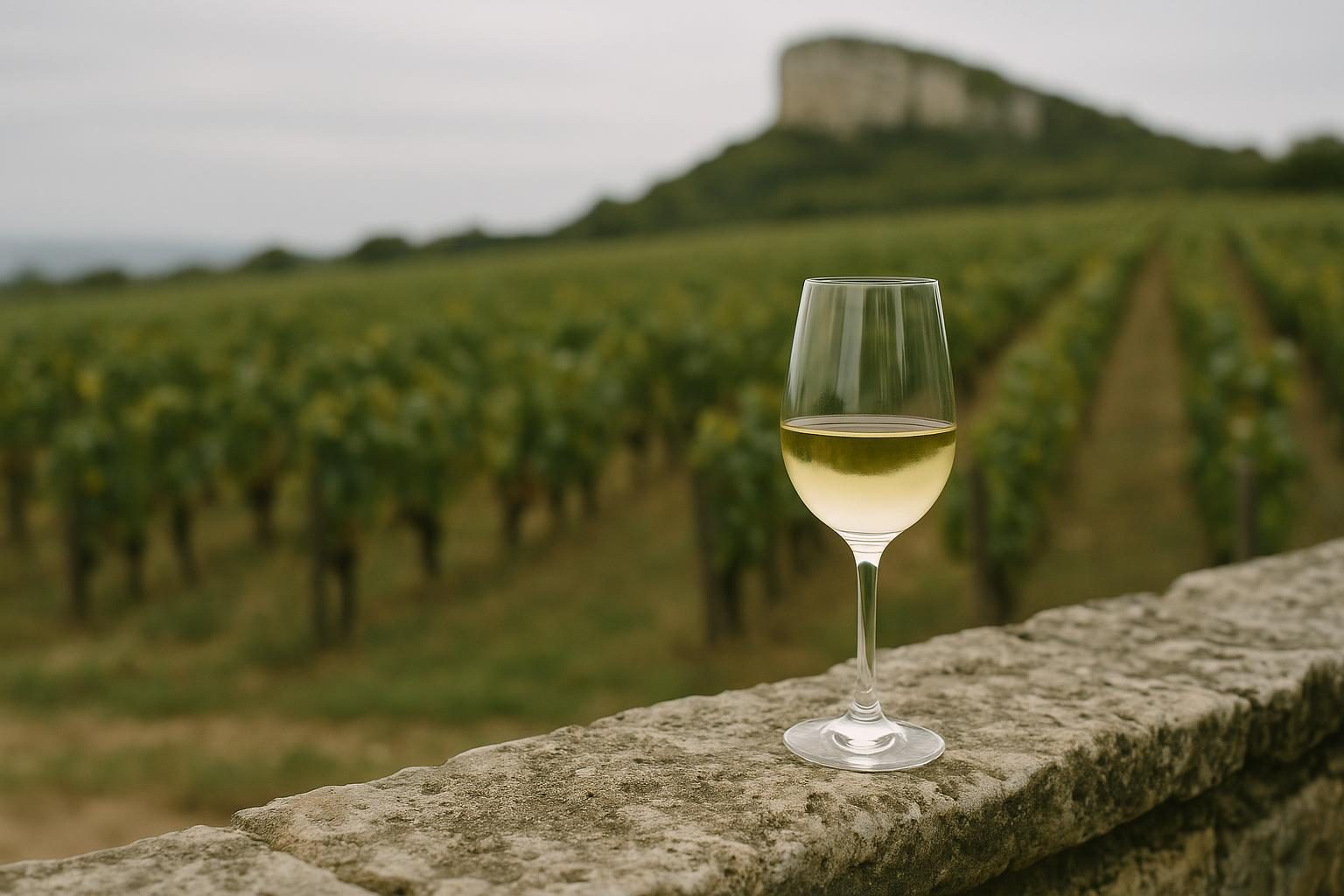
Domaine de la Romanée-Conti farms only Grand Crus, on just over 28 hectares in total. In addition to its Romanée-Conti monopole, it owns the second Côte de Nuits monopole, La Tâche (6.06 ha), acquired mostly in 1933. The estate also holds 3.51 ha of Richebourg (out of 8.03 ha), 5.29 ha of Romanée-Saint-Vivant (out of 9.44 ha measured in 2019), about 4.7 ha of Échezeaux, plots in Grands-Échezeaux and Corton, plus 0.67 ha of Montrachet for its white wine.
Ownership has been shared between the de Villaine and Leroy families since 1942, when Henri Leroy bought half of Edmond Gaudin de Villaine's shares. Since 2018-2022 the estate has been co-directed by Perrine Fenal, daughter of Lalou Bize-Leroy, and Bertrand de Villaine, nephew of Aubert de Villaine. Aubert de Villaine, the estate's defining figure for forty-eight years, stepped down from co-management on 1 January 2022 and now serves in an advisory role.
Contrary to a common misconception, DRC did not convert to biodynamics yesterday. The estate moved to organic farming as early as 1985 under Aubert de Villaine. Biodynamic trials began in the 1990s on selected parcels; full conversion was in place from 2007. Biodyvin certification was obtained around 2016. Yields are deliberately very low, around 25 hl/ha versus the Grand Cru ceiling of 35 hl/ha: it takes the fruit of three vines to fill a single bottle of Romanée-Conti.
1945, the mythical vintage and the replanting
The 1945 vintage became legendary for two reasons. First, it produced only 600 bottles versus around 5,000 today: the old ungrafted vines, exhausted and phylloxera-stricken, yielded barely 2.5 hl/ha. Second, it was the last pre-phylloxera vintage of the climat.
After this harvest, the estate uprooted the old vines, left the parcel fallow, and replanted in 1947 with vines grafted onto American rootstocks, the only proven defence against the phylloxera louse. No Romanée-Conti was released for the 1946-1951 vintages. The first wine from the new vineyard is the 1952. The scarcity of 1945 also explains the unusually high number of counterfeit bottles circulating in the market.
Auction records: from Sotheby's to La Paulée 2026
In 2018, Sotheby's New York hammered down a bottle of Romanée-Conti 1945 for US$558,000 (and a second for US$496,000), from Robert Drouhin's personal cellar, then the world record for a single bottle of wine. In April 2026, at Acker's La Paulée auction, another 1945 bottle reached US$812,500, becoming the most expensive bottle of wine ever sold at auction. Absolute scarcity (around 5,000 bottles a year for a global market), strict per-client allocation and a quasi-speculative status explain the surge.
Can you visit the climat? What is really possible
Domaine de la Romanée-Conti does not offer tours. Appointments are exceedingly rare, granted almost exclusively to long-standing allocataire clients or to professionals introduced by an importer. Unannounced visitors are turned away, local legend has it that they head back via Vosne-Romanée's « rue du Temps perdu » (Lost Time Street).
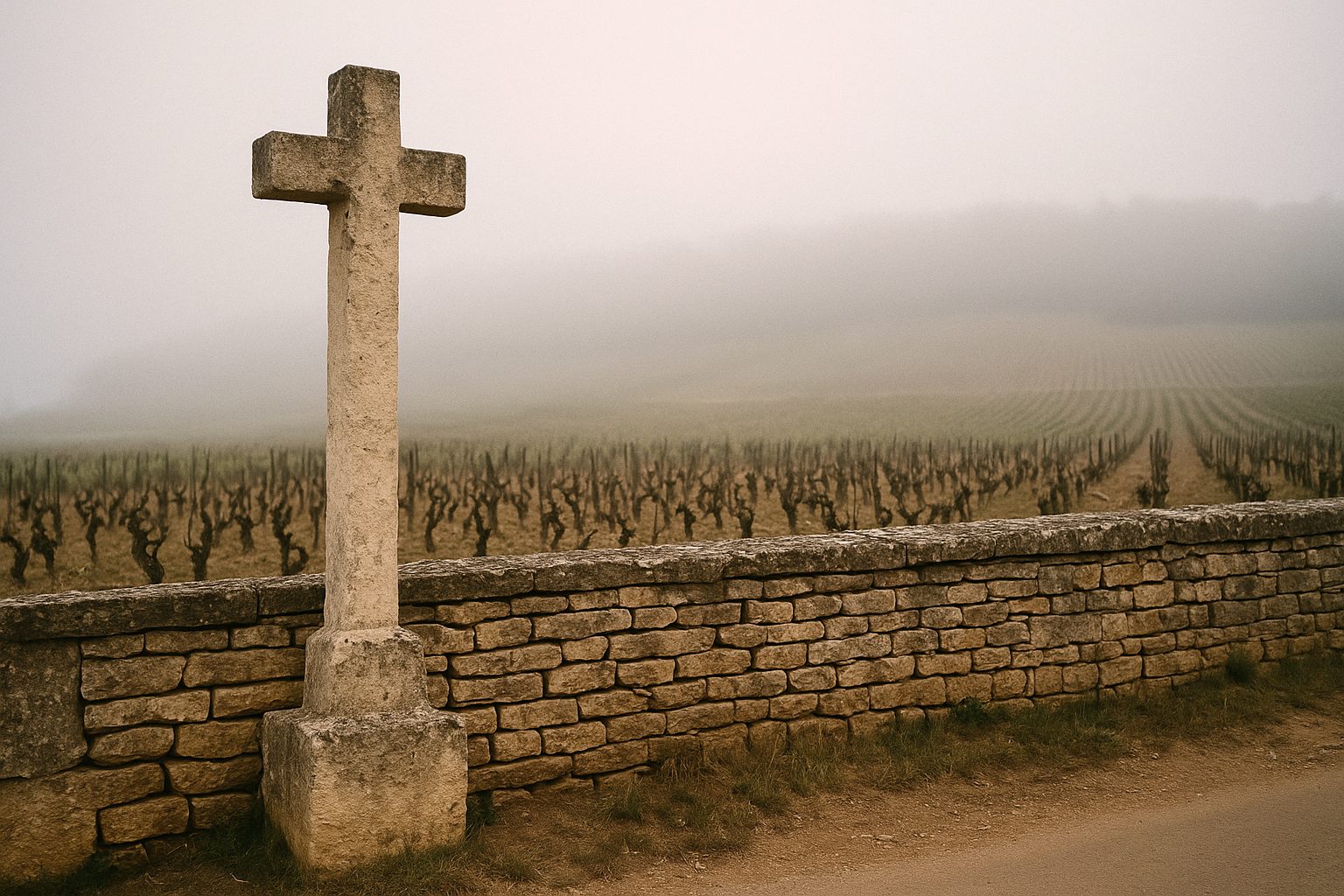
On the other hand, the climat itself is freely accessible. The parcel is marked by a low dry-stone wall and a limestone cross at its south-east corner: walking alongside Romanée-Conti is arguably the most accessible wine pilgrimage in all of Burgundy. Many neighbouring estates, however, do open for booked visits: in Vosne-Romanée itself, in Nuits-Saint-Georges or Vougeot, platforms such as Winalist make it easy to book tastings with quality producers.
Practical tips for exploring Vosne-Romanée
Visit Vosne-Romanée early in the morning, on a weekday, off-season, to have the climats to yourself. Park in the heart of the village and follow the signposted Grand Cru trail: in less than an hour, you will walk past Richebourg, Romanée-Saint-Vivant, La Romanée, La Romanée-Conti and La Tâche. For tastings, book well in advance, serious growers are in very high demand, especially in spring and autumn.
To explore the Côte de Nuits without constraint, oenosuite.fr offers high-end suites in Dijon, about 25 minutes by car from Vosne-Romanée. It is an ideal base to combine visits to the great climats, tastings with growers and the best tables of the Côte d'Or over a long weekend, without having to drive back after every cellar.
Sources & references
Plan your trip to Burgundy
Book your wine accommodation in Dijon
Luxury wine suite with complimentary blackcurrant liqueur, Jalunia connected cellar and wine tourism experiences.
Book now