Puligny-Montrachet: the world capital of white wine
Simon Stoll
Oenosuite Founder
Some names make wine lovers around the world tremble with excitement. Puligny-Montrachet is one of them. This small village in the Côte de Beaune, about 30 kilometres south of Beaune, is universally recognized as the world capital of dry white wine. Its Grand Crus, Montrachet chief among them, command prices that defy imagination and achieve levels of complexity that few white wines anywhere in the world can match. Here is your complete guide to discovering Puligny-Montrachet during your trip to Burgundy.
Montrachet: the king of white wines
Alexandre Dumas reportedly declared that Montrachet should be drunk "on one's knees, with head bared". Whether apocryphal or not, the quote perfectly captures the reverence this wine inspires. The Montrachet Grand Cru, shared between Puligny-Montrachet and Chassagne-Montrachet, covers only 7.99 hectares, yet produces a Chardonnay of such complexity and tension that it has no equal in the world of white wine.
Its characteristics are unique: a luminous golden robe, a nose of vertiginous intensity blending white flowers, acacia honey, toasted hazelnut and flint, then a palate that is simultaneously opulent and taut, with a razor-sharp minerality that gives it exceptional longevity. A well-stored Montrachet can evolve for 20 to 30 years in the cellar.
Practical tip: prices for a Montrachet Grand Cru regularly exceed €500 per bottle from leading producers. For an accessible introduction to this universe, the village appellations of Puligny-Montrachet offer an excellent entry point between €25 and €60.
The four Grand Crus of Puligny-Montrachet
Puligny-Montrachet has four Grand Crus, each with a distinct personality shaped by its terroir. Le Montrachet (shared with Chassagne-Montrachet) is the absolute pinnacle. Chevalier-Montrachet, perched at altitude just above Montrachet, produces a white of ethereal finesse and crystalline minerality, often considered the most elegant of the four. Bâtard-Montrachet (also shared with Chassagne-Montrachet) offers greater richness and generosity. Bienvenues-Bâtard-Montrachet, the smallest of the four at just 3.68 hectares, is distinguished by a silky texture and remarkable florality.
Below the Grand Crus, the Premiers Crus of Puligny-Montrachet, Les Pucelles, Les Folatières, Le Cailleret, Les Combettes, Clavoillon, form a constellation of exceptional wines accessible at more reasonable prices. Les Pucelles and Les Folatières are particularly sought after for their balance between opulence and freshness.
Visiting the estates of Puligny-Montrachet
Puligny-Montrachet is a peaceful village of barely 400 inhabitants, crossed by the Route des Grands Crus. Its wine houses and family estates offer visits and tastings for enthusiasts. Unlike other more touristy Burgundian villages, Puligny retains a precious authenticity: here, wine is at the heart of every conversation.
The best time to visit is spring (April-June) or autumn (September-November). In September, the harvest brings the village to life and it is sometimes possible to observe, or even participate in, the grape picking. Summer is pleasant but estates can be busy. Winter offers a more intimate atmosphere with fewer visitors.
Not to be missed nearby: the village of Chassagne-Montrachet, less than 2 km away, perfectly complements a day in the vines. Meursault, 4 km away, offers its famous rounder, more buttery white wines, ideal for comparing the styles of the Côte de Beaune. The town of Beaune, 12 km away, provides its unmissable Hôtel-Dieu and numerous cellars to explore.
Food and wine pairings: elevating Puligny-Montrachet
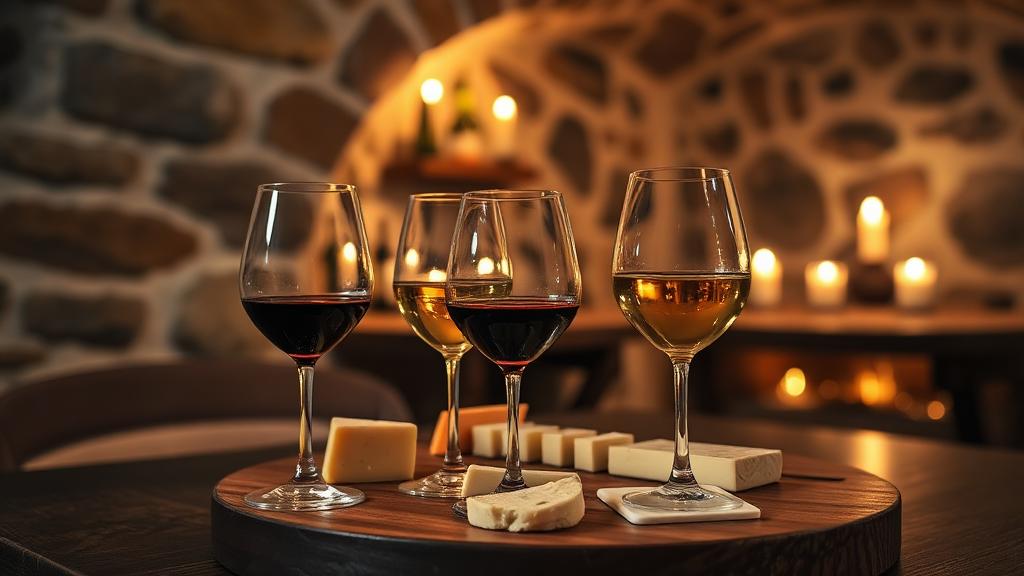
The wines of Puligny-Montrachet call for gastronomy that matches their stature. A Puligny village or Premier Cru pairs magnificently with seared scallops, sole meunière, a white truffle risotto or lobster in a light broth. The Grand Crus demand more elaborate dishes: Bresse chicken in cream sauce, braised veal sweetbreads, or simply a well-aged pressed cheese like a mature Comté.
The wines of the Côte de Beaune also pair wonderfully with traditional Burgundian cuisine. During your stay in Burgundy, take advantage of the gastronomic restaurants in Beaune or Dijon to experience these pairings in their natural context. The Oenosuite.fr platform helps you plan your entire wine tourism stay in Burgundy, from accommodation to oenotourism experiences.
How to reach Puligny-Montrachet
Puligny-Montrachet is located approximately 30 km south of Beaune and 45 km south of Dijon. By car, it is easily accessible from the A6 motorway (Beaune exit). The Route des Grands Crus (D974) connects all the major wine villages of the Côte de Beaune, from Beaune to Santenay. By train, frequent TGVs serve Beaune from Paris (2h15) and Dijon (20 min). From there, a taxi or bicycle rental allows you to reach the village at your own pace.
For enthusiasts wishing to stay in the heart of the vineyards, several characterful accommodation options, bed and breakfasts, wine estates, and prestige suites like those at Oenosuite, are available in the immediate vicinity. Sleeping among the rows of Chardonnay, steps away from some of the world's greatest wines, is an unforgettable experience we highly recommend.
Plan your trip to Burgundy
Book your wine accommodation in Dijon
Luxury wine suite with complimentary blackcurrant liqueur, Jalunia connected cellar and wine tourism experiences.
Book now