Burgundy's Smallest Climats: The Pocket-Sized Grands Crus
Simon Stoll
Oenosuite Founder
At 0.8452 hectares, La Romanée is both the smallest Grand Cru in Burgundy and the smallest AOC in France: a single plot in Vosne-Romanée, classified in 1936 and farmed as a monopole by Domaine du Comte Liger-Belair. It is not alone. Among the region's 33 Grand Cru appellations, several fit on less than four hectares, roughly the size of a few football pitches. These smallest climats of Burgundy, true pocket-sized grands crus, distil everything that makes the vineyard unique: a parcel map inherited from centuries of observation, names that ring out on a label, and volumes so tiny that most wine lovers will never taste a drop.
To understand why these micro-plots exist, you need to go back to the idea of the climat. Burgundy has 1,247 of them, plots mapped sometimes down to the square metre and named gradually since Gallo-Roman times as their potential for wine was revealed. It is this unique patchwork that the UNESCO World Heritage Committee inscribed on 4 July 2015, in Bonn, as a cultural landscape, after eight years of preparation. In this mosaic, size is never a measure of quality: a tiny climat can be worth more than a neighbour ten times its size, simply because the slope, the soil and the exposure are slightly more favourable there. That is exactly the story the pocket-sized grands crus tell.
La Romanée and Romanée-Conti: under 3 hectares between them
On the Vosne-Romanée slope, two of Burgundy's smallest climats almost touch. La Romanée, just 84.5 ares, sits directly above Romanée-Conti on clay-limestone soils. Only one estate makes it, Comte Liger-Belair, and output runs to just a few thousand bottles a year against enormous worldwide demand. On the scale of French wine, it is a genuine curiosity: an entire controlled appellation, with its own rulebook, covering less ground than a typical village back garden.
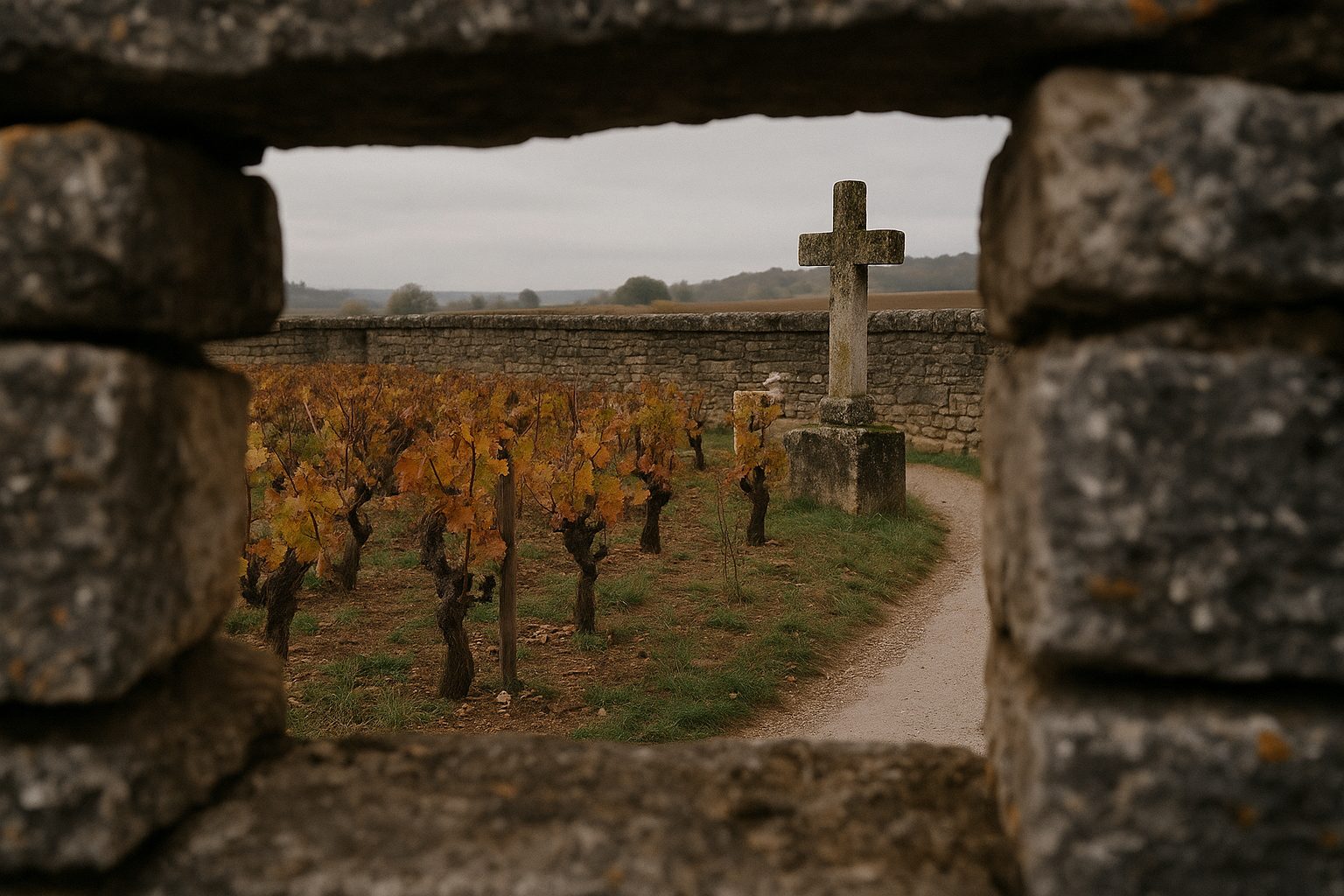
Just below, Romanée-Conti covers about 1.81 hectares, a monopole of Domaine de la Romanée-Conti. It is probably the most photographed vineyard on earth, and yet there is almost nothing to see: a few rows of Pinot Noir, a low wall and a stone cross. Visitors are not allowed to step into the vines, and signs all around the plot say so. You reach it on foot via the Rue du Temps Perdu, which climbs from the village up to the wall and the cross. The thrill is less about the landscape than about the realisation that an entire legend rests on under two hectares of soil.
Criots, Grande Rue, Griotte: the other pocket grands crus
In the Côte de Beaune, the smallest white Grand Cru is Criots-Bâtard-Montrachet, at about 1.57 hectares. Created in 1937, it is the only one of the four grands crus in the south of the Côte de Beaune that lies entirely within Chassagne-Montrachet. Its name is said to come from the stony, chalky soils of the plot, which faces due east and gives Chardonnay excellent ripeness. Its neighbour Bienvenues-Bâtard-Montrachet, on the Puligny side, covers only around 3.7 hectares. Together they are a reminder that the Montrachet legend is not limited to the grand cru of the same name: it spins off into tiny satellites, each with a character of its own.
Back in the Côte de Nuits, La Grande Rue (1.65 hectares) is the monopole of Domaine Lamarche, facing due east between 250 and 310 metres of altitude, squeezed between Romanée-Conti and La Tâche. Long sold as a mere Premier Cru, it was only promoted to Grand Cru in 1992, applied retroactively to the 1991 vintage, which makes it one of the most recently recognised grands crus in Burgundy. In Gevrey-Chambertin, Griotte-Chambertin, around 2.7 hectares depending on the survey, is the smallest grand cru in the village. It lies at the bottom of the slope, east of the Route des Grands Crus, between Chapelle-Chambertin and Charmes-Chambertin and facing Chambertin across the road. Nearby, Ruchottes-Chambertin tops out at roughly 3.3 hectares.
Why are these climats so small?
The small size of these plots is no accident. It stems first from centuries of observation: monks, growers and merchants noticed that the wine from one strip of hillside differed consistently from the strip next door, and eventually gave it a name. It is also a matter of land history. During the French Revolution, the estates of the clergy and nobility were sold off as national property, and the Civil Code of 1804 then required inheritances to be split equally: generation after generation, large estates broke up into rows of vines shared between brothers and sisters. The monopole, meaning an entire climat owned by a single estate, became the exception, which explains the symbolic value of La Romanée, Romanée-Conti or La Grande Rue. Elsewhere, a three-hectare grand cru can be divided between many owners, each producing just a few barrels a year.
Seeing Burgundy's smallest climats for yourself
The good news is that most of these pocket grands crus sit along or right next to the Route des Grands Crus in the Côte de Nuits, about twenty minutes from Dijon. A morning loop lets you see Griotte-Chambertin and Ruchottes-Chambertin in Gevrey, then drive on to Vosne-Romanée and walk up the Rue du Temps Perdu to the Romanée-Conti cross, with La Romanée just above and La Grande Rue alongside. Criots and Bienvenues call for a second half-day in the Côte de Beaune. Stay on the paths, pick nothing, and park away from farm access tracks, especially during harvest. To put these plots in context before you set off, the Cité des Climats et vins de Bourgogne, which opened in 2023 across three sites (Beaune, Chablis and Mâcon), offers an immersive visit on the geology and hierarchy of the climats.
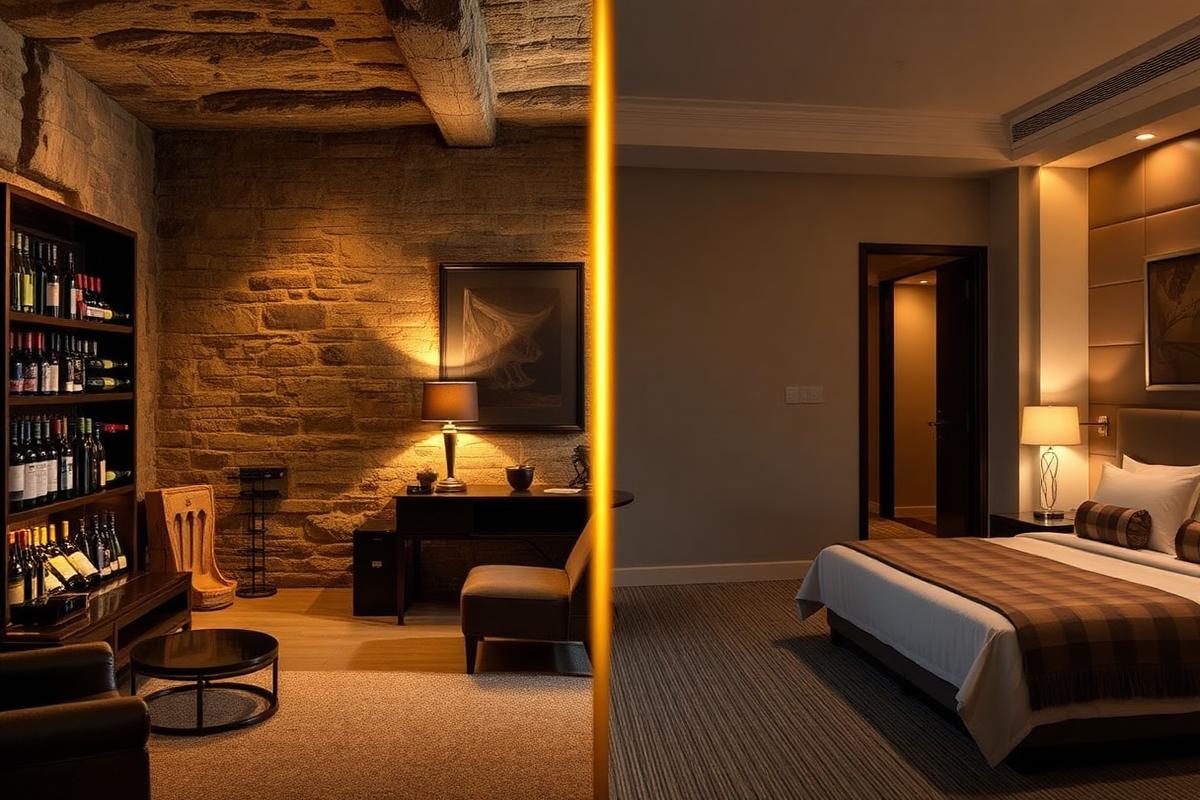
To explore these climats without piling on the miles, Oenosuite, right in the heart of Dijon a short walk from the Palace of the Dukes, makes an ideal base: the Route des Grands Crus starts just twenty minutes away. Depending on your group, the Suite Charme & Vin (43 m², up to four guests) or the Loft d'Artiste (25 m², for two) welcomes you with a miniature of Dijon crème de cassis, a wine escape game and the Jalunia connected cellar, so you can keep exploring Burgundy wines on a self-service basis in the evening. Book direct on oenosuite.fr for the best rate. And if you know a climat enthusiast whose free dates are a mystery, the Oenosuite gift card, from €25 to €1,000 and valid for 12 months on any stay, is available at oenosuite.fr/carte-cadeau: you choose the amount, they choose the dates.
Sources & references
- Grand cru de Bourgogne — Wikipédia
- La Romanée — Wikipedia
- Criots-Bâtard-Montrachet Grand Cru — Maison Louis Latour
- La Grande Rue, Grand Cru Monopole — Dico du vin
- Griotte-Chambertin, a vineyard profile — Burgundy Report
- Les Climats du vignoble de Bourgogne — UNESCO
- Cité des Climats et vins de Bourgogne
- Oenosuite gift card
Plan your trip to Burgundy
Book your wine accommodation in Dijon
Luxury wine suite with complimentary blackcurrant liqueur, Jalunia connected cellar and wine tourism experiences.
Book now