Did Parker's Scores Really Ruin the Taste of Burgundy?
Simon Stoll
Oenosuite Founder

Robert Parker (born 1947) is the American critic who popularised the 100-point wine rating system, through his magazine The Wine Advocate founded in 1978. His influence on the wine world is immense, Bordeaux, the Rhône and California were deeply reshaped by his preferences. Burgundy, however, is arguably the region that escaped "parkerization" the most: Parker only covered Burgundy from 1978 to 1993, and stepped away after a high-profile libel lawsuit filed by Maison Faiveley. But did he still influence the taste of Burgundian Pinot Noir? The debate still divides wine lovers today.
1978-1993: Parker in Burgundy, an age of misunderstandings
When Robert Parker launched The Wine Advocate in 1978, he proposed a revolution: an independent, ad-free magazine that rated wines on a 100-point scale, popularised with his friend Victor Morgenroth, rather than the vague tasting notes of the time. The system was quickly copied by Wine Spectator and spread worldwide. Parker himself covered Burgundy, visiting the region one month every year between 1978 and 1993. But the marriage between the pragmatic American and Burgundy's culture of terroir went sour. Parker wrote bluntly, denouncing winemaking practices he considered too aggressive and shipping issues. Growers, unaccustomed to such direct Anglo-Saxon style, perceived him as arrogant.
The rupture came in May 1994, when François Faiveley, a Nuits-Saint-Georges grower, filed a libel suit against Parker and his publisher Simon & Schuster. In the third edition of his Wine Buyer's Guide, Parker had written that Faiveley wines tasted abroad were "less rich" than those tasted on-site, implying possible deception. Faiveley sought no damages, only 1 symbolic French franc (16 cents). The case settled out of court and Parker removed the offending passages. It was later discovered that the taste difference came from improper storage at the American importer's warehouse: the wine had been "cooked". Parker then delegated Burgundy coverage to Pierre-Antoine Rovani in April 1997, and later summed up the episode bitterly: "I spilled too much blood and left."
"Parkerization": a myth for Burgundy?
The term "parkerization" emerged in the 1990s to describe the American critic's alleged influence on the style of wines worldwide. According to his detractors, including British journalist Tim Atkin MW, Parker imposed a universal taste: highly concentrated, alcohol-rich wines marked by new oak and designed to impress in their youth. Bordeaux, California and the Rhône Valley were the regions most deeply transformed by this drift toward an "international style".
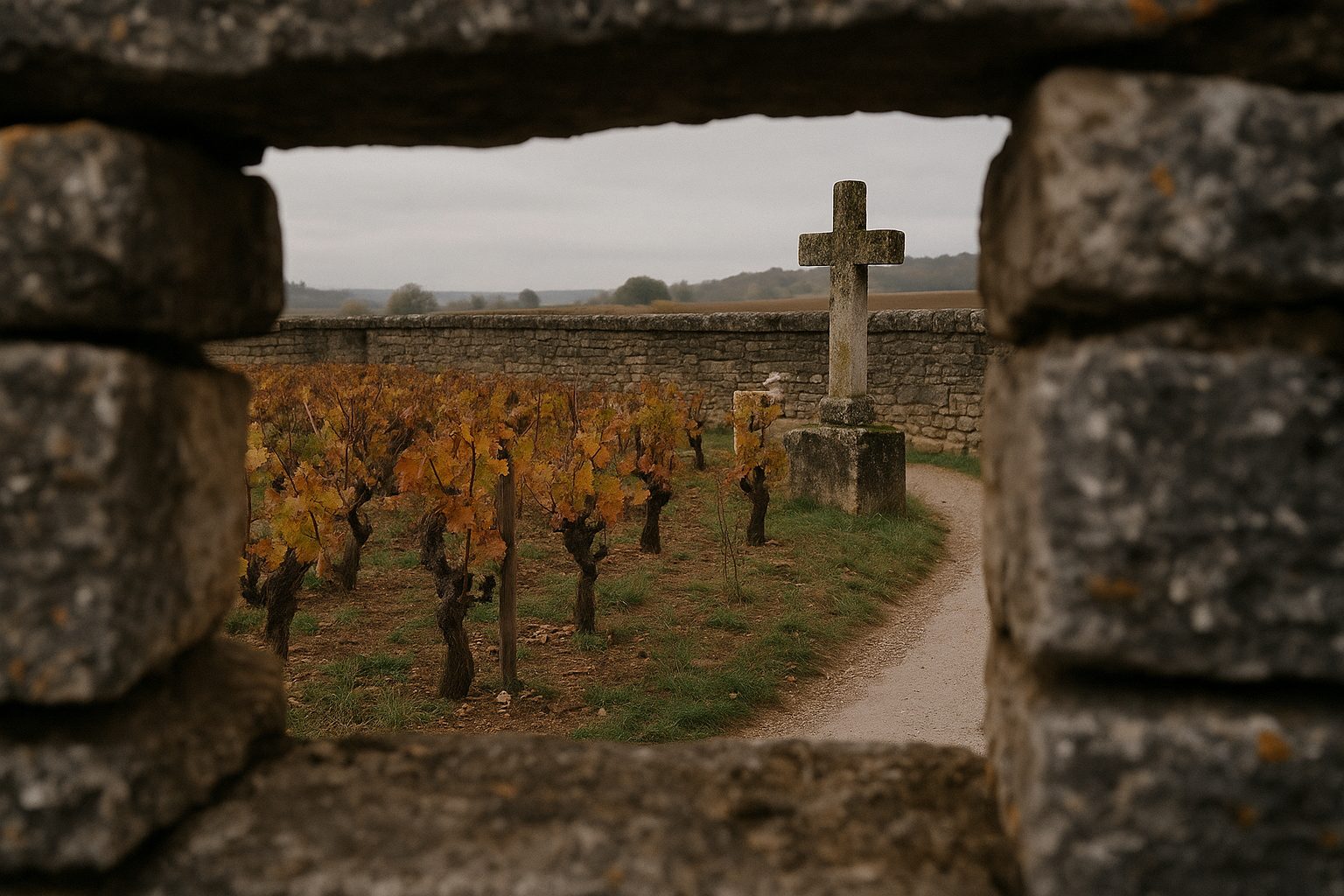
But Burgundy largely escaped the pattern, for three structural reasons. First, Parker covered the region for only fifteen years, compared with over forty years for Bordeaux. Second, Burgundian Pinot Noir lends itself poorly to over-extraction or massive new-oak ageing: push the wine in that direction and it breaks. Finally, Burgundy's culture of the climat, 1,247 strictly delimited parcels, listed as UNESCO World Heritage since 4 July 2015, structurally resists standardisation. Burgundy growers seek to express a place, not a universal taste.
Post-Parker: Burgundy now has its own critics
Parker's withdrawal was paradoxically an opportunity for Burgundy lovers. From 2000 onwards, a former Californian CFO named Allen Meadows launched Burghound.com, the first journal exclusively dedicated to Burgundy, Champagne and US Pinot Noir. Meadows now spends close to five months a year in Burgundy and visits over 300 domaines each season. His scoring is demanding: he has awarded a single 100-point score in more than 25 years, to a Romanée-Conti 1945. Burghound has subscribers in more than 64 countries.
The other Anglo-Saxon reference is Jasper Morris MW, a former British importer who became a Master of Wine in 1985. His book Inside Burgundy, published in 2010 and reissued in 2021, has won the André Simon prize twice, a unique distinction. Since September 2018, his site Jasper Morris Inside Burgundy offers an authoritative database of tasting notes and analysis. On the American side, William Kelley took over from Pierre Rovani at The Wine Advocate in 2017 and also writes for Decanter. His philosophy is explicitly non-Parkerian: he aims to highlight little-known domaines rather than confirm established hierarchies.
The terroir argument against the universal score
The underlying debate is philosophical: can you rate a Burgundy wine the way you rate a Californian Cabernet Sauvignon? For defenders of tradition, the answer is no. A great Burgundy does not seek to impress with power, but to express a place, a unique climat, exposure, geology. As Lalou Bize-Leroy, owner of the legendary Domaine Leroy and pioneer of biodynamics in Burgundy since 1988, puts it: "My Musigny must resemble Musigny, my Chambertin should not recall Pommard, and Pommard should not resemble Volnay." This logic is incompatible with a system that ranks wines on a single scale: a powerful, earthy Pommard rated 92 and an ethereal Volnay rated 92 are, in reality, two utterly different objects. The universal score flattens that diversity.
What Parker actually changed (and what he didn't)
What Parker changed: he democratised wine criticism and gave consumers a simple tool to compare wines. He also reminded growers that ageing and shipping practices mattered as much as viticulture. In June 2015, he publicly acknowledged his excesses with Burgundians, telling The Drinks Business: "My biggest mistake when I was younger and doing Burgundy was that I was too belligerent and too aggressive with the Burgundians." Parker formally retired from The Wine Advocate in May 2019 at age 71, after having sold his controlling stake to Singapore-based investors in December 2012, and then to Michelin (40% in 2017, 100% in 2019).
What he did not change: the culture of climats and Burgundians' visceral attachment to their terroir. The secondary market figures are unforgiving: Burgundy now accounts for 25% of all wines traded on Liv-ex in 2026, the highest share ever recorded, ahead of Bordeaux. The Burgundy 150 index jumped 75% during the 2021 bull run, before a 34% correction between September 2022 and August 2025. The market values the diversity of Burgundian terroir, not a standardised taste. Parker lost the Burgundy battle, and acknowledged it himself.
Tasting Burgundy beyond the scores
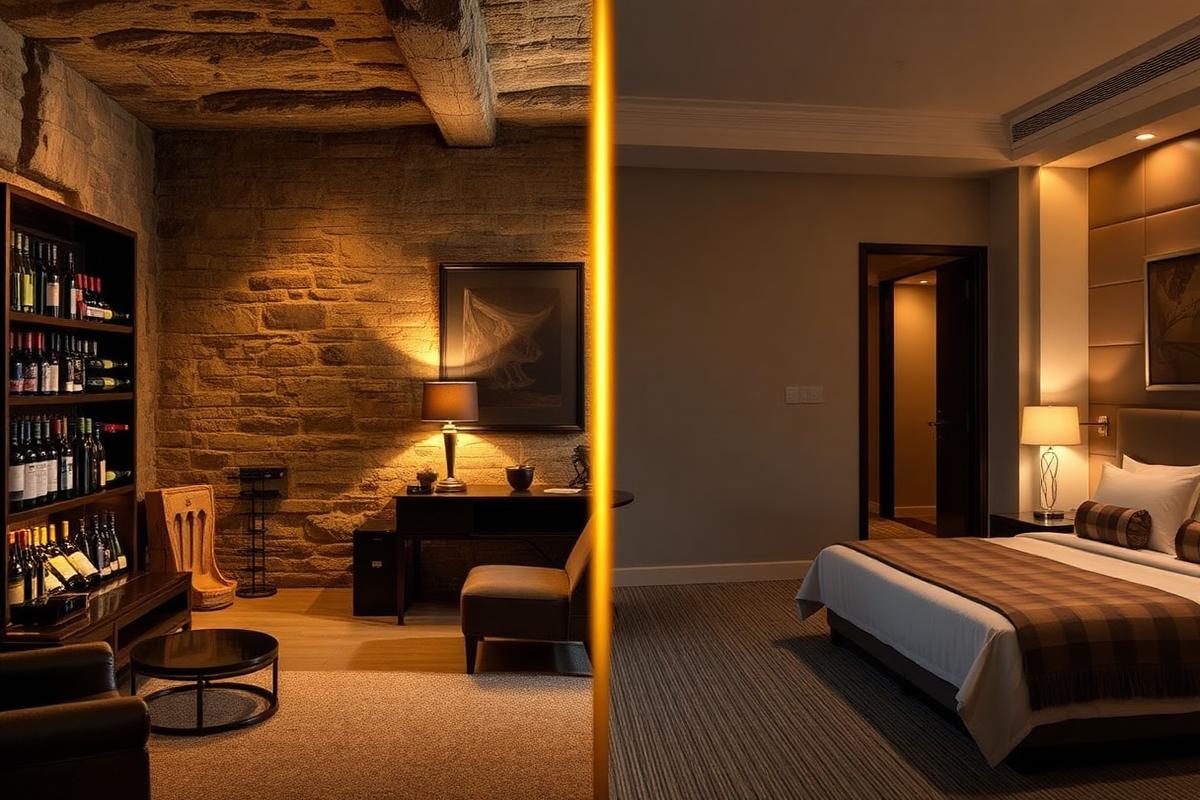
The best way to form your own opinion is to taste for yourself, at the estate, facing the grower. Burgundy is so diverse, 84 appellations, more than 1,200 climats, that no score can replace a direct visit. The Côte de Nuits for fine reds, the Côte de Beaune for great whites, the Mâconnais for accessible Chardonnays, Chablis for sheer minerality: every palate finds its territory. To plan a stay that covers several appellations in a few days, oenosuite.fr offers in Dijon accommodations designed for wine lovers, with a connected cellar, guided tastings and easy access to more than 100 estates across the Côte d'Or. The ideal base to discover Burgundy with your own palate, not someone else's.
Sources & references
Plan your trip to Burgundy
Book your wine accommodation in Dijon
Luxury wine suite with complimentary blackcurrant liqueur, Jalunia connected cellar and wine tourism experiences.
Book now