The Monks Who Invented Burgundy Wine: Cîteaux and Cluny
Simon Stoll
Oenosuite Founder
Cîteaux and Cluny: The Monks Who Invented Burgundy Wine
The Burgundy vineyard as we know it, its Climats, its dry-stone clos, its Pinot Noir and Chardonnay, is very largely the legacy of two monastic orders founded a few dozen kilometers from Beaune and Dijon: the Benedictines of Cluny in 910 and the Cistercians of Cîteaux in 1098. For nearly seven centuries, monks cleared, planted, observed, tasted and walled the slopes of the Côte d'Or. Their patient work gave birth to the very notion of terroir and still structures the map of the Burgundy vineyard today, inscribed on the UNESCO World Heritage List since July 4, 2015. A thousand-year story, documented and verifiable, that can still be read on the dry-stone walls of Vougeot or in the cellars of Petit Pontigny at Chablis.
Cluny, 910: Benedictine Power Takes Root
On September 11 of the year 910 (909 by some chronologies), William I the Pious, Duke of Aquitaine and Count of Mâcon, signed at Bourges the founding charter of Cluny Abbey, in the heart of the Mâconnais. Twelve Benedictine monks settled on a villa that already included, a decisive detail, vineyards, orchards, mills and even a pond. Placed directly under papal authority, Cluny would become within a few decades the most powerful religious institution in medieval Europe, spawning hundreds of priories from Spain to Poland. Its monks cleared the surrounding slopes, expanded their holdings through successive donations and exchanges, and spread their wine-making know-how throughout southern Burgundy, Mâconnais, Chalonnais, northern Beaujolais. Today only an eighth remains of what was, before the rebuilding of Saint Peter's in Rome, the largest church in Christendom: the scale of the building gives the measure of Cluniac ambition.
Cîteaux, 1098: Cistercian Rigor and the Meursault Vineyard
Nearly two centuries after Cluny, on March 21, 1098, a doubly symbolic date, the feast of Saint Benedict and Palm Sunday, Robert of Molesme founded Cîteaux Abbey in the Saône plain, some twelve kilometers southeast of what would become Vougeot. From the moment they arrived, the monks received from Duke Odo I of Burgundy a vineyard in Meursault: a founding act of total wine-growing commitment. The Cistercians wanted to return to strict observance of the Rule of Saint Benedict: manual work, silence, poverty, reading. Paradoxically, that rigor would produce some of the greatest wines in history. In 1111 a young nobleman born in Fontaine-lès-Dijon entered Cîteaux with some thirty companions: Bernard of Clairvaux (1090-1153). Four years later, on June 25, 1115, he founded Clairvaux Abbey in the Valley of Absinthe and helped propagate the Cistercian model, and its conception of working the vine, across Europe.
The Clos de Vougeot, a Seven-Century Viticulture Laboratory
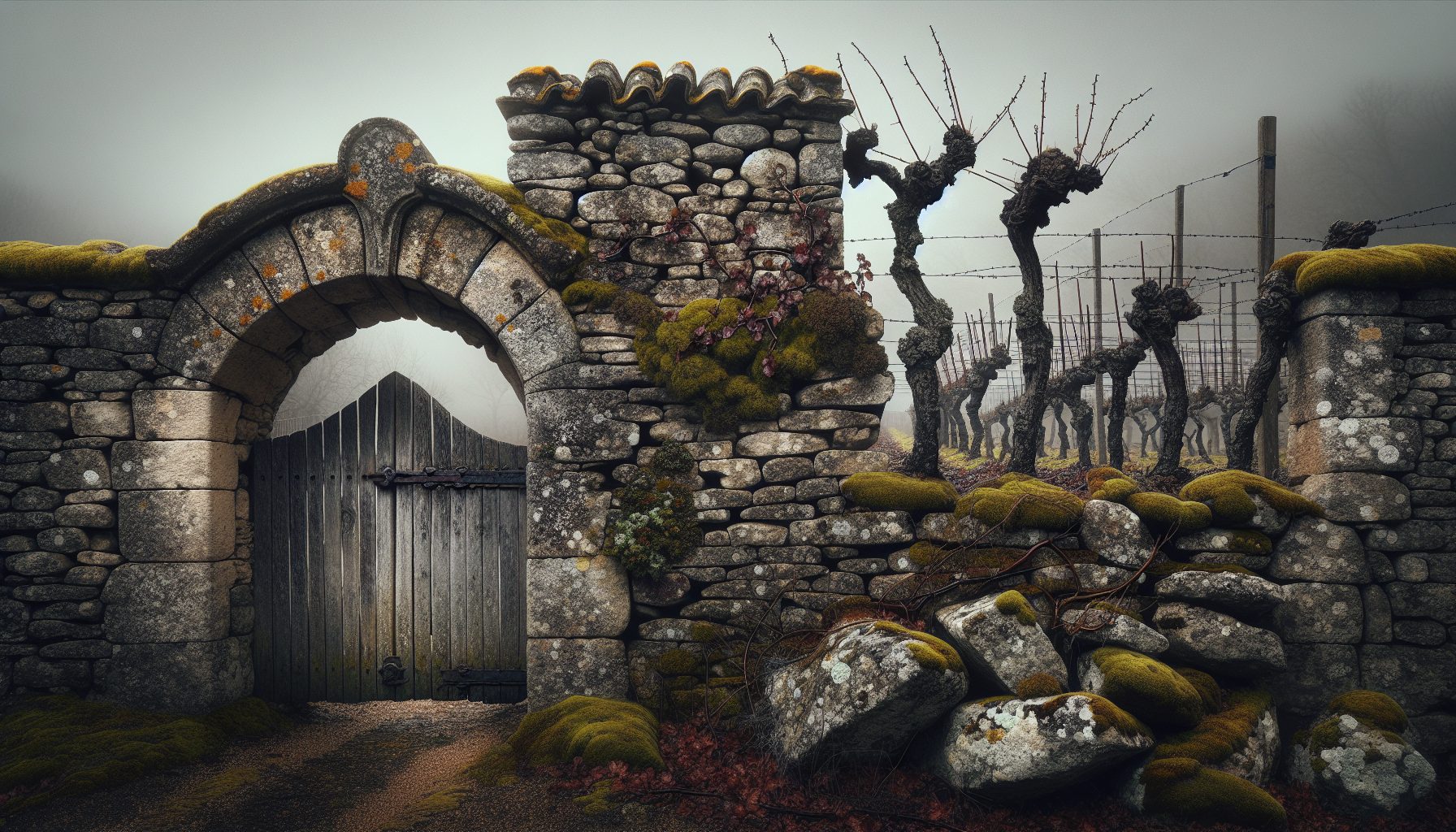
It was on the slopes of Vougeot, between 1109 and 1115, that the Cistercians methodically assembled their most famous property. They planted Pinot Noir as early as 1111 and entrusted its cultivation to their lay brothers. They built a vat house in 1170 still visible today, then, over the centuries, the monumental lever presses on display at the Château du Clos de Vougeot, the oldest, a wheel-and-capstan press, dates from 1477. It was only around 1330 that they began to enclose the whole estate with dry-stone walls, completed around 1336: the enclosure that gave birth to the word "clos" as it still structures Burgundian wine vocabulary. The Clos de Vougeot today covers 50.6 hectares classed Grand Cru, of which 47.3 hectares are in production, making it the largest Grand Cru of the Côte de Nuits. The monks worked here for almost seven hundred years, until the French Revolution confiscated and auctioned the estate in 1791.
The Birth of the Climat: Observe, Taste, Delimit
What makes the Cistercians' work genuinely unique is not that they planted the vine, others had done so since Gallo-Roman times, but that they observed it with a scientific method avant la lettre. Plot by plot, the monks tasted the wines, compared yields, noted differences of exposure, slope and soil color. From this patient observation, handed down from generation to generation, was born the notion of Climat: a vineyard plot carefully identified, named and delimited, producing a wine distinct from its immediate neighbor. An apparently simple but revolutionary, and very Burgundian, concept.
The first written mention of the word "climat" applied to a vineyard appears in a document dated September 5, 1572, kept in the archives of the Petit Pontigny in Chablis. And that 12th-century cellar is itself the work of the Cistercians: in 1114, Hugues de Mâcon founded Pontigny Abbey, the second "daughter" of Cîteaux, a few kilometers from Auxerre. Around 1130, the monks already cultivated about ten hectares of vines on the slopes of Chablis, exposed to the east and southeast, the same exposures sought today by Chablis Premier Cru growers. Since spring 2023, the Cellier du Petit Pontigny has housed the Chablis branch of the Cité des Climats et vins de Bourgogne: visitors now walk the walls that monks raised nearly a thousand years ago.
From Philippe le Hardi to UNESCO: The Consecration of a Terroir
The Dukes of Burgundy would extend the monastic work through law. In 1395, Philippe le Hardi (Philip the Bold) issued a decree banning Gamay from the great terroirs, branding it a "disloyal" grape, in favor of Pinot Noir, a Pinot that the monks had long identified as the king of the Côte's limestone slopes. Same logic for white Chardonnay, cultivated by the Cistercians from around the year 1000 in Meursault and around Puligny-Montrachet, and soon to forge the world reputation of the Côte de Beaune. Six centuries later, this long work of selection and parcel-naming was formally recognized on July 4, 2015, when the World Heritage Committee, meeting in Bonn for its 39th session, inscribed the Climats of the Burgundy vineyard on the UNESCO list as a "living evolving cultural landscape." The recognized site comprises 1,247 Climats spread over 104 municipalities and more than 60 kilometers, from Dijon in the northeast to Saint-Sernin-du-Plain in the southwest.
Visiting and Staying in Monastic Burgundy
For anyone wishing to touch this heritage, three sites are essential. The Château du Clos de Vougeot, open year-round, displays the medieval presses and tells seven centuries of Cistercian viticulture; guided tours give access to the 1170 vat house and the lay brothers' dormitory. Cîteaux Abbey, still inhabited by a monastic community (which produces the famous cheese of the same name), offers tours of its restored definitorium and a permanent exhibition on the order's history. Finally, Cluny Abbey in Saône-et-Loire deserves a full day, both for the monumental site and for the digital exhibitions that recreate the immense vanished church. In Chablis, the Cellier du Petit Pontigny now houses the Cité des Climats et vins de Bourgogne. Plan one stop per site, and round off with a tasting at a nearby estate, most winemakers still spontaneously mention "the monks" when asked about the origin of their plots. To range across this monastic Burgundy, Dijon remains the ideal base: the city is 20 minutes from Vougeot, 30 minutes from Cîteaux and less than an hour and a half from Pontigny. Accommodation such as that offered on oenosuite.fr, designed specifically for wine enthusiasts, combines urban comfort with visits to abbeys, châteaux and estates, exactly the reverse of the route once taken by the Cistercian barrel convoys of the Middle Ages.
Sources & References
- Cîteaux Abbey, Wikipedia (FR)
- Notre-Dame de Cîteaux Abbey, Cistercian history
- Cluny Abbey, Wikipedia (FR)
- Clos-Vougeot AOC, Wikipedia (FR)
- Château du Clos de Vougeot, Wikipedia (FR)
- Pontigny Abbey, origins of Chablis, Tourisme Yonne
- Climat (viticulture), Wikipedia (FR)
- The Climats, terroirs of Burgundy, UNESCO
- The contribution of monks and dukes of Burgundy, Vins de Bourgogne (BIVB)
Plan your trip to Burgundy
Book your wine accommodation in Dijon
Luxury wine suite with complimentary blackcurrant liqueur, Jalunia connected cellar and wine tourism experiences.
Book now