Marsannay: Burgundy's Only Three-Color Appellation
Simon Stoll
Oenosuite Founder
Marsannay is a village-level appellation of the Côte de Nuits in Burgundy, distinguished by a uniqueness found nowhere else in the region: it is the only village AOC to produce red, white and rosé wines under the same designation. Officially recognised as an AOC on 19 May 1987, it spans the communes of Marsannay-la-Côte, Chenôve and Couchey, at the northern tip of the Côte de Nuits, just a few kilometres from Dijon.
A Strategic Location at the Gates of Dijon
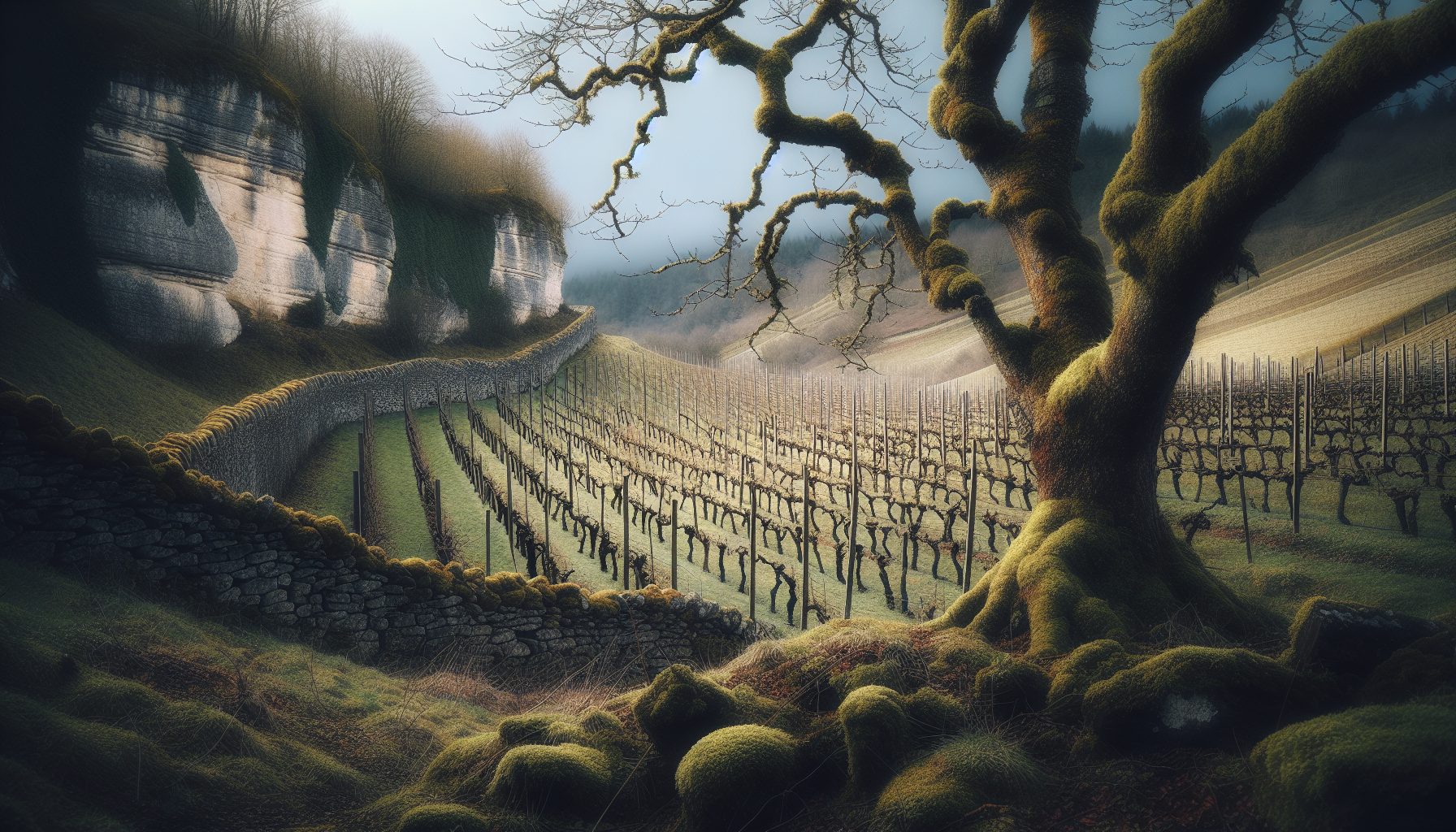
The first appellation at the northern entrance of the Côte de Nuits, Marsannay occupies a pivotal position between the Burgundian capital and the legendary names of the vineyard: Gevrey-Chambertin, Morey-Saint-Denis, Chambolle-Musigny. Its proximity to Dijon, barely 8 kilometres, makes it a natural first stop on the Route des Grands Crus. The appellation covers 361 classified hectares across the three communes, of which 283.7 hectares were declared in production in 2023 according to the BIVB. The vines spread across gentle slopes between 260 and 320 metres altitude, on the clay-limestone soils typical of Burgundy, calcareous marls, clays and gravels, cut through by several combes (Combe de Grandvau, Combe du Pré, Combe Pévenelle). The semi-continental climate, with moderately warm summers and cool nights, encourages slow and gradual ripening, essential for expressing the complexity of Pinot Noir and Chardonnay.
Burgundy's Only Three-Color Appellation
Red wines dominate, accounting for 77% of the production area in 2023 (217.6 hectares), made primarily from Pinot Noir. White wines cover 18% of the vineyard (51.9 hectares), made from Chardonnay and Pinot Blanc. But it is the rosé, 5% of the area with 14 hectares, that gives Marsannay its exceptional character: no other village-level appellation in the Côte de Nuits, nor in all of Burgundy at the communal level, can claim this privilege.
Marsannay rosé is no marketing gimmick: its existence dates back to 1919, when Joseph Clair-Daü began selling a rosé wine from his vines at a renowned Dijon restaurant, Aux trois faisans. The wine quickly gained prestige, championed by Curnonsky (the celebrated prince of gastronomes) and Canon Kir, future deputy mayor of Dijon. In 1929, the Marsannay cooperative winery joined the adventure. Yet it would take until 1987 for this centenary tradition to receive the official recognition it deserved.
A Thousand Years of Vines: History Rooted in the Land
The presence of vines in Marsannay is attested since the 7th century. In 658, according to the chronicles of abbé Claude Courtépée, the Benedictine abbey of Saint-Pierre de Bèze already owned twelve parcels of vines at Marsannay, the same abbey that lent its name to one of Burgundy's most famous Grands Crus, Chambertin Clos de Bèze. Through the Middle Ages, the Dukes of Burgundy, the bishopric of Autun and other ecclesiastical lords contributed to the vineyard's reputation.
Before the creation of the Marsannay AOC in 1987, the appellation operated since 1965 under the designation Bourgogne Marsannay (for reds and whites) and Bourgogne Clairet Marsannay (for rosés). The decree of 19 May 1987 elevated Marsannay to a full village appellation in three colours, restoring an identity that had been obscured for decades by neighbouring appellations.
Vineyard Sites on the Path to Premier Cru Status
Marsannay has no Premiers Crus yet, but that may soon change. Since a request filed by producers in 2011, the dossier has been advancing with the INAO. In 2024, twelve climats were shortlisted as candidates for promotion: Les Longeroies, En la Montagne, En Grands Vaux, La Charme aux Prêtres, Les Boivin, Les Grasses Têtes, Le Clos de Jeu, Les Favières, Au Champ Salomon, Le Clos, Champs Perdrix and Le Clos du Roy. The latter, located in Chenôve on grèzes litées soils (bedded limestone), is among the most anticipated candidates. Two additional sites, Saint-Jacques and Genelières, are still under review.
When official recognition comes, it will significantly reshape the international perception of Marsannay. In the meantime, the appellation already offers wines of remarkable quality at still-accessible prices, an opportunity that savvy wine lovers have already taken note of.
The Estates That Define Marsannay
Château de Marsannay (chateau-marsannay.com) is one of the appellation's flagship addresses: a 34-hectare estate certified in organic farming, located on the Route des Grands Crus, which vinifies over 40 climats separately, including parcels in prestigious appellations such as Chambertin, Ruchottes-Chambertin and Clos de Vougeot. Oenotourism is well developed here, with guided visits and tastings open year-round, every day from May to September.
Domaine Sylvain Pataille is another absolute reference: this trained oenologist, established since 1999 in Marsannay-la-Côte, tends over 17 hectares of vines exclusively within the appellation. His flagship cuvées, L'Ancestral (Pinot Fin) and Clos du Roi, rank among the most sought-after wines of the Côte de Nuits. Other noteworthy estates include Domaine Bruno Clair (whose Marsannay Les Longeroies rouge is a benchmark), Domaine Jean Fournier, and the Domaine du Vieux Collège, which produces all three colours with equal care.
Marsannay: An Ideal Base for Oenotourism in the Côte de Nuits
Visiting Marsannay means enjoying privileged access to the entire Côte de Nuits. In under 30 minutes, you can reach Gevrey-Chambertin to the south and Dijon to the north, a city whose gastronomic vitality (covered market, Michelin-starred restaurants, Cité Internationale de la Gastronomie) pairs perfectly with a day among the vines. By bicycle, the Route des Grands Crus passes directly through Marsannay, offering one of the most beautiful wine routes in Burgundy.
To plan your stay in the region, oenosuite.fr lists the best accommodation options at winemakers and wine estates near Marsannay and Dijon, the ideal solution for immersing yourself in vineyard life for a weekend or a full week, visiting estates at your own pace.
Sources & References
Plan your trip to Burgundy
Book your wine accommodation in Dijon
Luxury wine suite with complimentary blackcurrant liqueur, Jalunia connected cellar and wine tourism experiences.
Book now