Fixin: the Overlooked Village of the Northern Côte de Nuits
Simon Stoll
Oenosuite Founder
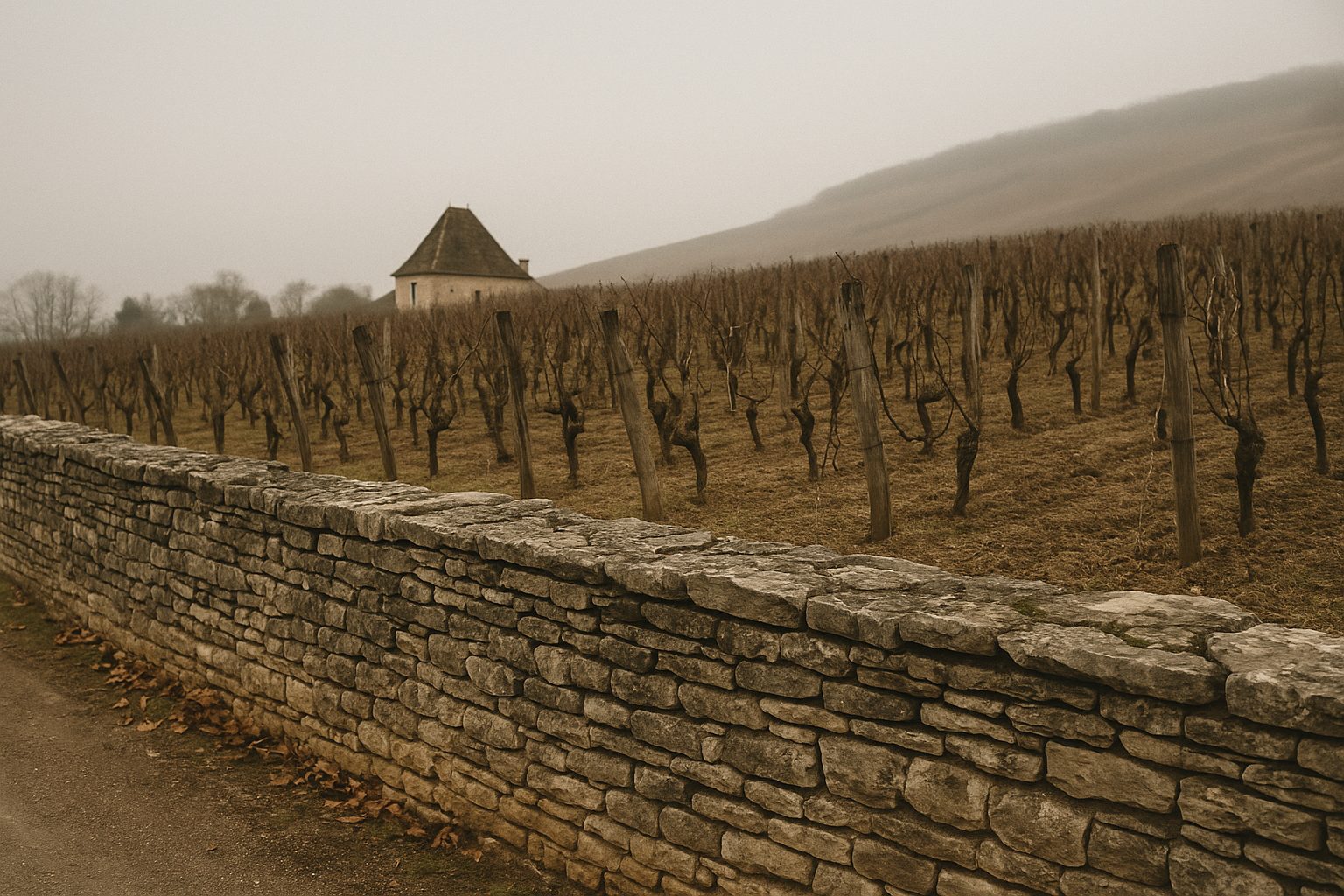
Fixin is a village appellation of the Côte de Nuits, in Burgundy, producing overwhelmingly red wines from Pinot Noir across roughly 102 hectares, including six climats classified as Premier Cru. Located about ten kilometres south-west of Dijon, between Marsannay-la-Côte and Gevrey-Chambertin, it forms one of the first gateways to the famous Côte de Nuits vineyard.
Often driven through without a second glance by visitors rushing towards Gevrey, Fixin is nonetheless one of Burgundy’s best-kept secrets: powerful wines, an intact Cistercian heritage, a park dedicated to Napoleon, and prices that remain among the gentlest on the slope. Here is everything you need to know before setting down your bags and your corkscrew.
Fixin, the northern gateway to the Côte de Nuits
Recognised as an appellation d’origine contrôlée back in 1936, Fixin covers the commune of the same name, which also includes the old wine-growing hamlet of Fixey. The vineyard unfolds on east-facing slopes over clay-limestone soils mixed with marl — the geological signature behind the finesse of the côte’s great reds. This is the very north of the Côte de Nuits, just past Marsannay, on the legendary Route des Grands Crus that links Dijon to Santenay.
Of the roughly 102 hectares in production, the vast majority is planted with Pinot Noir for red wine — nearly 95 hectares — while Chardonnay occupies only about 6 hectares devoted to whites. Premier Cru classification alone accounts for close to 17.5 hectares, a remarkable proportion for such a discreet appellation. Fixin wines are known to be firm, deeply coloured and profound, built for ageing, with a slightly wild character that appeals to lovers of authentic Burgundy.
Six Premiers Crus and two legendary monopoles
Fixin has six climats classified as Premier Cru: Les Arvelets, Les Hervelets, Le Clos du Chapitre, Le Clos de la Perrière, Le Clos Napoléon (whose cadastral name is « Aux Cheusots ») and Le Meix Bas. Two of them are monopoles — walled vineyards owned by a single proprietor — a rarity that gives the appellation a special aura.
The Clos de la Perrière is the most fascinating. This walled 5-hectare clos was founded in 1142 by the Cistercian monks of Cîteaux, who built a manor and a vaulted cellar still in use nine centuries later. Owned by the Joliet family since 1853, it has never been divided and has passed down intact through six generations. Unusually, it produces both a red and one of Fixin’s very rare white Premiers Crus.
The second monopole, the Clos Napoléon, belongs to Domaine Pierre Gelin, an estate founded in Fixin in 1925. Covering 1.83 hectares, this clos became the estate’s monopole in 1954 and produces around 8,500 bottles a year. Its name is no accident: it reflects this village’s singular attachment to the memory of the Emperor.
Napoleon watches over the vines: the Noisot Park
Fixin’s most astonishing story is not one you drink — it is one you walk. Above the vines, the Parc Noisot houses a monument to Napoleon I that is unique in France. Its builder, Claude Noisot, a former grenadier and captain of the Old Guard, had followed the Emperor into exile on the island of Elba. Back in Fixin, this devoted soldier laid out a park in honour of his idol.
He had one hundred steps carved into the stone, in memory of the Hundred Days, and commissioned from the great Dijon sculptor François Rude a bronze work that became famous: « Le Réveil de Napoléon » (Napoleon Awakening to Immortality), unveiled on 19 September 1847 before several thousand people. A small museum completes the visit. Few vineyards offer, just steps from the vines, such a journey into the imperial epic.
Fixin, the best value in the Côte de Nuits?
Here is the argument that should win over any wine lover: at Fixin, you can drink great Côte de Nuits Pinot Noir without spending a fortune. Overshadowed by its world-famous neighbour, Gevrey-Chambertin, the appellation offers wines of the same geological lineage — powerful, structured, built to age — at far more affordable prices. For anyone who wants to understand the muscular style of the northern côte without paying grand-cru money, Fixin is an ideal entry point.
It is also an appellation where the winemaker remains within reach: the estates are family-run, the cellars human-sized, and the welcome often warmer and more available than in over-visited villages. A tasting at the estate, a chat with the grower, a direct purchase — at Fixin, wine tourism rediscovers its human scale.
Visiting Fixin: our practical tips
Fixin lends itself perfectly to a half-day on the Route des Grands Crus. Start with a tasting at one of the benchmark estates — Domaine Joliet at the Clos de la Perrière or Domaine Pierre Gelin at the Clos Napoléon — booking ahead is essential, as the operations are small. Continue with the climb up to the Parc Noisot for the view over the côte and the Napoleonic monument, then push on to Marsannay to the north or Gevrey-Chambertin to the south to string appellations together.
Spring and autumn offer the finest light over the slopes, while winter, quieter, favours privileged encounters with the growers. As Fixin has only a handful of places to stay, the ideal approach is to base yourself centrally. The wine-tourism accommodation oenosuite.fr, in Dijon, makes a perfect starting point: less than twenty minutes from Fixin, you can plan your itinerary, taste on your return, and reach both the Côte de Nuits and the Côte de Beaune with ease. To discover Burgundy differently, away from the crowds and close to the winemakers, oenosuite.fr is the ideal base for a tailor-made stay.
Sources & references
Plan your trip to Burgundy
Book your wine accommodation in Dijon
Luxury wine suite with complimentary blackcurrant liqueur, Jalunia connected cellar and wine tourism experiences.
Book now