Corton and Corton-Charlemagne: Burgundy's Only Red and White Grand Cru
Simon Stoll
Oenosuite Founder
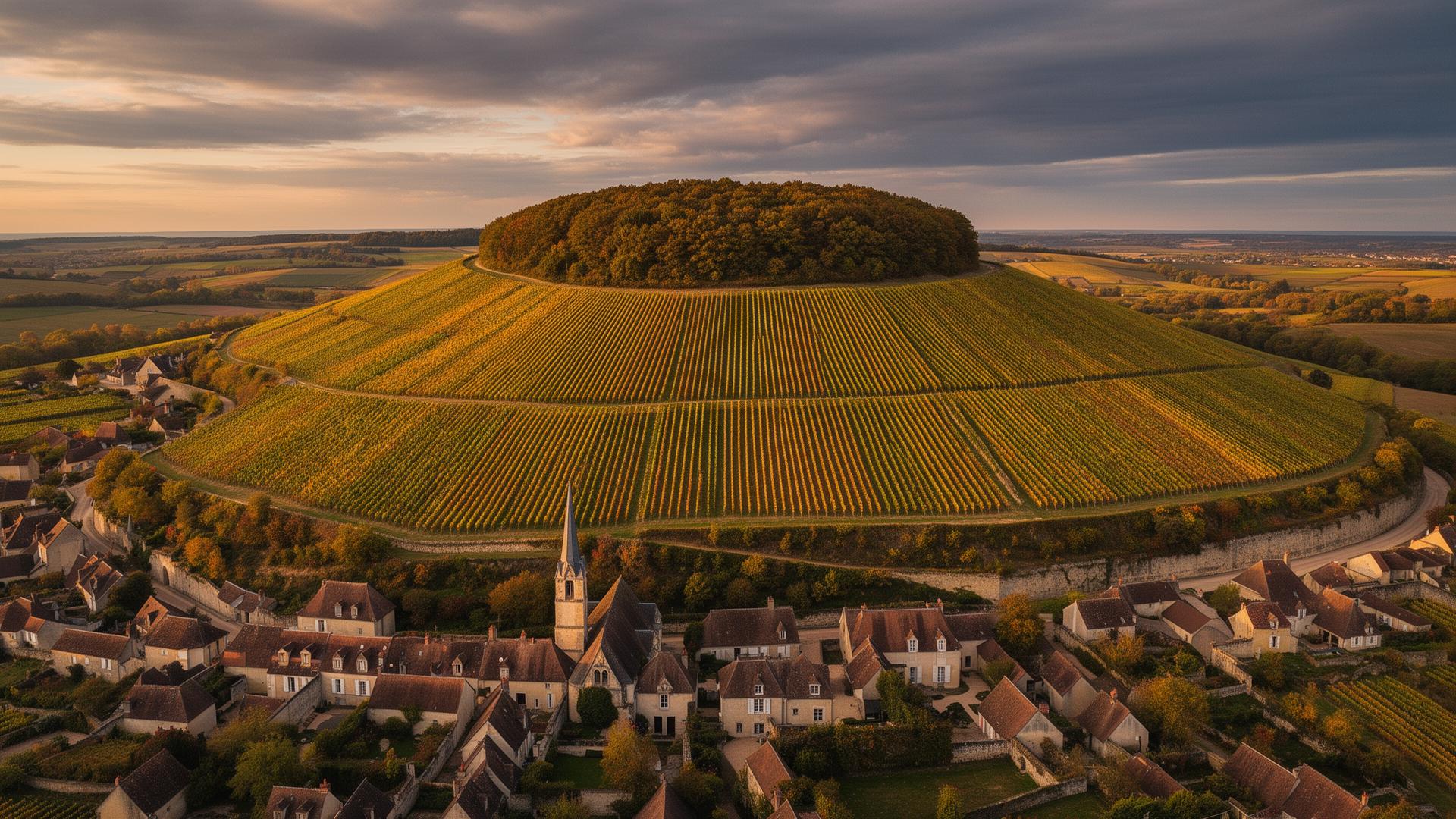
Corton and Corton-Charlemagne are the two Grand Crus that share the Corton hillside, in the Côte de Beaune. Corton is the only red Grand Cru in the entire Côte de Beaune, and one of the largest in surface area, with 95 hectares under production across three communes: Aloxe-Corton, Ladoix-Serrigny and Pernand-Vergelesses. Corton-Charlemagne, its white counterpart, covers 52 hectares planted exclusively with Chardonnay. Together, they form a unique singularity in the Burgundy vineyard: the same hillside, two Grand Crus recognised by the AOC since 1937, two colours, two radically different characters.
The Montagne de Corton: A Natural Limestone Amphitheatre
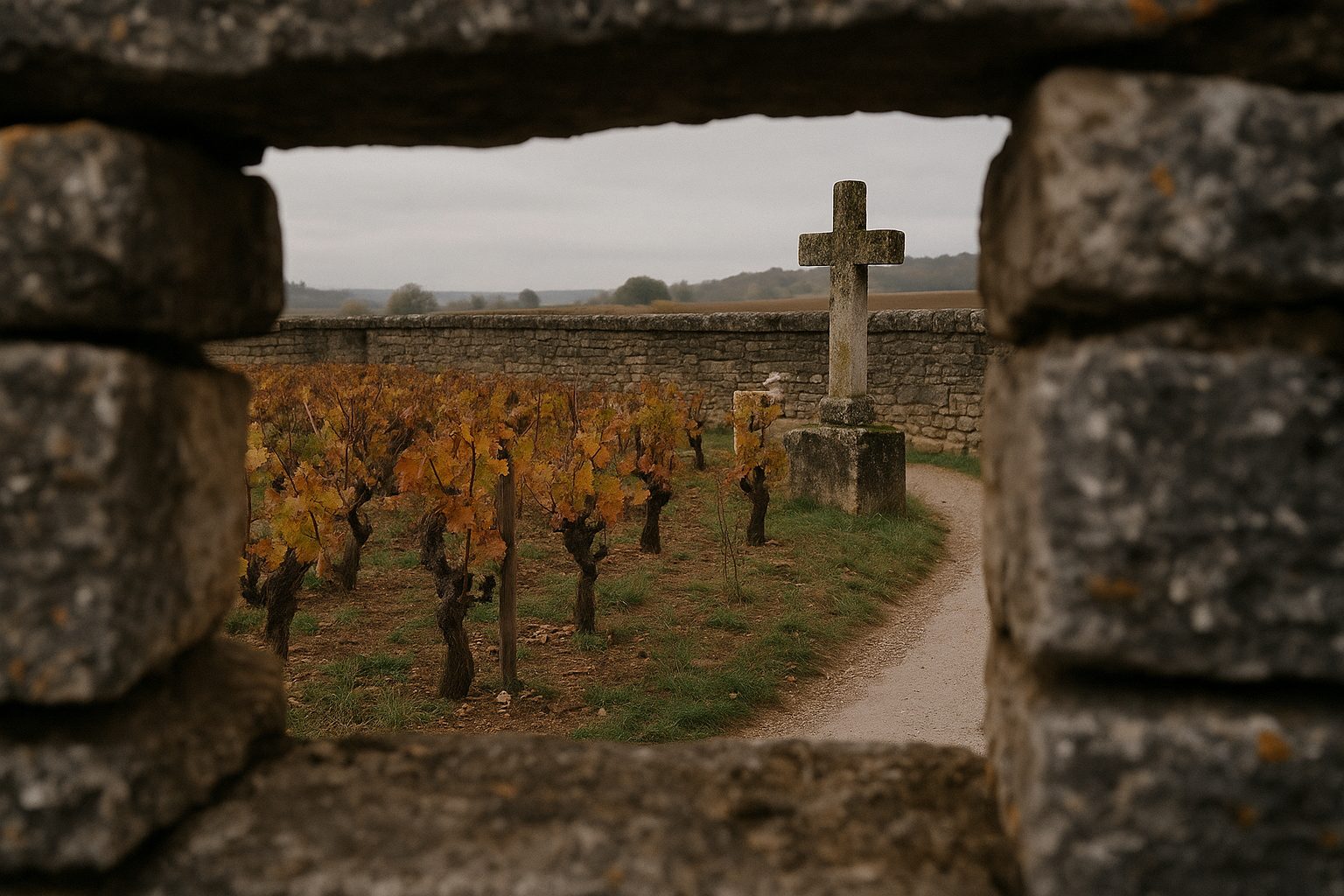
The Montagne de Corton dominates the Côte d'Or plain with its wooded summit rising to 385 metres. The Grand Cru vineyard is planted halfway up the hillside, between 240 and 350 metres altitude, in a natural amphitheatre configuration. This layout creates a remarkable diversity of exposures: the east- and south-east-facing slope, warmer and sunnier, carries most of the Corton red; the west- and south-west-facing slope, bathed in afternoon light, is the historic heart of Corton-Charlemagne. The geology matches: at the base of the slope, Bathonian hard limestones and ferruginous ooliths give red Corton its tannic backbone and deep colour; mid-slope, soft Oxfordian limestones and marls, rich in silica and chaillots (flint-limestone fragments), provide the white wines with their mineral tension and exceptional ageing capacity.
Corton: The Côte de Beaune's Only Red Grand Cru
The Corton AOC, recognised on 31 July 1937, is not only the sole red Grand Cru of the Côte de Beaune, but also the largest Grand Cru in all of Burgundy, with 95 hectares under production (91.5 in red, 4 in white). Annual production is approximately 3,000 hectolitres, of which 95% is red Pinot Noir. The appellation is divided into 28 named plots (lieux-dits), each of which may append its name to "Corton". The most reputed include: Corton-Bressandes (17.4 hectares, the largest, south-east-facing, often the most structured), Corton-Renardes (prized for its raciness and character), Corton-Clos du Roi (one of the noblest, fine and persistent), and Corton-Pougets (of remarkable floral elegance). Corton reds distinguish themselves from Côte de Nuits Pinot Noirs by their power, tannic structure and aromas of black cherry, spice and truffle, best enjoyed after 8 to 15 years of ageing.
Corton-Charlemagne: An Imperial Legacy
The story of Corton-Charlemagne goes back to 775 AD, when the Emperor Charlemagne, who then owned the Corton hillside, donated the vineyards to the collegiate church of Saint-Andoche in Saulieu. According to legend, it was his wife Luitgard who insisted that the upper part of the hill be replanted with white grapes: tired of seeing red wine stain the Emperor's white beard, she reportedly ordered that the vines produce white wine henceforth. Whether historical fact or centuries-old embellishment, Corton-Charlemagne today covers 52 hectares planted exclusively with Chardonnay (Aligoté and Pinot Gris dominated the hillside as recently as the 19th century). Annual production is approximately 2,160 to 2,280 hectolitres, equivalent to roughly 304,000 bottles.
These imposing whites, rich, full-bodied, mineral, with notes of cinnamon, toasted hazelnut and flint, are among the longest-finishing wines in all of Burgundy. The finest vintages require at least 10 years in the cellar before reaching their full potential, and can age for 25 to 30 years. Their profile differs markedly from Meursault or Montrachet: more austere in youth, more powerful, with a quasi-Champagne-like minerality that surprises those unfamiliar with the appellation.
Key Estates to Know
At the top of the Corton-Charlemagne hierarchy sits Domaine Bonneau du Martray, in Pernand-Vergelesses. With 11 hectares on the Corton hillside, 9.5 in Corton-Charlemagne and 1.5 in Corton red, it is the largest single-Grand-Cru owner in all of Burgundy. Since 2011, the estate has been run entirely on biodynamic principles (certification obtained in 2013), following a gradual conversion initiated from 1997 by Jean-Charles le Bault de la Morinière. The estate was acquired in 2017 by American E. Stanley Kroenke, without any departure from its biodynamic philosophy. For lovers of great white Burgundy, Bonneau du Martray's Corton-Charlemagne is an absolute benchmark.
Bouchard Père & Fils (founded in 1731), one of Burgundy's oldest merchant houses, produces a reference Corton red and Corton-Charlemagne white. Louis Latour is another essential name on this appellation, with a long tradition of vinification on the Corton hillside. For more accessible discoveries, Domaine Senard in Aloxe-Corton and the Caveau d'Aloxe-Corton (created in 1975, bringing together the estates of Chapuis, Meuneveaux, Follin-Arbelet and Poisot) offer wines at more reasonable prices alongside cellar visits and tastings open to the public.
Visiting the Corton Hillside: Practical Tips
Aloxe-Corton lies 6 km from Beaune and 30 km south of Dijon, at the heart of the Route des Grands Crus. The "Tour de la Butte de Corton" is a 6-kilometre loop trail through the vineyards of all three communes, with panoramic views across the Grands Crus and the village of Pernand-Vergelesses. For a guided experience, Winalist lists tasting options in Aloxe-Corton from €66 per person, including formats with in-vineyard tastings and a comparative exploration of different lieux-dits. The École des Terroirs (bookable via Winalist) runs a full Friday morning programme: a walk through the vines between Aloxe-Corton and Pernand-Vergelesses, a tasting of 8 wines from regional appellations to Grand Cru level, and a traditional mâchon luncheon.
To plan a full oenotourism stay around the Corton hillside, oenosuite.fr lists the best accommodation options at wine estates across the Côte de Beaune, in Beaune, Aloxe-Corton and the surrounding villages. The perfect base for exploring both Grand Crus, meeting producers directly, and leaving with a few bottles of Corton-Charlemagne for the cellar, to open in ten years, when they will have reached their full expression. Best times to visit are October (after harvest, when the vineyards turn gold and red) or spring, when Chardonnay shoots begin to unfurl on the old vines of the Montagne de Corton.
Sources & References
Plan your trip to Burgundy
Book your wine accommodation in Dijon
Luxury wine suite with complimentary blackcurrant liqueur, Jalunia connected cellar and wine tourism experiences.
Book now