Burgundy vs Bordeaux: Why Pinot Noir Crushes Merlot
Simon Stoll
Oenosuite Founder
Burgundy and Bordeaux are the two most famous French wine regions in the world, yet they embody two opposing philosophies of great wine. Burgundy is monovarietal land, where Pinot Noir and Chardonnay rule alone over a patchwork of climats. Bordeaux is the land of the blend, where Merlot, Cabernet Sauvignon and Cabernet Franc are married inside château estates. Which approach better expresses terroir? Wine lovers have been arguing for decades - here is our analysis, figures in hand.
Burgundy: one terroir, one grape, one vision
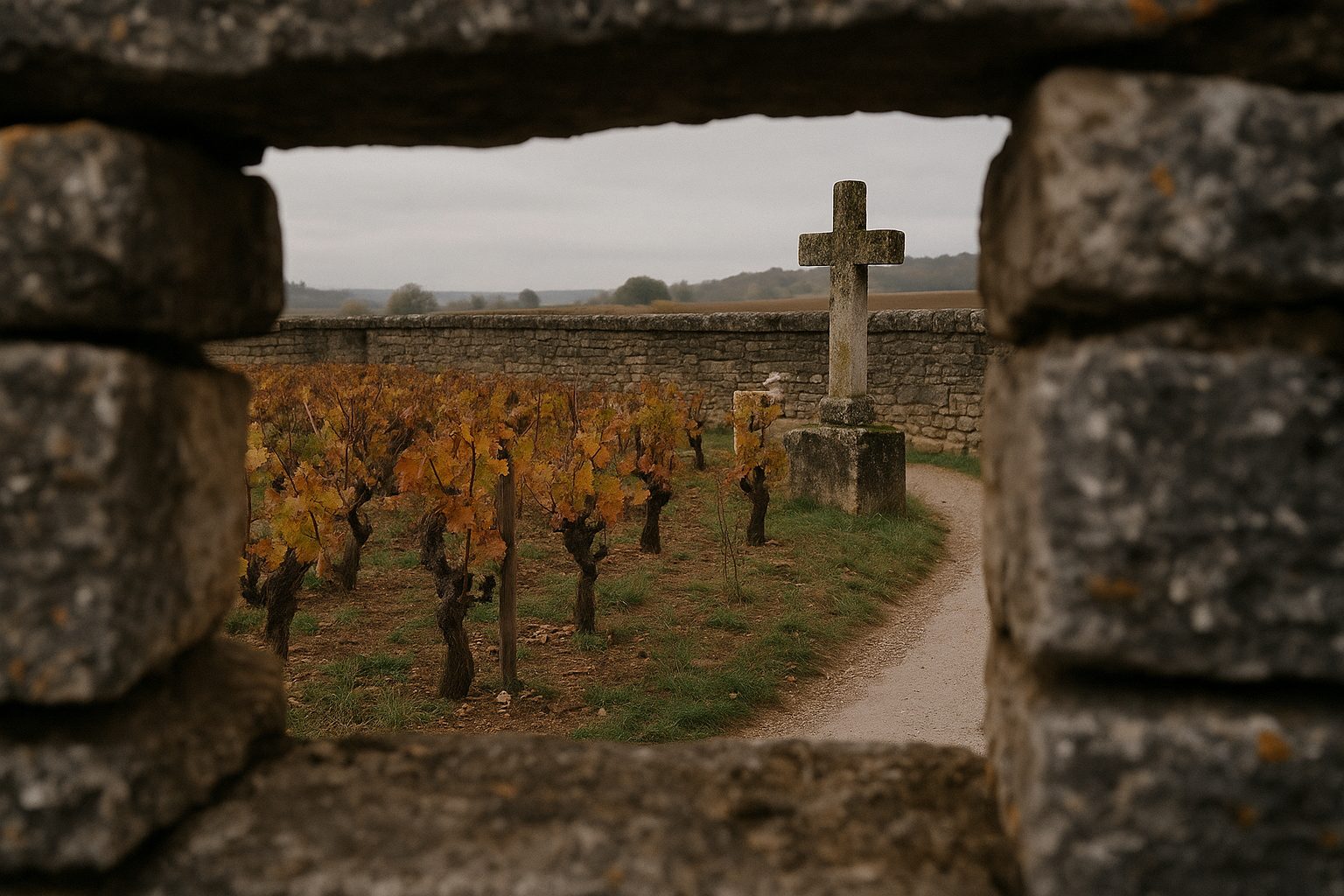
The Burgundy vineyard covers around 32,000 hectares in 2024 according to the BIVB, barely 4.3 % of the French vineyard. Its philosophy fits in one sentence: one climat, one grape, one wine. Reds are almost exclusively Pinot Noir (first mentioned in writing in 1375 as "Plant Fin"), whites are Chardonnay, and the point is not to mask but to reveal. Every parcel, every "climat" - the Burgundian word for a historically defined, named plot - produces a wine that speaks of its soil, exposure and altitude.
This grape-terroir logic is enshrined in an almost obsessive hierarchy: 84 AOCs, 44 village appellations, 588 Premier Cru climats spread over 28 appellations, and 33 Grands Crus covering only about 550 hectares, less than 2 % of regional production. On a Grand Cru label, the village name disappears entirely: "Chambertin", "Musigny", "Montrachet" - the climat alone is enough. That level of granularity is what fascinates collectors and wine lovers worldwide.
Bordeaux: the philosophy of the blend
Bordeaux plays a radically different score. With about 95,000 hectares of AOP vines in 2024 according to the CIVB, the Gironde vineyard is nearly three times the size of Burgundy. More importantly, single-varietal Bordeaux barely exists: red Bordeaux is almost always a blend of Merlot, Cabernet Sauvignon and Cabernet Franc, with touches of Petit Verdot or Malbec. It is the identity of the château, not the grape or the parcel, that structures the wine's image.
Merlot accounts for more than 60 % of Bordeaux plantings, up to 75 % in some appellations. On the Right Bank (Saint-Émilion, Pomerol), it dominates the blend: Château Pétrus is made from about 95 % Merlot. On the Left Bank (Médoc, Graves), Cabernet Sauvignon takes the lead on the warm gravels. The historical pecking order rests on the 1855 Classification, which lists 61 red châteaux (5 First Growths, 14 Seconds, 14 Thirds, 10 Fourths, 18 Fifths) plus 27 sweet whites from Sauternes and Barsac: a ranking nearly frozen for 170 years.
Pinot Noir vs Merlot: two grapes, two worlds
Pinot Noir is a demanding, capricious grape with thin skin and a tightly packed cluster (which gave it its name, evoking a pine cone). It rejects excessive heat, ripens slowly and expresses soil nuance better than any other variety. In Burgundy, on Jurassic marls and limestones, it delivers wines with a bright ruby colour and fine, silky tannins, mixing cherry, raspberry, violet, spice and undergrowth. Its ability to translate the smallest terroir variation is legendary: it is the reason a parcel 50 metres from its neighbour can produce a noticeably different wine.
Merlot, by contrast, is a generous, fertile grape that thrives on clay-limestone soils and humidity. It offers roundness, fruit (strawberry, raspberry, blackberry), velvety texture and alcohol - the grape that makes tasting easy. But it is rarely left alone: its job is to bring flesh and mid-palate to a blend that the Cabernets then tighten and structure. Where Pinot Noir seeks precision, Merlot seeks seduction. Where great Burgundy lets you drink its terroir, great Bordeaux lets you drink the cellar master's craft.
The global market is tipping toward Burgundy
The fine-wine market numbers speak loudly. On the reference platform Liv-ex in the first half of 2024, Bordeaux accounted for 37.9 % of trade value, vs 22.7 % for Burgundy. But that gap masks a heavy trend: Bordeaux's share is shrinking (40.4 % in H2 2023, 39.4 % in H1 2023), while Burgundy is climbing. By November 2024, Bordeaux was down to 30.0 %, vs 27.7 % for Burgundy - barely three points apart, even though the Bordeaux vineyard is three times the size.
Even more telling: at the very top of the market, Burgundy concentrates about 69 % of the Liv-ex "First Tier" wines in 2024. On the auction front, the absolute record is still held by a 1945 Domaine de la Romanée-Conti bottle sold for 558,000 dollars at Sotheby's in October 2018. The Domaine de la Romanée-Conti, with only 28 hectares of Grand Cru holdings in total and just 1.8 hectares for the Romanée-Conti monopole itself, sets the ceiling price of the global market - well above any Bordeaux First Growth.
Our verdict, and the nuance that follows
Does Pinot Noir really "crush" Merlot? On finesse, transparency of terroir and resale value, the answer is yes, with no ambiguity. No grape narrates the soil quite like Pinot Noir on the Burgundian climats, and no secondary market is moving as fast as the Côte de Nuits. With only 32,000 hectares, Burgundy plays in the same league as a Bordeaux vineyard three times its size.
That said, a nuance is needed. Bordeaux Merlot has never tried to compete with Pinot Noir on its own ground: it offers something else - the blend, the consistency, the patient 30- to 50-year ageing of a Médoc First Growth, the silky opulence of Pomerol. Great Bordeaux is teamwork; great Burgundy is a terroir signature. Truly passionate wine lovers end up drinking both. But to settle the debate for yourself, nothing beats tasting on the spot: oenosuite.fr in Dijon offers stays designed for wine lovers - connected cellar, guided tastings and easy access to Côte de Nuits and Côte de Beaune estates. An ideal base, 20 minutes from the first Grands Crus, to form your own opinion on the century's great match between Pinot Noir and Merlot.
Sources & references
Plan your trip to Burgundy
Book your wine accommodation in Dijon
Luxury wine suite with complimentary blackcurrant liqueur, Jalunia connected cellar and wine tourism experiences.
Book now