Climat, lieu-dit, clos: Burgundy wine vocabulary finally explained
Simon Stoll
Oenosuite Founder
Why Burgundy wine has its own dictionary
The Burgundy vineyard stretches for roughly 60 kilometres between Dijon and Santenay, on a strip of land rarely more than 3 kilometres wide, yet its vocabulary is arguably the most complex in France. Climat, lieu-dit, clos, monopole, Premier Cru, Grand Cru: before even discussing aromas, you need to master a dozen terms to decode a Burgundy label. This vocabulary is not a connoisseur's whim. It reflects a unique reality, a mosaic of vineyard parcels patiently delimited since the Middle Ages by the monks of Cîteaux and Cluny, then enriched by centuries of grower observation and INAO classification. Here are the verified definitions of the words you will meet at every tasting, every cellar visit and every wine list.
Climat: the key word that changes everything
In Burgundy, a climat designates a precisely delimited vineyard parcel, bearing a proper name recognised for centuries, with its own geological, hydrometric and exposure characteristics. It is not the weather, it is a terroir in the strictest sense, inherited from monastic times. The Burgundy vineyard counts 1,463 climats in total, of which 1,247 lie on the Côte d'Or alone (Côte de Nuits and Côte de Beaune combined), inscribed on 4 July 2015 on the UNESCO World Heritage List as a cultural landscape.
Climats vary widely in size. The smallest, La Toppe au Vert (Ladoix-Serrigny, in AOC Corton), measures just 0.108 hectare. At the other end, Les Beaumont in Chorey-lès-Beaune covers 40.9 hectares, and Les Grèves in Beaune 31.3 hectares. This fine-grained delineation is what allows two wines made a few metres apart to be instantly recognisable. When a grower talks about "his climat", he often means a parcel of less than a hectare whose every vine he knows by heart.
Lieu-dit vs climat: the nuance that matters
Every climat is a lieu-dit, but not every lieu-dit is a climat. A lieu-dit is a cadastral place name, a locality registered in the French land registry, with no particular vocation. A climat is a lieu-dit dedicated to vines and recognised for its own viticultural identity. On a label, a lieu-dit may accompany a Village appellation to specify the exact origin of the grapes: "Gevrey-Chambertin Aux Combottes" or "Meursault Les Charmes" when the climat is classified as Premier Cru. Conversely, some lieux-dits located in regional zones do not enjoy recognised climat status, even if their name occasionally appears in small print on the back label.
Clos: the wall that says it all
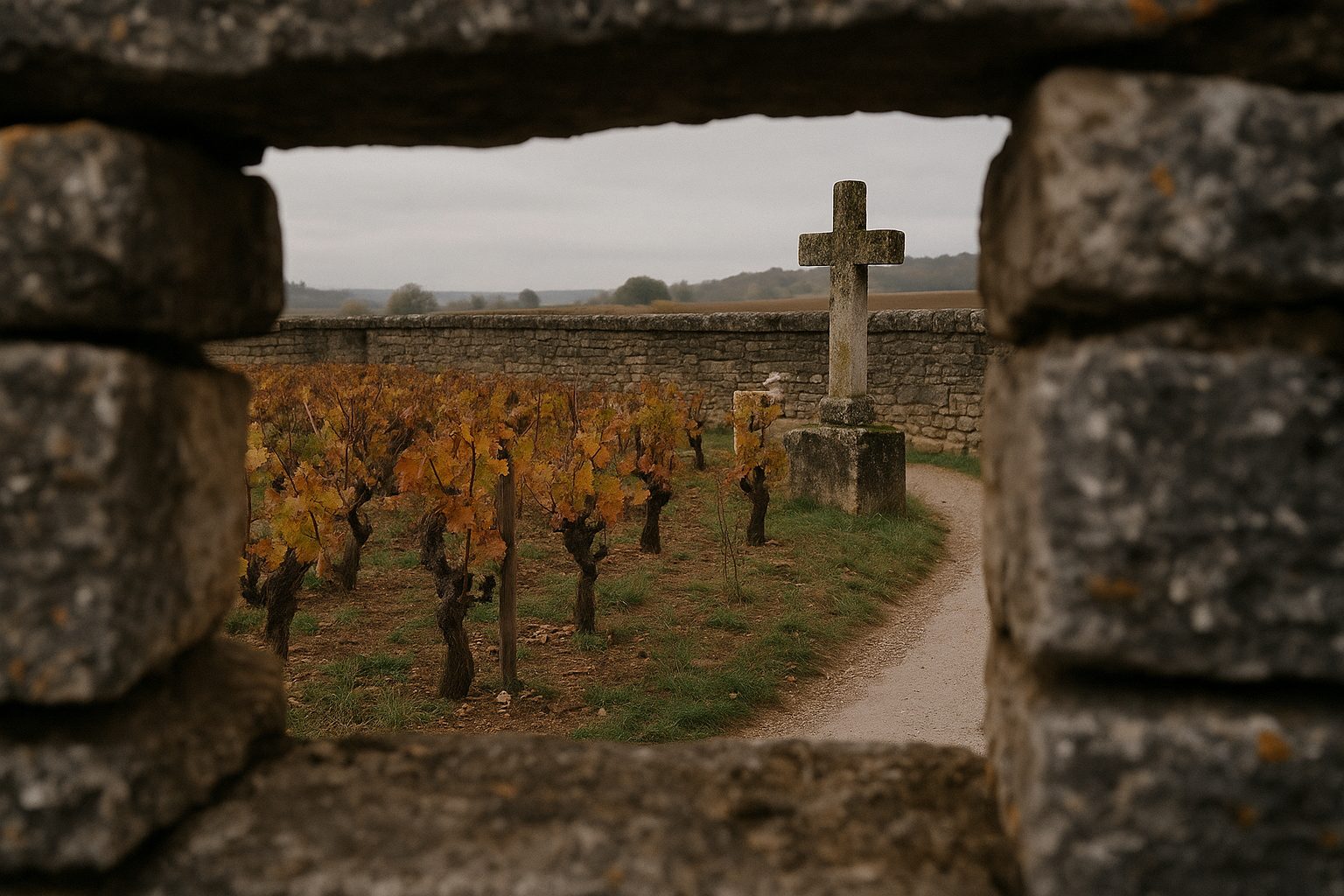
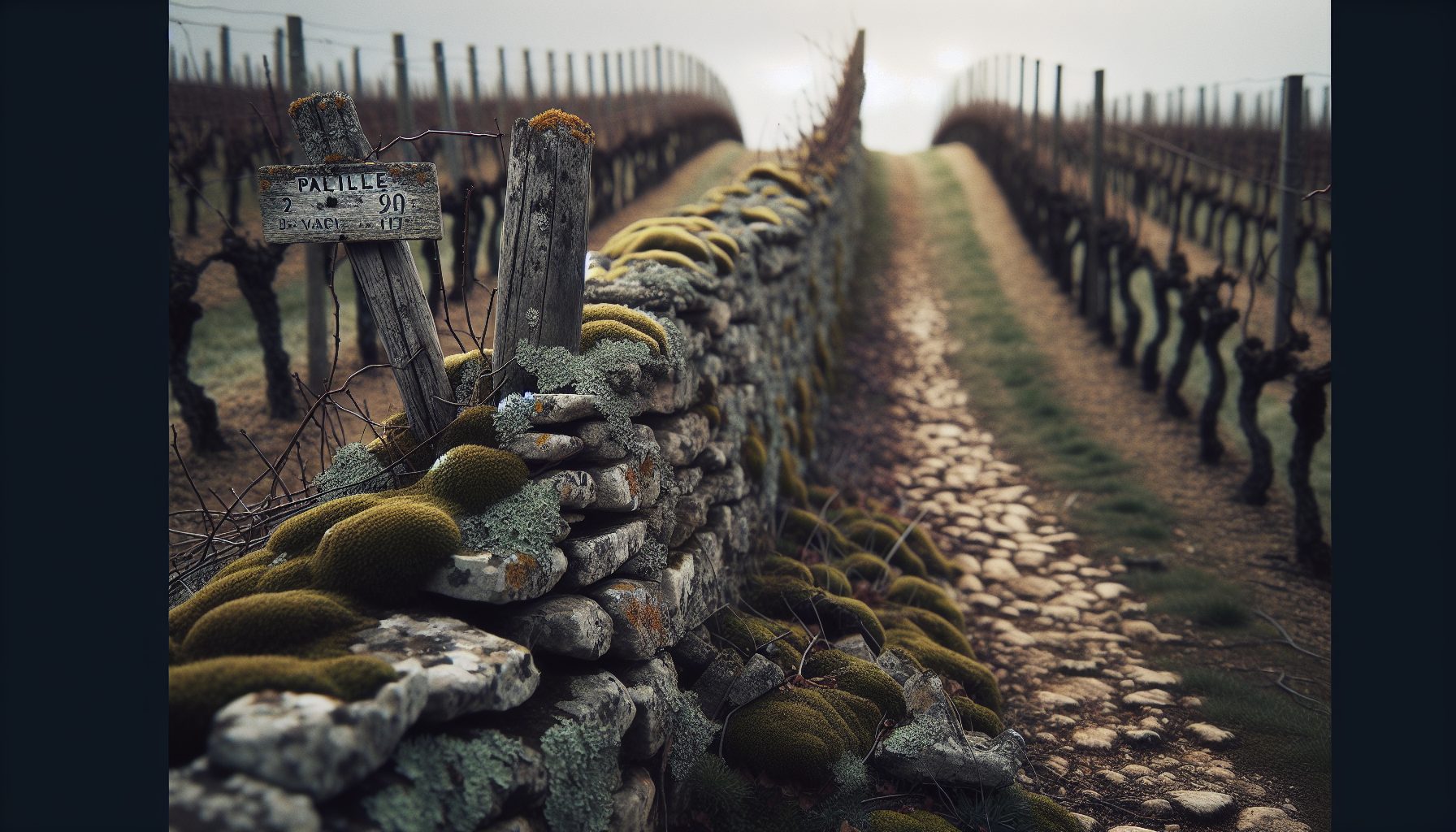
The word clos historically refers to a vineyard parcel enclosed by a dry-stone wall. The wall originally kept out game and thieves and signalled monastic ownership. Today many of these walls have crumbled, but the name has stuck, and still evokes a parcel with precise historical contours. The most iconic example is the Clos de Vougeot (50.6 hectares), created by the Cistercian monks of Cîteaux Abbey from 1109-1115 and fully walled by 1336. It is the largest single vineyard classified as Grand Cru in the Côte de Nuits, today shared between more than eighty owners. The Clos de Tart (7.53 ha), Clos des Lambrays and Clos Saint-Denis also belong to Burgundian mythology. Not every clos is a Grand Cru, but the word clos on a label always suggests a story, an enclosure and an original monastic intent.
Monopole: one climat, one owner
A parcel is called a monopole when it is owned and farmed in full by a single estate. The fragmentation typical of Burgundy, worsened by the Napoleonic Civil Code of 1804 and centuries of inheritance, makes monopoles rare: only 5 of Burgundy's 33 Grands Crus are monopoles. The most famous is Romanée-Conti (1.81 hectare in Vosne-Romanée), exclusively owned by Domaine de la Romanée-Conti, which produces around 5,000 to 6,000 bottles per year. Other examples include the Clos de Tart in Morey-Saint-Denis, the largest Grand Cru monopole at 7.53 hectares, and the Clos de la Maréchale in Nuits-Saint-Georges (9.74 ha), a Premier Cru monopole farmed by Domaine Jacques-Frédéric Mugnier. The word "Monopole" legally appears on the label, and is usually a guarantee of stylistic coherence: the same winemaker signs the entire cuvée.
The appellation pyramid: from regional to Grand Cru
Burgundy wines follow a four-tier hierarchy, managed by the INAO and supported by the BIVB (Bureau Interprofessionnel des Vins de Bourgogne). At the base, regional appellations (Bourgogne, Bourgogne Aligoté, Mâcon, Crémant de Bourgogne, Coteaux Bourguignons…) represent around 50% of production. Just above, Village (communal) appellations (Gevrey-Chambertin, Meursault, Pommard, Chassagne-Montrachet, Nuits-Saint-Georges…) account for roughly 38%: the name of the village becomes the appellation itself.
Higher still, the Premiers Crus gather 640 climats classified inside Village appellations, around 10% of total production. The climat name then appears next to the village: "Beaune Premier Cru Les Grèves", "Meursault Premier Cru Les Perrières". At the very top, the Grands Crus, exactly 33 of them, cover about 550 hectares, less than 2% of the entire Burgundy vineyard. They carry their own AOC, without the village name attached: a "Chambertin", a "Montrachet" or a "Corton" need no further introduction. Understanding this pyramid lets you read a wine list at a glance, and calibrate both your expectations and your budget before tasting.
Plan your wine tourism stay with the right vocabulary
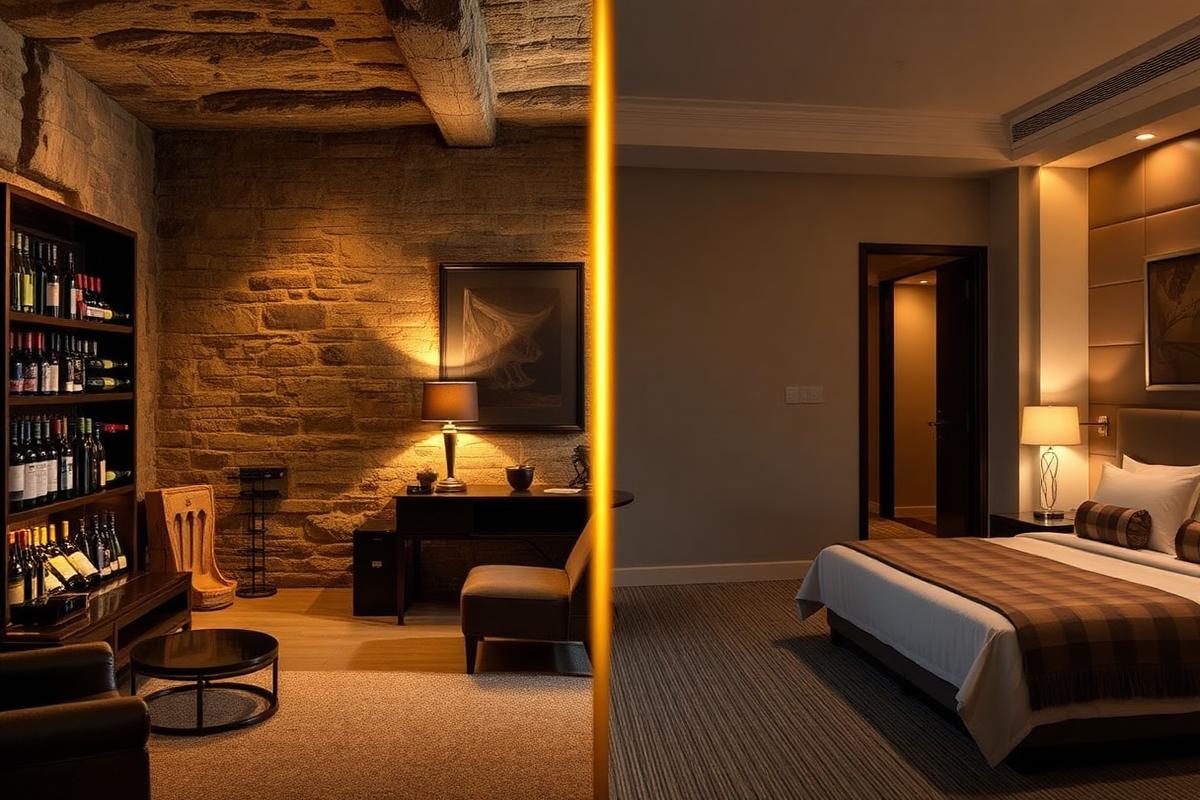
Before a cellar visit or a tasting workshop, keeping these words in mind transforms the experience. Asking "which climat does this cuvée come from?" rather than "which village is it?" instantly shifts the tone of the conversation with a grower, who realises she is talking to a curious and informed visitor. To soak in this vocabulary on the ground, oenosuite.fr offers in Dijon, the historical capital of wine-growing Burgundy and the gateway to the Côte de Nuits, stays designed for wine lovers and curious newcomers alike: wine-themed suites, a connected Jalunia wine cellar, an oenological escape game and blind tastings. It is an ideal city base for daily trips to Gevrey-Chambertin, Vosne-Romanée, Beaune or the UNESCO-listed Climats. With this lexicon in your pocket, every label becomes a map of the vineyard, and every glass, a reading of the terroir.
Sources & references
Plan your trip to Burgundy
Book your wine accommodation in Dijon
Luxury wine suite with complimentary blackcurrant liqueur, Jalunia connected cellar and wine tourism experiences.
Book now