Whole Bunch or Destemmed: How Red Burgundy Gets Its Style
Simon Stoll
Oenosuite Founder
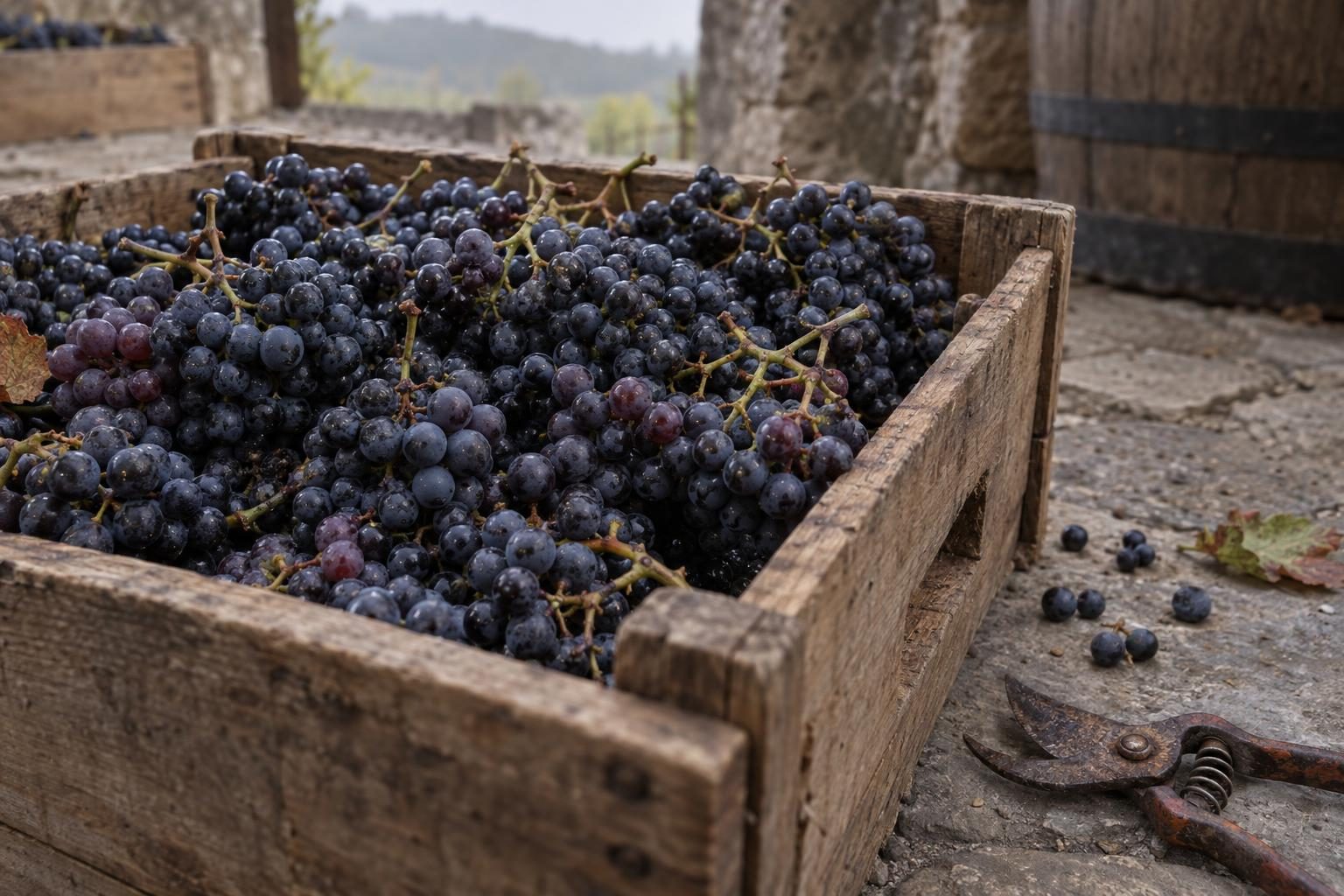
Whole-cluster fermentation, also called whole-bunch fermentation, means fermenting grapes with their stems (the woody part of the bunch) instead of destemming them; according to Wine Spectator, winemakers often use it for only part of a batch, commonly 20 to 40%, with some going up to 100%. For a lover of red Burgundy, it is one of the cellar choices that best explains why two Pinot Noirs from the same vintage taste different: full destemming, partial destemming or whole bunch, every estate has its own recipe.
Destemming or whole bunch: what are we talking about?
On arrival at the winery, the harvest can follow three paths. It can be fully destemmed: berries are separated from stems and only the berries ferment. It can be partially destemmed: a share of bunches is kept whole and mixed with berries. Or it can be vinified as whole bunches. According to the Burgundy Report, stems are kept fully, partly or not at all depending on the estate, and some estates insist on hand harvesting so as to keep them: a harvesting machine damages bunches.
Red Burgundy is a special case, because Pinot Noir is low in tannin and sensitive to oxidation, and stems can give it what its thin skin does not always provide. Wine Spectator notes that many winemakers cite Burgundy as an inspiration, but that not every Burgundian producer uses it: it is a style choice, not an appellation rule. We found no regulatory requirement on this in the specifications consulted; the information comes from the winemakers themselves.
What stems change in the glass
The effects described by winemakers and specialist writers point the same way, with nuances. Stems can add extra tannin, structure and an impression of freshness; ripe ones can also give spicier, minty or forest-floor notes. The Burgundy Report adds that they tend to lighten the colour and slightly raise the pH. On the fermentation side, whole bunches release their sugars more gradually, which can limit the temperature rise in the tank, and allow a little carbonic maceration, which keeps the fruit crunchy.
The risk has a name: stem ripeness. If stems are still green, they can give hard tannins and vegetal or herbaceous notes. That is why winemakers quoted by Réussir Vigne give it up in vintages where stems and berries do not ripen together, and use more of it in warm years. For a wine lover this translates into a simple rule: whole bunch is not judged in itself, but by vintage and by estate. Treat it neither as a guarantee of quality nor as a flaw.
One last point to keep in mind before opening a bottle: these effects are hard to isolate in the glass. A whole-bunch wine may seem fresher, airier, longer, but ageing, the share of new oak, vine age and climate matter just as much. Without the estate's technical sheet, you can form hypotheses; you cannot assert them.
Vatting, punch-downs, pump-overs: the rest of the recipe
Once the tank is full, other choices shape the style. The Burgundy Report describes in the Côte d'Or a vatting of about two to three weeks, sometimes preceded by a cold maceration of two to four days at 12-18°C, which gives gentler extraction and scheduling flexibility in the cellar. Figures vary widely between estates: take them as orders of magnitude, not norms.
During fermentation, the cap, the mass of skins and stems that rises to the surface, must be wetted. Pigeage pushes it down into the juice, by foot or with a pigeou, a perforated disc on a long handle; remontage pumps juice from the bottom of the tank over it. According to the Burgundy Report, more and more Burgundy estates do less punching down and more pumping over, because tannins and anthocyanins fix better in the presence of oxygen, and the cap temperature should stay below 35°C. With stems, punching down is also harder to do, which points toward gentler extraction.
Keep the principle rather than the figures: with Pinot Noir, winemakers generally aim to infuse rather than extract. Stems, vatting time and cellar gestures are all settings on the same dial, between a softer wine and a firmer, fresher one.
Comparing these styles in Dijon, from Oenosuite
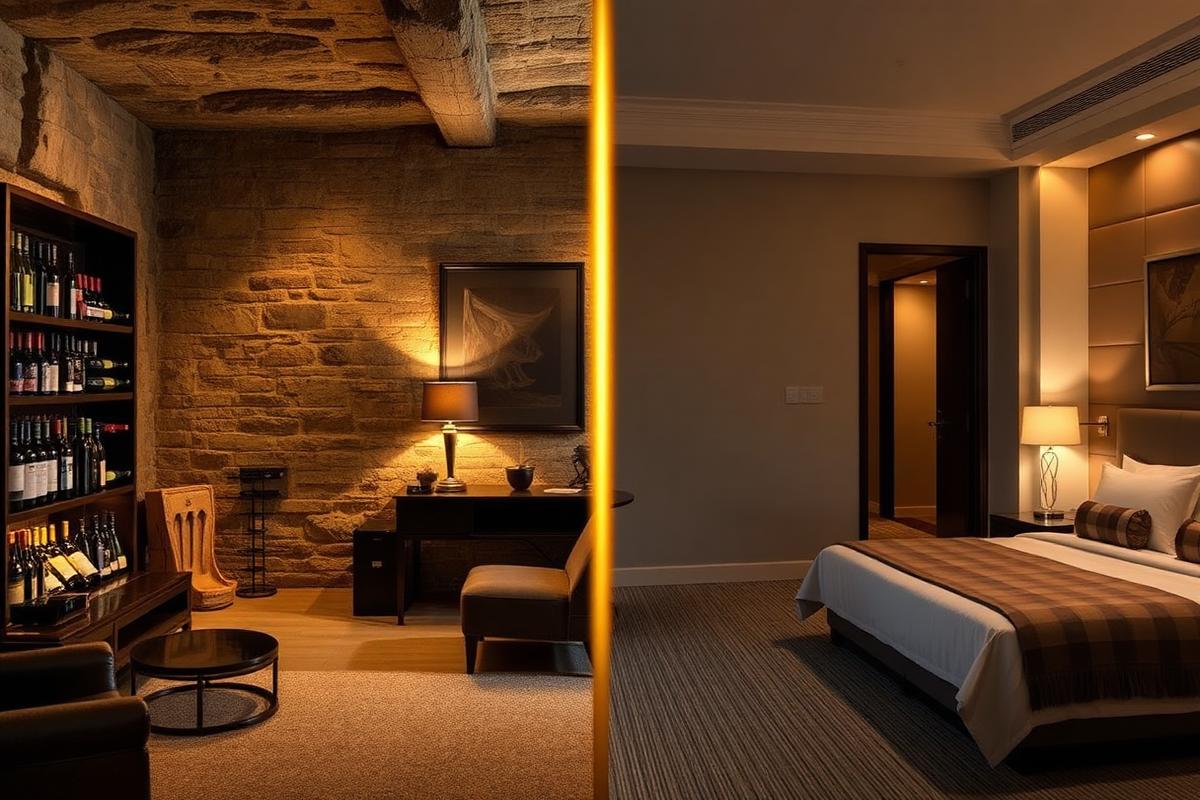
The best way to grasp these differences is to compare several reds side by side. At Oenosuite, in central Dijon a short walk from the Palais des Ducs, the Jalunia connected cellar offers Burgundy wines in tubes or bottles on a self-service basis from the suite: enough to taste several wines of different styles, then read their technical sheets to see whether the winemaker mentions destemming or whole bunch. The Loft d'Artiste (25 m², 2 guests) and the Suite Charme & Vin (43 m², 2 to 4 guests) are 20 minutes from the Route des Grands Crus, so you can ask a winemaker directly the next day.
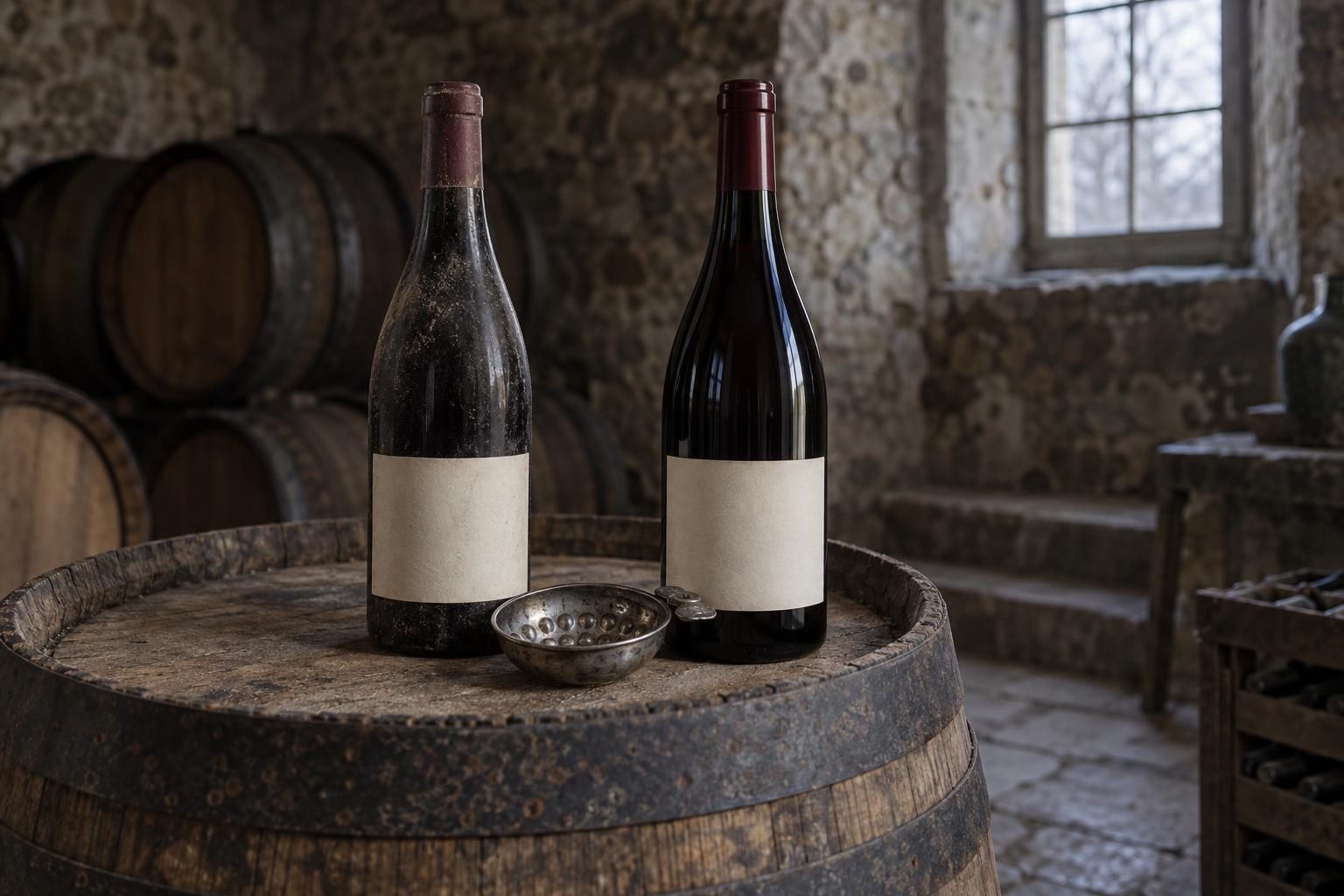
The tasting socks left in the apartment for your own blind tasting let you run a tasting with your own bottles. A simple exercise is to compare two reds from the same appellation but different estates, then decide which feels fresher or more tannic. The only Vignobles & Découvertes labelled apartment in Bourgogne-Franche-Comté is rated 4.94/5 on Airbnb (100+ reviews); booking directly on oenosuite.fr avoids the platform commission.
To give this kind of weekend to a wine lover without knowing their availability, the Oenosuite gift card lets you choose the amount (€50, 75, 100, 150, 200 or 300, or a custom amount from €25 to €1,000) while they choose their dates. It is valid for 12 months, usable on any Oenosuite stay or experience, with an optional recipient name and personalised message, and subject to a 14-day right of withdrawal.
Whole bunch or destemmed is the kind of detail that is better tasted than read. A stay at Oenosuite, or a gift card given to a wine-curious friend, turns these notions into real tastings: details on oenosuite.fr or at +33 7 50 96 09 18.
Sources & references
Plan your trip to Burgundy
Book your wine accommodation in Dijon
Luxury wine suite with complimentary blackcurrant liqueur, Jalunia connected cellar and wine tourism experiences.
Book now