History of the Kir: Félix Kir, Dijon Cassis and Aligoté
Simon Stoll
Oenosuite Founder
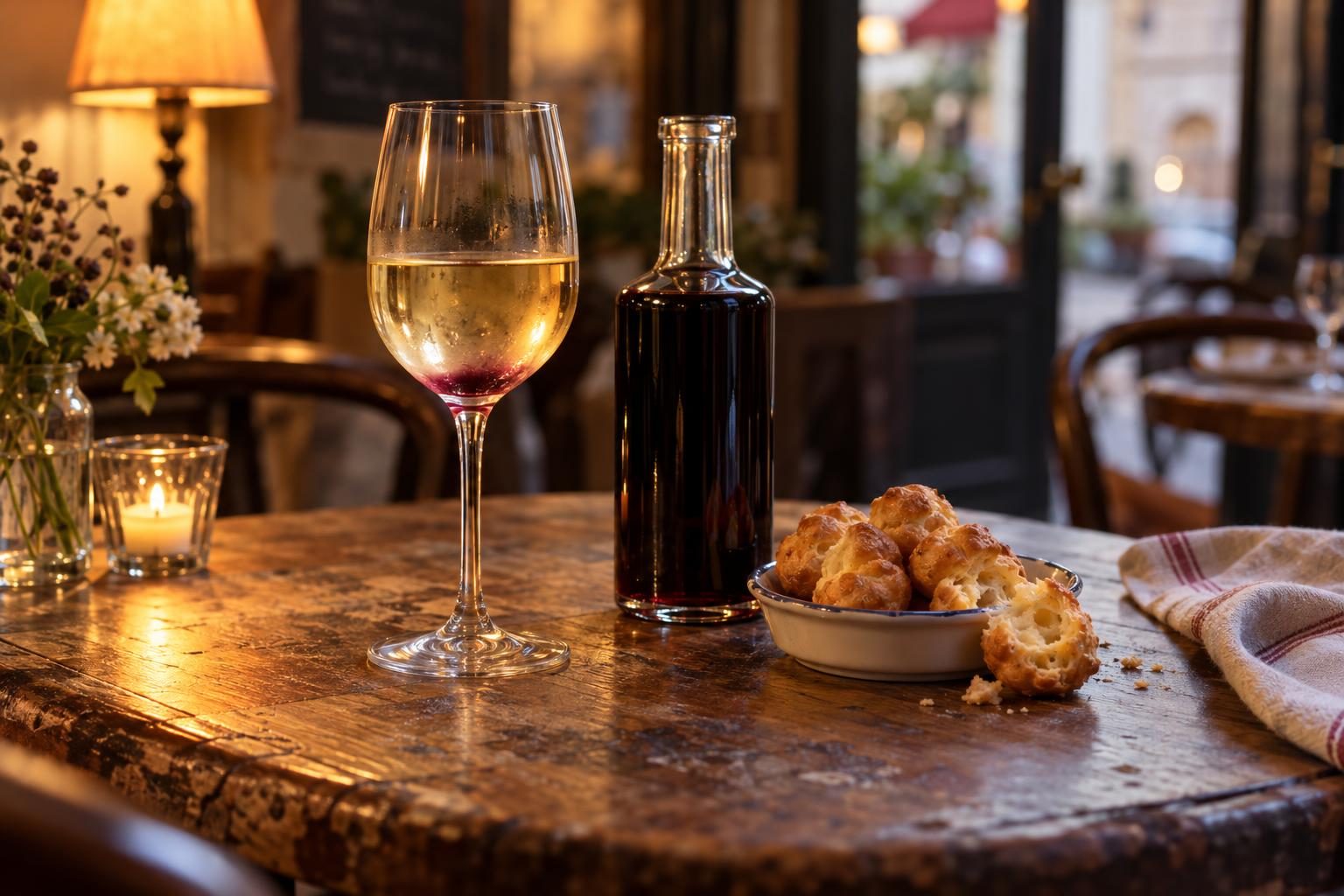
The Kir, a blend of crème de cassis and white aligoté wine, is named after Félix Kir (1876-1968), a canon, Resistance member and later deputy-mayor of Dijon from 1945 until his death, a 22-year term; crème de cassis itself is credited to a Dijon native, Auguste-Denis Lagoute, who set the recipe in 1841. History of the Kir, origin of blanc-cassis, Dijon blackcurrant liqueur: here is what is actually known, and what you can taste on the spot.
From medicinal blackcurrant to crème de cassis: Dijon, 1841
Blackcurrant (Ribes nigrum) has been grown around Dijon since the early modern period, first for medicinal uses. The move to a pleasure liqueur dates to 1841: according to sources, Auguste-Denis Lagoute, a Dijon café owner and liqueur maker, perfected a crème de cassis after several years of trials and founded the house that became Lejay-Lagoute. The method is still the same in principle: berries macerated in neutral alcohol, then sweetened. That simple recipe, combining a local fruit with local know-how, explains why Dijon's cassis houses have lasted for almost two centuries.
The emblematic variety is the Noir de Bourgogne, an aromatic blackcurrant named in the Dijon crème de cassis specification. Four Dijon houses share production of this protected geographical indication today: Briottet (founded 1836), Gabriel Boudier (1874), Lejay-Lagoute and L'Héritier-Guyot. A second PGI, "crème de cassis de Bourgogne", covers a wider area, from the Côte-d'Or to Saône-et-Loire.
Blanc-cassis, Kir, cardinal: who invented what?
The pairing of white wine and blackcurrant predates the canon. It circulated in Dijon as blanc-cassis from the early 20th century. Burgundy historian Jean Rosen credits Henri Barabant, Dijon's socialist mayor, who in 1904 is said to have replaced champagne at official receptions with aligoté, softened with cassis to make it friendlier. The more widespread legend has the German occupiers requisitioning the region's red wines, with Félix Kir then serving white: it is one version among others.
What is established is the canon's role in popularising the mix. Mayor of Dijon from 1945, he served it at every town-hall reception, then in Burgundy's other town halls and in Paris through his parliamentary network. The blanc-cassis took his name, which became standard in the 1950s. Félix Kir turned Dijon's glass of hospitality into a national emblem, and the city still associates its name with a simple, convivial way of welcoming guests, a glass in hand, before any speech is made.
The recipe: proportions, wine and variations
No source consulted fixes a single ratio: you find one third cassis to two thirds wine in the story attributed to 1904, but also one fifth crème de cassis to four fifths aligoté elsewhere. Enthusiasts generally prefer the less sweet version: pour the crème de cassis into the bottom of the glass, then top up with a well-chilled aligoté, dry and lively, whose acidity balances the liqueur's sweetness.
The choice of wine matters more than the amount of cassis. Serve everything cold, and build the drink in the glass rather than in a shaker, so that the wine keeps its freshness and the liqueur does not cloud it. A mediocre, over-acidic aligoté calls for more liqueur; a straight, fruity aligoté, such as those from the Bouzeron appellation, needs only a few drops. For a clean result, prefer a Dijon crème de cassis to a generic liqueur: the geographical indication guarantees production in Dijon and a precise specification for fruit, sugar and alcohol strength, which gives a true berry taste rather than a syrup. Variations are easy: the Kir Royal swaps the wine for champagne or a Crémant de Bourgogne, and the cardinal uses red wine. Whichever version you choose, taste it before serving it to guests and adjust the liqueur drop by drop.
The Kir on the spot: museum, distillery and aperitif
To understand the making, the Cassissium in Nuits-Saint-Georges offers a three-part visit: a museum devoted to blackcurrant, a tour of the Védrenne distillery, then a guided tasting of fruit creams and liqueurs. Opening hours and prices vary by season and by source: check them before you go. In Dijon itself, the historic houses sell their creams in shops and in many delicatessens. At the table, the Kir remains a start-of-meal aperitif: it goes with gougères, eggs in red wine sauce or a board of Burgundy charcuterie, and its sweetness makes it a poor match for a great wine, which it would mask.
Extending the Kir story at Oenosuite
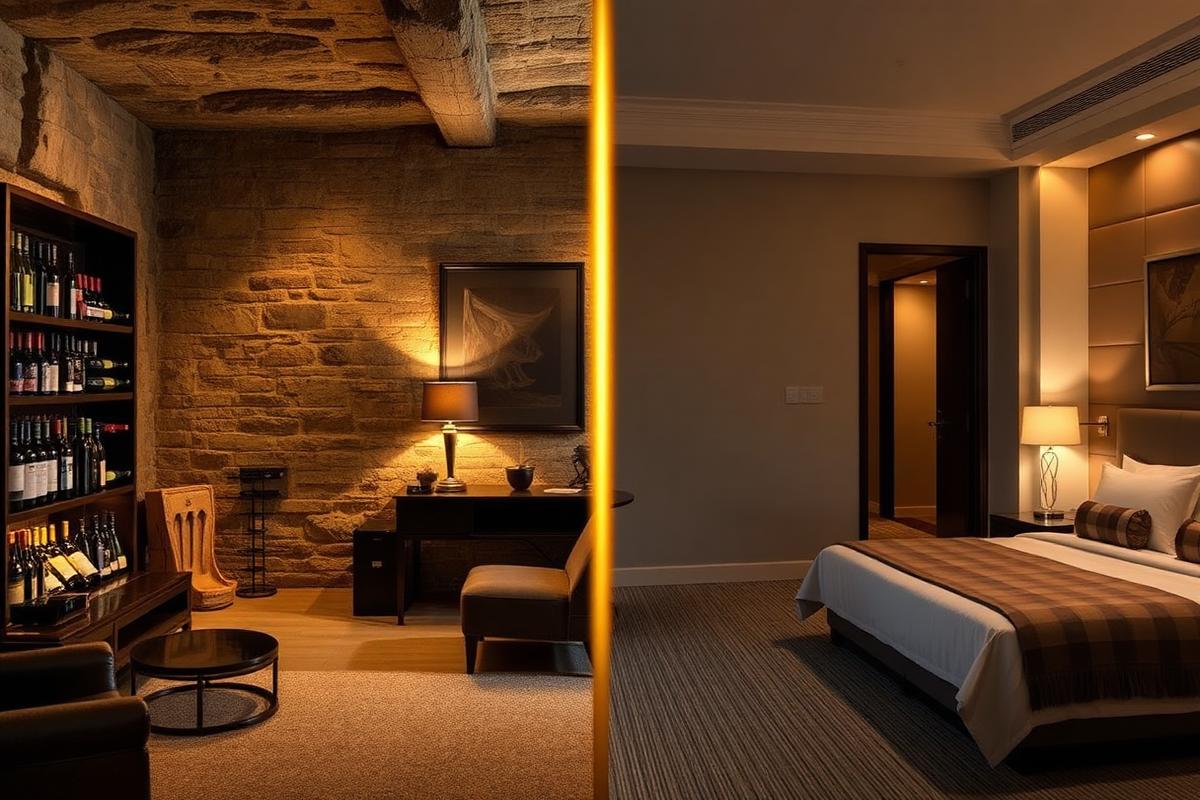
The simplest way to make the Kir a travel memory is to drink one in Dijon. At Oenosuite, in the historic centre a short walk from the Palais des Ducs, a miniature bottle of Dijon crème de cassis is offered on arrival: mix it with an aligoté found along the way. The only apartment with the Vignobles & Découvertes label in Bourgogne-Franche-Comté also has a Jalunia connected cellar, with Burgundy wines on self-service from the suite, and tasting socks left in the apartment for your own blind tasting with your own bottles. The Route des Grands Crus is 20 minutes away. Book direct at oenosuite.fr or on 07 50 96 09 18.
To give this Dijon tradition to a wine lover without knowing their availability, the Oenosuite gift card lets you choose the amount (€50, 75, 100, 150, 200 or 300, or a custom amount from €25 to €1,000) while they choose their dates. It is valid for 12 months and usable on any Oenosuite stay or experience.
The Kir is not a bar cocktail: it is a Dijon story of fruit, white wine and hospitality, best tasted on the spot. A weekend at Oenosuite or an Oenosuite gift card given to a loved one: two ways to extend it.
Sources & references
Plan your trip to Burgundy
Book your wine accommodation in Dijon
Luxury wine suite with complimentary blackcurrant liqueur, Jalunia connected cellar and wine tourism experiences.
Book now