Should You Decant a Great Burgundy? The Real Debate
Simon Stoll
Oenosuite Founder
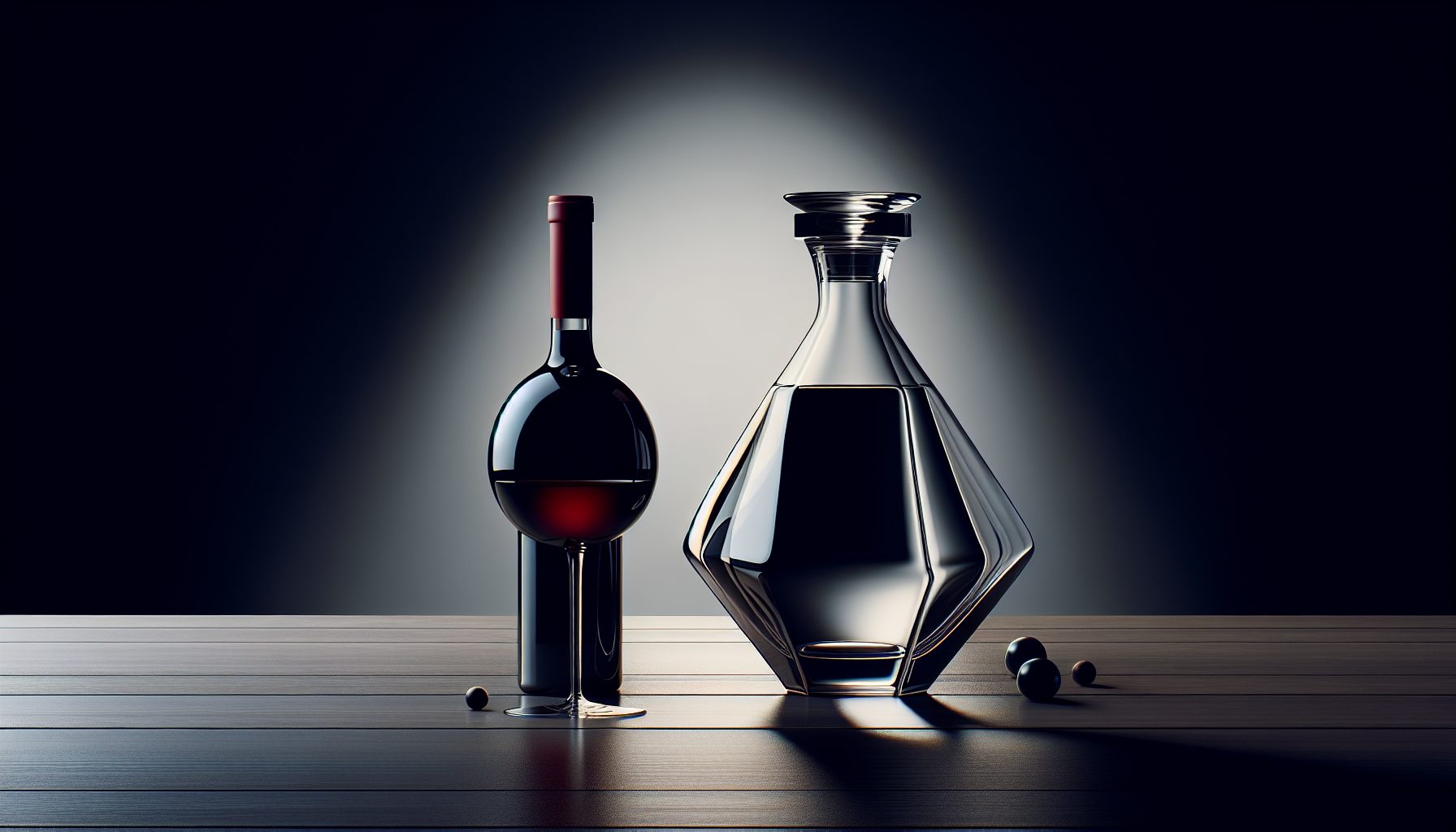
Decanting a great Burgundy is, in most cases, a bad idea. Pinot Noir, the exclusive grape of the great reds of the Côte de Nuits and the Côte de Beaune, tolerates extended contact with oxygen poorly, unlike the much more tannic great Bordeaux wines. This rule, long left unsaid out of habit or service convenience, is now openly admitted by the majority of professional sommeliers working with Burgundy.
The sommeliers' verdict: no, as a general rule
The signature aromas of Burgundian Pinot Noir, red fruits, violet, undergrowth, sweet spices, are volatile by nature. Exposing them abruptly to air by pouring the wine into a wide-open decanter risks watching them evaporate within minutes. According to The Wine Society and Decanter magazine, letting a red Burgundy breathe for several hours can literally kill its fruit, especially on older vintages.
Unlike a great Bordeaux, structured by powerful tannins that benefit from extended decanting to soften, Pinot Noir has a fine, almost lacy tannic frame. Prolonged aeration has nothing to soften, and a lot to damage. As the respected Burgundy wine educator Philippe Meyroux puts it bluntly: a young Pinot Noir rarely survives more than 45 minutes in an open decanter without losing its fruit lift.
Burgundy vs Bordeaux: why the same rule doesn't apply
Bordeaux's Left Bank, dominated by Cabernet Sauvignon and Merlot, rests on a massive tannic backbone that polishes slowly with air. Bordeaux sommeliers even routinely practise « double decanting » to multiply the contact surfaces between wine and oxygen. What works on the Left Bank turns into a disaster in the Côte de Nuits: Pinot Noir simply doesn't have the robustness to absorb that treatment.
This difference explains why a Pommard or a Chambolle-Musigny served in a wide-open decanter often loses its aromatic substance in less than an hour. Conversely, the so-called « ballon » Burgundy glass, adopted as the standard, is designed to preserve aromas rather than let them escape: narrowed opening, broad bowl, brief and concentrated aeration. The glass does the work the decanter would overdo.
Young wines vs old vintages: two distinct logics
For a young red Burgundy (under five years old), a 20- to 30-minute pass through a narrow carafe can help free up the fruit. Beyond 45 minutes, oxidation risks outweigh the benefits. Many sommeliers prefer simply to « shoulder » the bottle: open it, let the wine breathe in the neck for an hour before service, without ever pouring it into a decanter. The air-to-wine contact, limited to the neck's surface, is perfectly dosed.
For an older great Burgundy: a fifteen-year-old Gevrey-Chambertin, a twenty-year-old Vosne-Romanée, let alone bottles from the Domaine de la Romanée-Conti or Domaine Leroy, classic decanting is almost always discouraged. These wines have little sediment to remove (Pinot Noir produces less than Cabernet) and their fragility grows with age. The preferred method: open the bottle three to five hours before service, let the wine evolve in its own neck, and pour directly into the glass. The Burgundy ballon does the rest.
The exceptions that prove the rule
A few specific cases justify a pass through the decanter, even briefly. Natural wines at a young age, sometimes marked by reduction notes (egg, sulfur, struck match), often benefit from 30 minutes to 2 hours in a decanter to let those notes fade. Several well-known Burgundy natural-wine producers, such as Philippe Pacalet in Beaune or Jean-Yves Bizot in Vosne-Romanée, make cuvées that can surprise on opening but blossom after measured aeration.
Another exception: very young red Burgundies from solar vintages (2018, 2020), sometimes dense and tightly wound on serving, may benefit from a quick 15- to 20-minute decant. Conversely, a 1996 or 2002 grand cru will come out weakened by the same operation. The golden rule, on which all sommeliers insist: always taste the wine in the glass before deciding, never the other way around.
Temperature matters more than the decanter
Burgundy sommeliers like to repeat it: it's better to serve a great Burgundy well without decanting than to decant it badly. The ideal temperature sits between 14 and 16 °C depending on the wine's profile. Lighter and fruitier (Marsannay, generic Bourgogne, Côte Chalonnaise Pinot): 14 °C. More complex and structured (Vosne-Romanée, Chambertin, Corton): 16 °C, knowing that wine warms up naturally by 2 to 3 °C in the glass once served.
The right glass plays at least an equivalent role. The INAO glass, standardised at 21.5 cl by AFNOR, is the reference glass for professional tastings, practical but minimalist. For serving a great Burgundy at table, the larger Burgundy ballon, wider and rounder, better showcases the red-fruit, sweet-spice and undergrowth aromas of Pinot Noir. The fill rule: one third maximum, never more.
Our practical advice: the oenosuite method
To make the most of great Burgundies during an oenotourism stay, here is the routine we recommend to guests staying at oenosuite.fr, the ideal base from which to explore Dijon, Beaune and the Côte de Nuits. Take the bottle out of the cellar 30 minutes before service, open it, and let it evolve in the neck while your guests settle in. Always taste in the glass first: if the wine is closed, wait another 15 minutes; if it is already expressive, serve immediately. Choose a 70 cl Burgundy ballon, fill it to a third, at 14-16 °C depending on the cru. To go further on the topic, the Cité des Climats et vins de Bourgogne in Beaune (which opened on 17 June 2023) runs tasting workshops where these principles are explained step by step.
Sources & references
Plan your trip to Burgundy
Book your wine accommodation in Dijon
Luxury wine suite with complimentary blackcurrant liqueur, Jalunia connected cellar and wine tourism experiences.
Book now