Burgundy or Champagne: Which Wine Weekend Should You Pick?
Simon Stoll
Oenosuite Founder
Paris to Dijon by TGV takes 1 hour 32 minutes on the fastest services; Paris to Reims, 45 minutes on a direct TGV. Both vineyards have been UNESCO World Heritage sites since July 2015. On paper, the Burgundy versus Champagne contest looks close. Yet a wine weekend in one region bears almost no resemblance to the other: not the budget, not the pace, not the kind of encounters you will have, not even the way you look at the vines. This comparison settles the question using concrete criteria — real travel time, tasting costs, how densely you can pack in visits, accommodation options — rather than grape preferences. If you are torn between a wine stay in Champagne and a weekend in the Burgundy vineyard, the next few minutes should be enough to make up your mind.
Let us be clear from the outset: this is not about crowning a better wine. Burgundy's Pinot Noir and Chardonnay and Champagne's blends operate in registers that simply do not compare. The real question, when you have two full days and a defined budget, is far more practical: where will your weekend be densest, most accessible and most memorable? That is what the five criteria below answer, and the answer changes depending on whether this is your first wine trip, whether you want to meet growers, or whether you are mainly trying to mark a birthday properly.
Getting there from Paris: 45 minutes does not tell the whole story
On paper, Champagne wins: Reims is 45 minutes from Paris by direct TGV, against roughly 1 hour 32 to 1 hour 35 for Dijon from Gare de Lyon, with around ten direct trains a day over 260 kilometres. But travel time does not end when you step off the train. In Champagne, the vineyards are scattered across the Marne, and getting from Reims to Épernay still takes between 27 minutes and close to an hour by rail depending on the service — before you even consider reaching the villages of the Montagne de Reims or the Côte des Blancs, where a car quickly becomes essential. In Burgundy the logic is reversed: the Route des Grands Crus, the first wine route ever created in France, starts literally at the edge of Dijon and runs 60 kilometres down to Santenay. Marsannay-la-Côte, Fixin and Gevrey-Chambertin are all under twenty minutes from the city centre. In short, Champagne gets you to the region faster; Burgundy gets you to the vines faster.
Tasting prices: where the two regions genuinely diverge
This is the line item that surprises first-time visitors most. In Burgundy, a guided tasting at an estate usually costs between €20 and €40: budget around €35 for the immersive experience at Château de Pommard, roughly €30 for five wines at Domaine des Comtes Lafon in Meursault, or about €40 for seven wines at Bouchard Père & Fils. Grand crus rarely feature in standard tastings: the moment a Chambertin or a Montrachet is poured, expect a minimum of €50. In Champagne, the spread is far wider between the grandes maisons — which run heavily staged cellar tours, often bookable weeks ahead — and the grower-producers of Aÿ, Hautvillers or the Montagne de Reims, where a tasting costs a fraction of the price of a prestige cuvée. Since rates shift from season to season, always check the estate's own website before you travel.
Behind those numbers sits a structural difference. The BIVB lists roughly 900 cellars open to the public in Burgundy, spread across some 3,489 wine estates averaging 8.51 hectares: in the vast majority of cases, the person pouring your wine is the person who made it. Champagne, meanwhile, welcomes close to two million visitors a year, around 60% of them from abroad, and has built a far more professionalised welcome around trading houses that ship 266 million bottles annually. Neither is objectively better: it is a choice between a well-rehearsed spectacle and a conversation in a working vat room. If you want to compare offers before booking, platforms such as Winalist let you filter visits by region, duration and budget.
Where to sleep, and how to gift this weekend
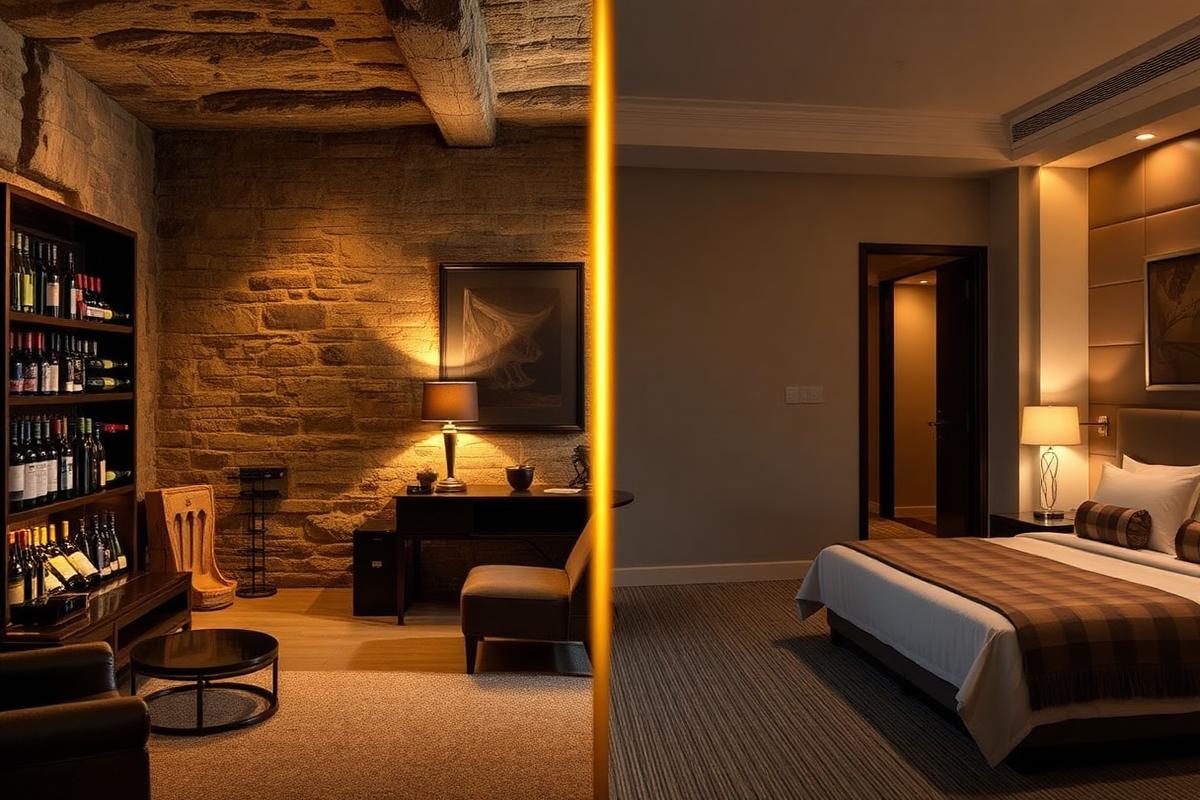
This is the criterion people consider last, even though it determines everything else. In Champagne you have to trade off the urban comfort of Reims against proximity to the vines, and the two rarely coincide. In Burgundy, Dijon solves the problem: a walkable city of art and history, served by TGV, twenty minutes from the Route des Grands Crus. That is exactly where Oenosuite sits — the only apartment in Bourgogne-Franche-Comté to carry the Vignobles & Découvertes label, rated a 3-star Meublé de Tourisme, with two properties in the historic centre. The Suite Charme & Vin offers 43 m² for two to four guests, with exposed stonework, cement floor tiles and a video projector, a short walk from the Palais des Ducs. The Loft d'Artiste offers 25 m² for two, designed by Dijon architect Alexandrine Vaure, with raw concrete, a water-vapour fireplace and a cocoon mezzanine. The pair are rated 4.94/5 on Airbnb across more than a hundred reviews, with Guest Favourite status. Booking directly on oenosuite.fr gets you the best rate, with no platform commission (07 50 96 09 18).
What really changes is that the wine does not stop at the front door. On site you will find tasting socks left in the apartment for your own blind tasting, a wine escape game, the Jalunia connected cellar offering Burgundy wines in tubes or bottles on a self-service basis from the suite itself, wine games, and a miniature of Dijon crème de cassis waiting on arrival. In practical terms, that means a rainy evening or a Sunday when the estates are shut — a common occurrence in both Burgundy and Champagne — does not turn into dead time. On a two-night weekend, where every lost half-day costs you a quarter of the trip, that matters more than it sounds.
A comparison like this one is often read on someone else's behalf: you want to give a wine weekend, but you have no idea which dates the recipient is free, and booking for them is a gamble. The Oenosuite gift card solves precisely that problem: you choose the amount, they choose the dates. Six preset amounts are available — €50, €75, €100, €150, €200 and €300 — or a custom amount between €25 and €1,000, which works just as well for a solo present as for a group whip-round. You can add the recipient's name and a personal message, the card stays valid for twelve months from purchase, and it can be used on any Oenosuite stay or experience. A 14-day right of withdrawal runs from the purchase date. Everything happens at oenosuite.fr/carte-cadeau, and the code arrives by email after payment.
Landscape and heritage: two ways of looking at a vineyard
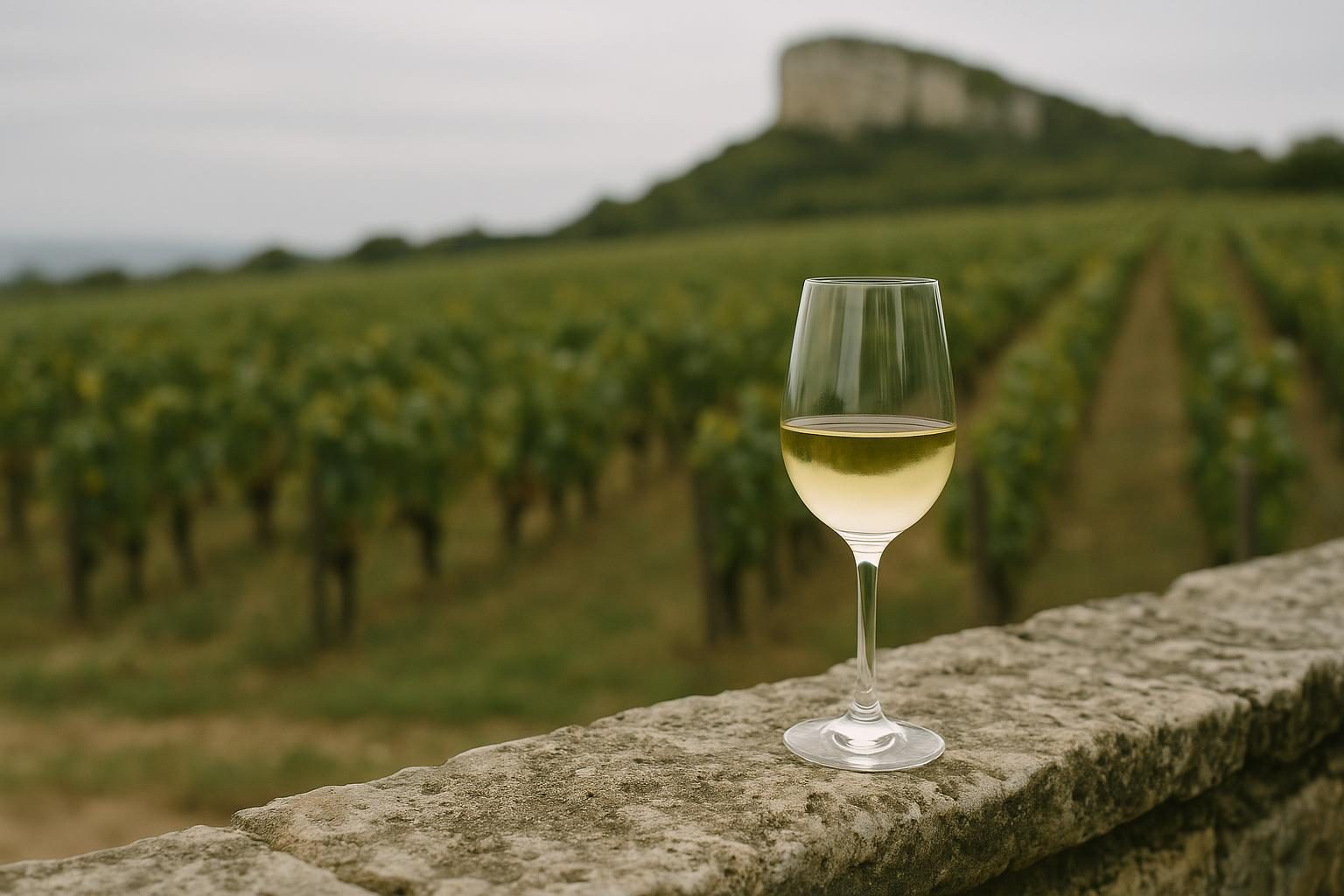
Both regions were inscribed by UNESCO in the same summer of 2015, but for opposite reasons. Champagne was recognised as the Champagne Hillsides, Houses and Cellars: the Avenue de Champagne in Épernay and its kilometres of galleries, the Saint-Nicaise hill in Reims with its ancient chalk quarries, the historic slopes of Hautvillers. It is a vertical, underground, largely architectural heritage — you visit buildings as much as vines. Burgundy was listed for its Climats: 1,247 delimited parcels covering 13,219 hectares, roughly a third of the vineyard, across 40 communes in the Côte-d'Or and Saône-et-Loire. Here the heritage is horizontal and plot-based, readable from a path between two low walls. To grasp the logic before walking into it, the Cité des Climats et vins de Bourgogne, opened in 2023 across three sites (Chablis, Beaune and Mâcon), makes an excellent first stop, with adult entry from €9.50 including a tasting at the Mâcon site.
Our verdict, by traveller profile
Choose Champagne if this is your first wine weekend, if you are marking a specific occasion, if the round trip from Paris has to fit into a day and a half, or if descending into Gallo-Roman chalk cellars appeals to you more than walking between rows of vines. The spectacle delivers and the logistics are well oiled. Choose Burgundy if you want to meet the person who made the wine, if you plan to alternate vineyard and city, if you like the idea of covering 60 kilometres of villages by bike or car without ever exceeding 40 minutes of driving, or if you want a region where tasting prices stay legible. It is also the better call for a three-day stay or longer, where the sheer range of appellations — 84 AOCs, including 33 grand crus — keeps monotony at bay.
In both cases, the success of the weekend depends less on the vineyard than on the base you explore it from. If your choice leans towards Burgundy, Oenosuite puts you in the heart of Dijon, twenty minutes from the first grand crus, with tastings and the wine escape game included in the stay: book directly on oenosuite.fr for the best rate, or give a gift card if you would rather leave the dates to whoever enjoys it. And if you are still undecided, nothing stops you doing both: the two vineyards are only a few hours apart by road, and there is no substitute for comparing them first-hand.
Sources & references
Plan your trip to Burgundy
Book your wine accommodation in Dijon
Luxury wine suite with complimentary blackcurrant liqueur, Jalunia connected cellar and wine tourism experiences.
Book now