Bold Burgundy Food and Wine Pairings: 6 Matches to Try
Simon Stoll
Oenosuite Founder
In Burgundy, the most repeated food and wine pairing is still beef bourguignon with a Pinot Noir. It is an excellent starting point, but it is not a border. The region also produces an Aligoté that accounts for around 6% of Burgundy's plantings, with close to 1,620 hectares claimed under the Bourgogne Aligoté appellation, and a Bourgogne Passe-tout-grains that remains the only local AOC required to be a blend: more than 30% Pinot Noir and more than 15% Gamay. Those wines open the door to bold food and wine pairings, unusual matches and unexpected combinations that almost nobody tries on holiday. Here are six solid ideas, and the technical reasons why they work.
Why the classic Burgundy pairings have their limits
The region's historic pairings — beef bourguignon with Pinot Noir, oeufs en meurette with red Burgundy, jambon persillé with Chardonnay — were built around a rich, slow-cooked, butter-heavy cuisine. They work because the wine answers with acidity and fine tannin, never with raw power. The trouble is that the reflex quickly hardens into a single rule: a serious dish must call for a serious red. In practice Burgundy is one of the most versatile wine regions at the table, precisely because its reds are low in tannin and its whites high in acidity. The Bourgogne Wine Board also runs a pairing search engine that suggests a wine for a dish, a dish for a wine or a wine for an occasion: the range of combinations there goes well beyond the postcard regional repertoire.
Six bold Burgundy food and wine pairings to try
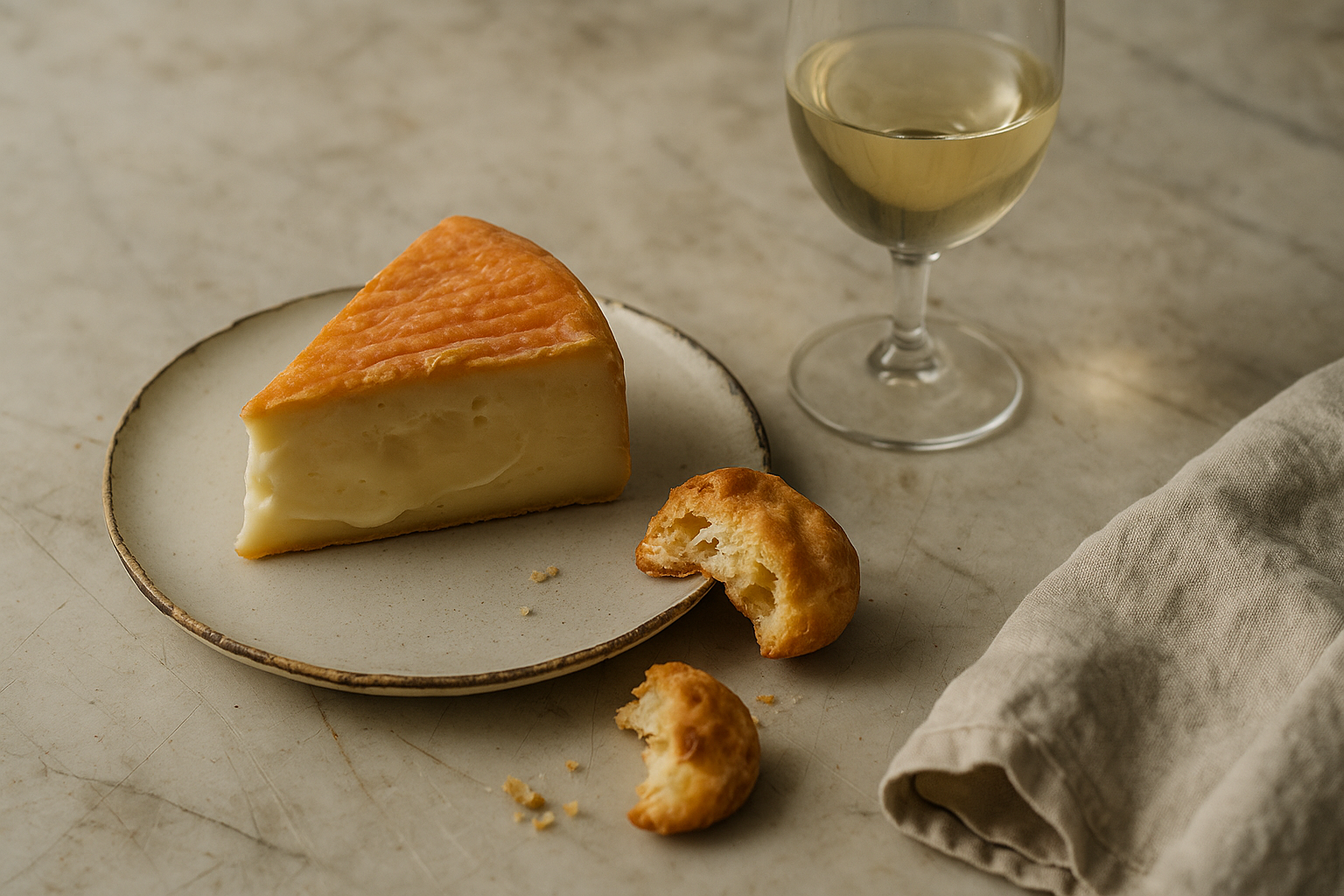
Époisses with white Burgundy, rather than a powerful red. Époisses AOP is a soft, washed-rind cheese, rubbed regularly with brine and Marc de Bourgogne over four to eight weeks of ageing. The instinct is to open a great Côte de Nuits red: the washed rind and the salt then flatten the fruit of the Pinot Noir and push its tannins forward. The most reliable regional pairing is a white Burgundy that is both full-bodied and acidic — a Chablis, a Meursault, sometimes simply a fresh Aligoté. The acidity cuts through the fat of the paste, and the salt in the cheese lengthens the wine instead of hardening it. Try it side by side with a red, glass against glass: the demonstration takes thirty seconds and surprises almost everyone.
Bourgogne Aligoté with sharp or spicy food. Aligoté accounts for around 6% of Burgundy's plantings and produces lively, taut whites, often with a green edge when young. That is exactly what a ceviche, a Thai salad, spring rolls or a fresh goat cheese needs: the wine is not trying to dominate the plate, it refreshes it. For a step up, Bouzeron is the only village appellation in Burgundy made from Aligoté, created by decree in February 1998 across some sixty hectares in the Côte Chalonnaise. One precaution with chilli: past a certain level it amplifies the sensation of alcohol. A sober, nervy white will always do better than a generous, oaky Chardonnay.
A light Pinot Noir served cool with grilled fish. Red wine with fish is treated as an absolute taboo. It collapses as soon as two conditions are met: a low-tannin red and a low serving temperature. Burgundy reds are served at around 16°C, and a light Pinot Noir handles 14°C very well — about an hour in the fridge before the meal. At that temperature an entry-level red Burgundy, a Marsannay or a Hautes-Côtes will happily follow seared tuna, grilled salmon or baked trout without leaving the metallic bitterness that wrecks the pairing. Stay cautious with shellfish and very briny raw fish, where the bet remains risky.
Bourgogne Passe-tout-grains with grilled or smoked food. Passe-tout-grains is the regulatory oddity of the vineyard: its specification requires a blend of Pinot Noir, at more than 30%, and Gamay, at more than 15%, making it the only Burgundy AOC that demands two grape varieties in the glass. The result is a juicy, generous red with a supple structure — a profile tailored for grilled pork chops, marinated skewers, smoked chicken or even a Saturday-night pizza. It too benefits from being served slightly cool. It is also one of the most affordable reds in the region, which makes it the ideal wine for experimenting without painful arithmetic.
Crémant de Bourgogne with fried food, gougères included. The gougère, a savoury choux pastry made with Comté or Gruyère, took its modern form in the 19th century and was traditionally served in cellars during tastings. It is almost always poured alongside a still white; bubbles do the job better. The mousse and acidity of a Crémant scrub away the fat of the melted cheese and the pastry, and the same logic applies to anything out of a fryer: fritters, tempura, fried chicken, thin fries. Serve it properly chilled and, above all, keep it for the whole meal rather than confining it to the aperitif, which is the usual fate of Burgundy bubbles.
Marc or Fine de Bourgogne with a blackcurrant dessert. Since the decrees of March 2011, Marc de Bourgogne and Fine de Bourgogne have been protected appellations: the marc, distilled from grape pomace, is at least 40% ABV and spends a minimum of two years in wood; the fine, distilled from wines on fine lees, three years. These spirits almost never escape the role of a dry after-dinner drink. Try them with a blackcurrant dessert: crème de cassis de Dijon, a protected geographical indication since 2013, carries at least 400 g of sugar per litre for a minimum of 15% ABV, with at least 200 g of fruit per litre and a quarter of the berries from the Noir de Bourgogne and Royal de Naples varieties. The sugar of the cassis and the warmth of the spirit answer each other, provided you pour very small amounts.
The three levers that make a bold pairing work
An unexpected pairing rarely succeeds by luck. The first lever is serving temperature: white Burgundies are served between 12 and 14°C when young, 14 to 16°C on riper wines, and reds at around 16°C, with a young wine taking a degree or two less. A few degrees shift the whole balance between fruit, acidity and alcohol, and that is often the only thing separating a failed pairing from an obvious one. The second lever is acidity, which plays the part of a squeeze of lemon: it cuts fat, which is why Burgundian whites hold their own against powerful cheeses and fried food. The third is tannic structure: the less tannic a red, the better it copes with delicate proteins, light sauces and briny dishes. Sugar and chilli remain the two traps, because they amplify perceived alcohol and demand a sober wine, served cool.
Where to try these pairings without opening six bottles
The real obstacle is logistical: comparing six pairings means six bottles open on the same evening. Three solutions exist locally. The tasting workshops at the Cité des Climats et vins de Bourgogne, opened in 2023 across three sites — Beaune, Chablis and Mâcon — let you taste several appellations in a single session; admission with a tasting included costs around €14.50 in Beaune and €9.50 in Chablis and Mâcon, with the Beaune site open all year. The markets and wine merchants of Dijon then let you assemble a cheese board, a little charcuterie and two or three bottles for a test dinner. And well-equipped accommodation saves you from carrying half a cellar around.
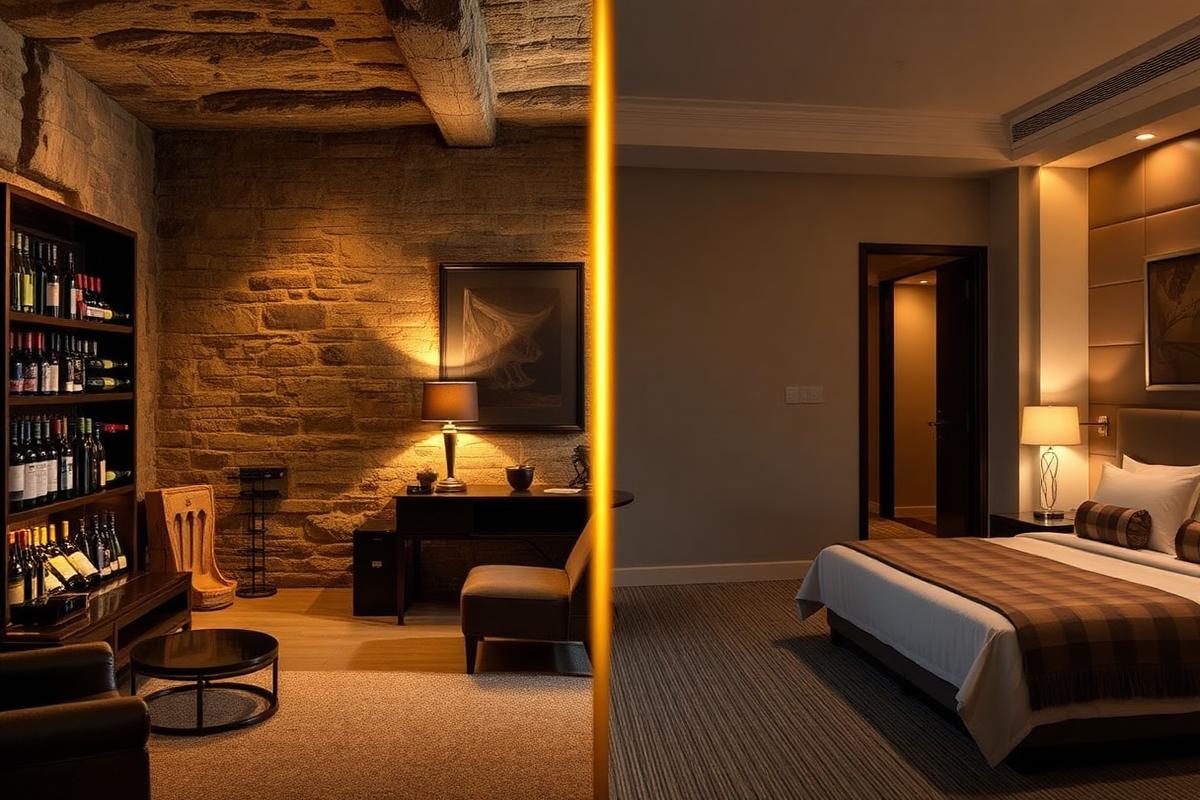
That is exactly what the Oenosuite offers, in the very centre of Dijon: the Jalunia connected cellar installed in the apartment gives self-service access to Burgundy wines in tubes or bottles, which makes it possible to compare a white and a red on the same cheese without uncorking six bottles. A miniature of crème de cassis de Dijon is offered on arrival — enough to test the last pairing on this list — and tasting socks are left in the apartment for your own blind tasting, if you want to taste without seeing the labels. The Suite Charme & Vin (43 m², 2 to 4 guests) and the Loft d'Artiste (25 m², 2 guests) can be booked directly on oenosuite.fr at the best rate, and the Route des Grands Crus is twenty minutes away. If you would rather give these experiences than live them, the Oenosuite gift card solves the date problem: you choose the amount — set tiers from €50 to €300, or a free amount between €25 and €1,000 — and the recipient chooses their own weekend within twelve months, at oenosuite.fr/carte-cadeau.
Sources & references
Plan your trip to Burgundy
Book your wine accommodation in Dijon
Luxury wine suite with complimentary blackcurrant liqueur, Jalunia connected cellar and wine tourism experiences.
Book now